
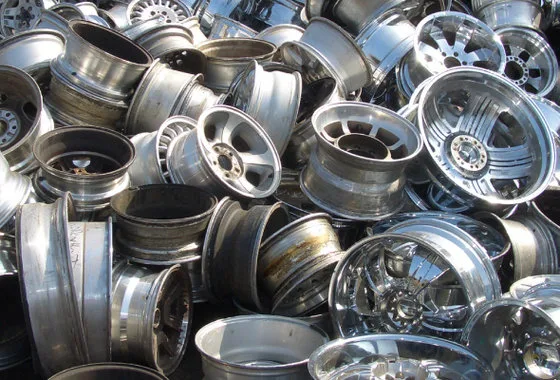
What is aluminum alloy wheel scrap?
aluminum alloy wheel scrap includes scrap aluminum wheels and automotive rim castings. The value and processing route depend on grade, physical form, contamination and the receiving recycler or smelter specification.
How should aluminum alloy wheel scrap be prepared?
Remove tyres, valves, balance weights, steel inserts and excessive dirt, and verify alloy groups where downstream sorting requires it.
Baling or briquetting changes the package form; it does not purify mixed scrap. Confirm the accepted grade and contamination limits with the downstream buyer.
Recommended processing route
Prepared wheel scrap can be size-reduced or processed as cast aluminum feedstock according to the buyer and furnace route.
The safest and most economical route can include sorting, draining, cutting, shearing, screening, baling or briquetting. The sequence must match the actual material rather than a generic material name.
How to select suitable equipment
Provide wheel dimensions, attachments, alloy, batch volume and downstream size requirement. Also confirm loading method, site voltage, available floor space, shift pattern and the required discharge arrangement.
Capacity, density and package dimensions are project-specific and should be verified through technical review or a representative material test.
Frequently asked questions
Do aluminum wheels always need to be baled for recycling?
No. Prepared wheel castings may be accepted directly or require suitable size reduction, depending on the receiving plant's specification. Review wheel dimensions, alloy identity and remaining attachments before choosing a route. A baler intended for light aluminum sheet should not be assumed suitable for rigid wheel castings without a specific technical assessment.
Which wheel attachments affect the recycling specification?
Tyres, valves, balance weights, steel inserts and excessive dirt must be identified and removed or accepted under the agreed preparation specification. Keep known alloy groups traceable when required by the receiver. Compression or size reduction does not separate every attachment or establish that the material meets a cast-aluminum chemistry limit.
What should a trial for wheel scrap measure?
Use the normal range of wheel diameters and casting sections after approved preparation. Record accepted output, rejected oversize pieces and the time required for loading and discharge. Confirm the receiver's required size or package as part of acceptance, rather than treating a successful processing cycle as proof that every wheel type is suitable.
How does wheel scrap affect maintenance planning?
The supplier should review contact surfaces, any cutting or size-reduction tooling and discharge clearance for the approved wheel range. Retained attachments and unexpected heavy sections should be recorded when operation changes. Service work must follow the specified isolation procedure, and a new wheel design should trigger review before it enters routine production.