
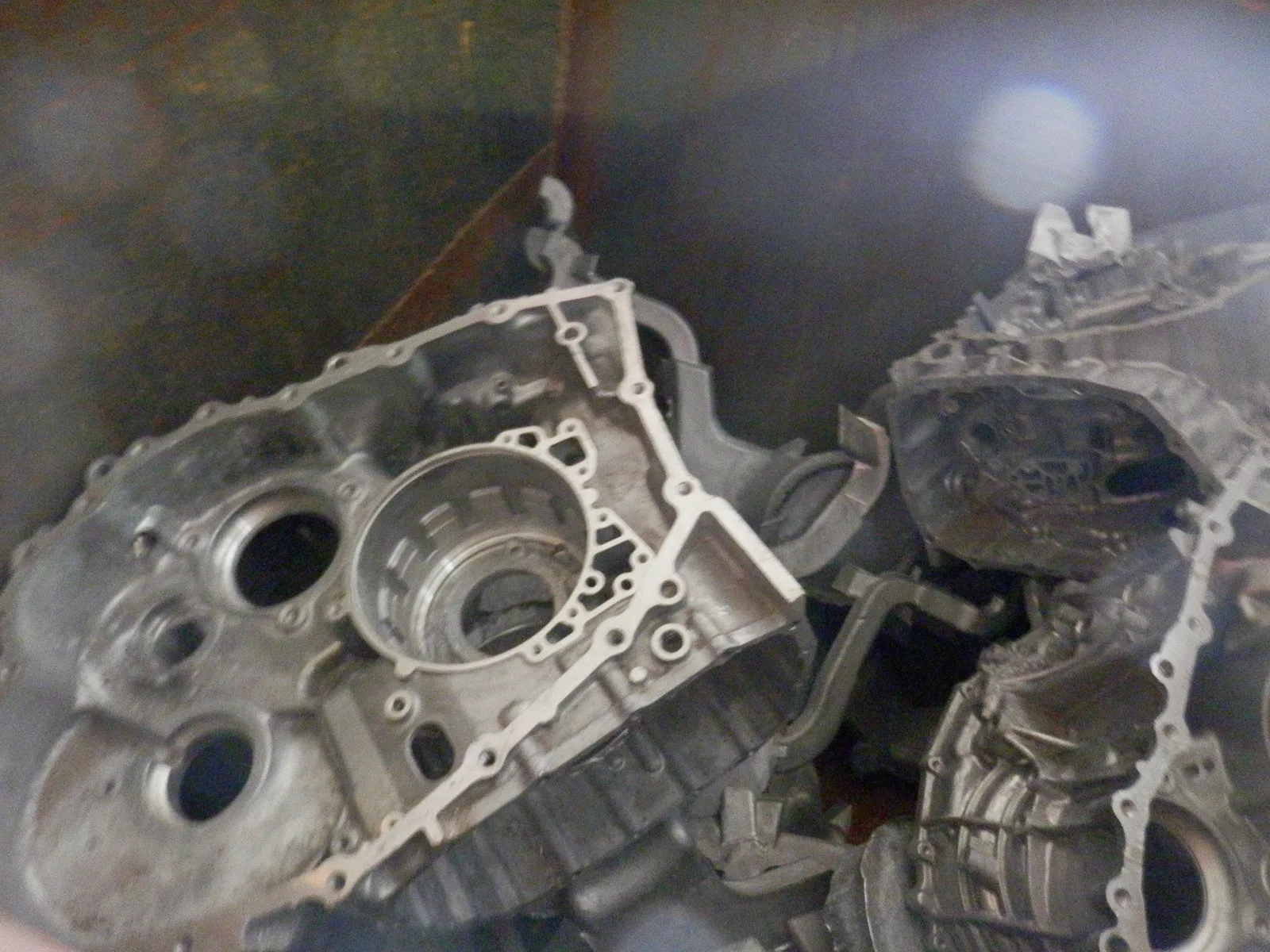
What is aluminum engine housings?
aluminum engine housings includes engine blocks, gearbox housings and cast aluminum automotive shells. The value and processing route depend on grade, physical form, contamination and the receiving recycler or smelter specification.
How should aluminum engine housings be prepared?
Drain all fluids and remove steel inserts, bearings, rubber, plastic and electronic attachments where the recycling specification requires it.
Baling or briquetting changes the package form; it does not purify mixed scrap. Confirm the accepted grade and contamination limits with the downstream buyer.
Recommended processing route
Cast housings may require dismantling or size reduction before baling, shearing or direct foundry preparation.
The safest and most economical route can include sorting, draining, cutting, shearing, screening, baling or briquetting. The sequence must match the actual material rather than a generic material name.
How to select suitable equipment
Provide alloy identification, wall thickness, maximum dimensions, attachments and target downstream route. Also confirm loading method, site voltage, available floor space, shift pattern and the required discharge arrangement.
Capacity, density and package dimensions are project-specific and should be verified through technical review or a representative material test.
Frequently asked questions
Should cast aluminum engine housings be baled directly?
Not by default. Engine blocks and gearbox housings have rigid sections, cavities and variable attachments that differ from light sheet scrap. Review maximum dimensions, wall thickness and alloy before choosing dismantling, suitable size reduction, baling or direct foundry preparation. The intended receiver may prefer a prepared casting rather than a bale.
Which attachments and residues affect aluminum housing acceptance?
Oil and other operating fluids require appropriate removal, while steel inserts, bearings, rubber, plastic and electronic attachments must be assessed against the recycling specification. Preparation should be carried out under an approved safe process. Compression cannot separate embedded components or certify the resulting batch as a clean cast-aluminum grade.
How should a housing-processing trial represent real production?
Include the normal range of housing sizes, wall sections and remaining permitted inserts, with the proposed loading equipment. Measure accepted output across the complete approved preparation and processing route. Keep rejected or oversize castings visible in the results instead of using only the smallest housings to establish a capacity claim.
What maintenance implications should cast housings be reviewed for?
Ask the supplier to include chamber contact surfaces, any size-reduction tooling and the discharge route in the inspection plan for the approved castings. Record retained inserts and unexpected heavy sections when unusual loading occurs. A change in housing design requires a suitability review, not an automatic increase in force or repeated cycling.