
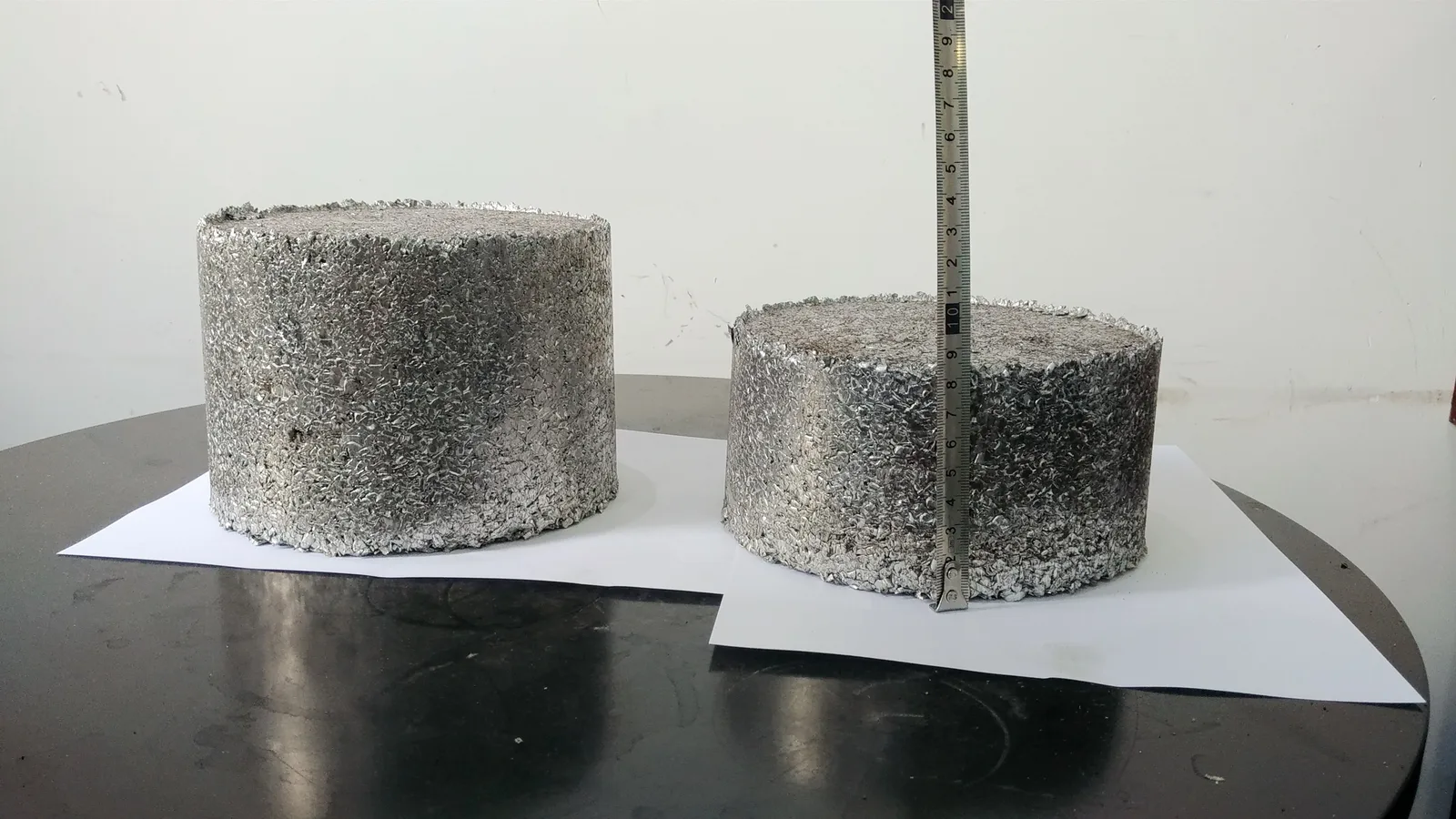
What is aluminum wire granules?
aluminum wire granules includes chopped aluminum conductor and cable granulation output. The value and processing route depend on grade, physical form, contamination and the receiving recycler or smelter specification.
How should aluminum wire granules be prepared?
Remove copper, steel and insulation residue, control fines and moisture, and keep batches traceable by source.
Baling or briquetting changes the package form; it does not purify mixed scrap. Confirm the accepted grade and contamination limits with the downstream buyer.
Recommended processing route
Uniform granules may be compacted or briquetted after feedability and finished-unit stability are confirmed by testing.
The safest and most economical route can include sorting, draining, cutting, shearing, screening, baling or briquetting. The sequence must match the actual material rather than a generic material name.
How to select suitable equipment
Provide particle size, purity, bulk density, flowability and required finished form. Also confirm loading method, site voltage, available floor space, shift pattern and the required discharge arrangement.
Capacity, density and package dimensions are project-specific and should be verified through technical review or a representative material test.
Frequently asked questions
Are aluminum wire granules equivalent to aluminum machining chips?
No. Chopped conductor particles have a different shape and flow behavior from machining curls, so the same feeder or briquetting result should not be assumed. Review particle-size distribution, loose density and the finished package required. A controlled material trial must establish both consistent filling and acceptable briquette stability.
How clean should cable-derived aluminum granules be before compaction?
The required cleanliness comes from the buyer's material specification, not the press. Copper, steel, insulation residue and other contamination must be assessed and separated upstream where required. Keep batches traceable to their cable source, and quantify fines and moisture; compacting granules does not upgrade their metal purity.
What should be measured in an aluminum-granule production trial?
After the material and any fines hazards are assessed, measure accepted package mass over complete feeding and discharge cycles. Include normal particle-size variation, loose density and residual contamination in the trial record. Check how finished units survive the intended collection and transport route, rather than accepting output from press strokes alone.
What maintenance concerns should be reviewed for aluminum wire granules?
The supplier's plan should address the metering path, tooling, discharge containment and any approved fines-management arrangement. Record particle accumulation and changes in package consistency as inspection triggers. Fine aluminum residues require material-specific cleanup controls, while internal servicing must follow the equipment's safe isolation procedure and specified access method.