
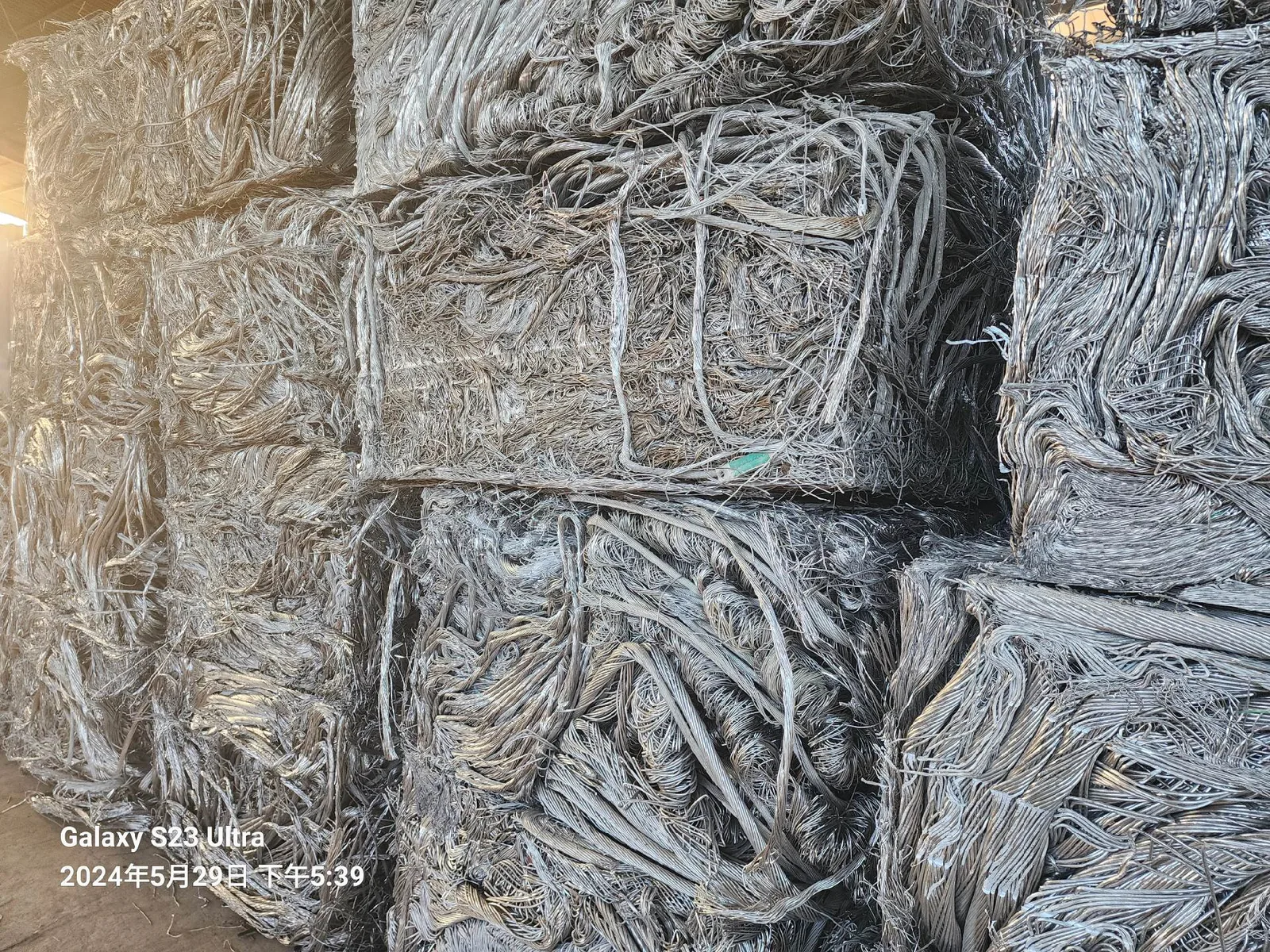
What is aluminum wire scrap?
aluminum wire scrap includes bare aluminum conductor, cable offcuts and loose wire bundles. The value and processing route depend on grade, physical form, contamination and the receiving recycler or smelter specification.
How should aluminum wire scrap be prepared?
Remove insulation, steel core, connectors, moisture and foreign metal, and keep known conductor grades separated.
Baling or briquetting changes the package form; it does not purify mixed scrap. Confirm the accepted grade and contamination limits with the downstream buyer.
Recommended processing route
Clean prepared wire can be baled into stable packages; tangled or long wire may need cutting or controlled pre-feeding.
The safest and most economical route can include sorting, draining, cutting, shearing, screening, baling or briquetting. The sequence must match the actual material rather than a generic material name.
How to select suitable equipment
Provide wire diameter, maximum length, steel content, loose density and target bale size. Also confirm loading method, site voltage, available floor space, shift pattern and the required discharge arrangement.
Capacity, density and package dimensions are project-specific and should be verified through technical review or a representative material test.
Frequently asked questions
Is a baler or briquetting press better for aluminum wire?
Long bare conductors and loose wire bundles are normally evaluated for baling, with cutting or controlled preparation when needed. Uniform chopped granules require a separate briquetting assessment. Wire diameter, length, spring-back and bundle geometry determine the feed arrangement; the material name alone does not establish that a chip press can accept it.
Can steel-cored or insulated aluminum conductors be baled as clean wire?
No. Steel cores, insulation, connectors and foreign metals must be identified and separated to the extent required by the buyer. Baling does not perform cable separation. Keep conductor sources and known grades traceable, and confirm the prepared material specification before treating visually similar wire as one recycling stream.
How should aluminum wire baling capacity be measured?
Run the intended mix of wire diameters, lengths and bundle shapes using the approved loading method. Record preparation time, full-cycle bale output and the stability of finished packages after release. Capacity obtained with short loose pieces should not be assumed for tightly tangled wire or large conductor coils.
What maintenance concerns are associated with long aluminum wire?
The maintenance plan should address wire retained around feeding equipment, chamber edges and the discharge path. Repeated tangling calls for a review of preparation and containment, not routine manual intervention during operation. Trained personnel should inspect and clear the system only under the manufacturer's approved shutdown and energy-isolation arrangements.