
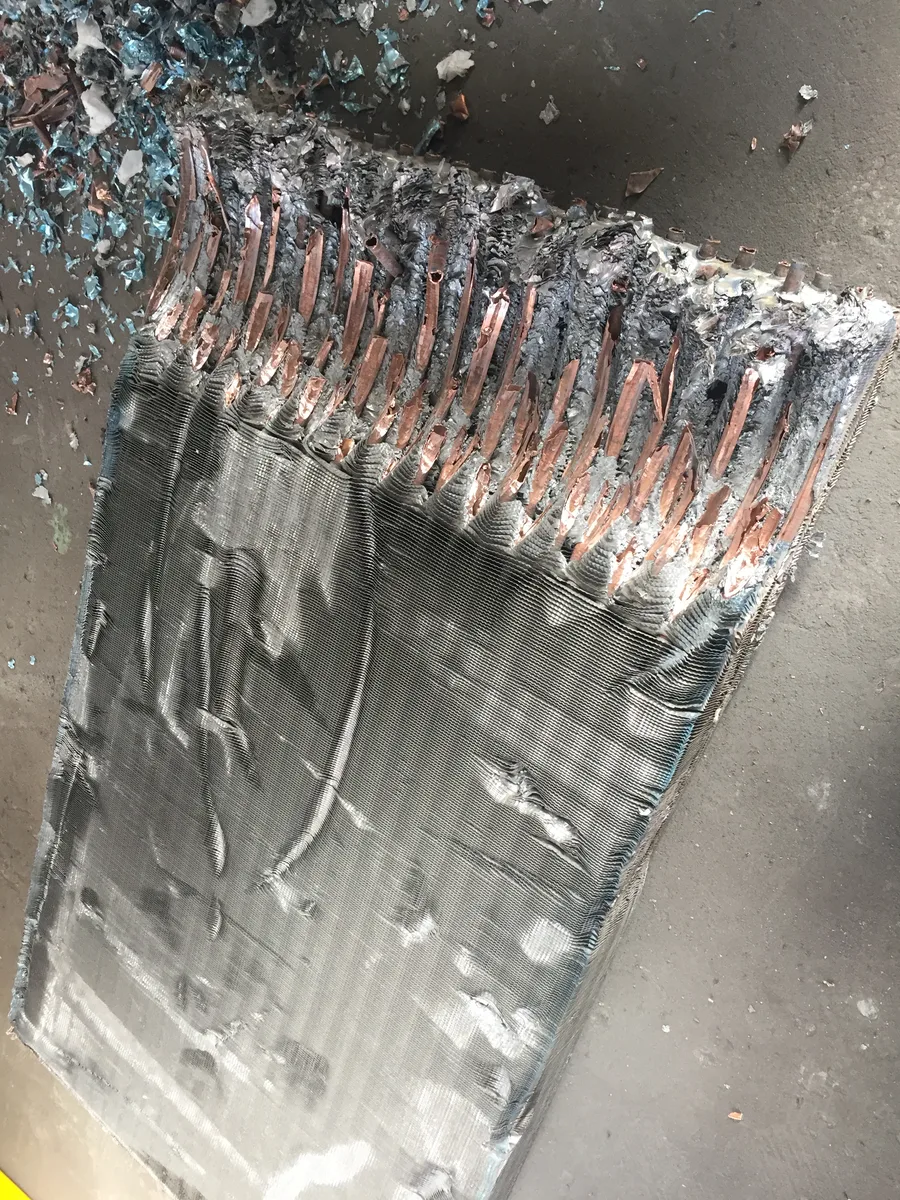
What is copper-aluminum radiators?
copper-aluminum radiators includes air-conditioner radiators, heat-exchanger cores and copper-aluminum assemblies. The value and processing route depend on grade, physical form, contamination and the receiving recycler or smelter specification.
How should copper-aluminum radiators be prepared?
Drain fluids and remove steel frames, plastic tanks, fans and other attachments before separating copper tube from aluminum fins.
Baling or briquetting changes the package form; it does not purify mixed scrap. Confirm the accepted grade and contamination limits with the downstream buyer.
Recommended processing route
A dedicated radiator recycling route normally combines dismantling, controlled size reduction and material separation before final compaction.
The safest and most economical route can include sorting, draining, cutting, shearing, screening, baling or briquetting. The sequence must match the actual material rather than a generic material name.
How to select suitable equipment
Provide core dimensions, copper-aluminum ratio, attachments, cleanliness and required separation quality. Also confirm loading method, site voltage, available floor space, shift pattern and the required discharge arrangement.
Capacity, density and package dimensions are project-specific and should be verified through technical review or a representative material test.
Frequently asked questions
Can a baler separate copper tubes from aluminum radiator fins?
No. Baling packages the assembly but does not separate its metals. A radiator-recycling route normally needs appropriate dismantling, size reduction and separation before final compaction. Define whether the buyer accepts mixed cores or requires separate copper and aluminum fractions before deciding which processing stages are necessary.
What preparation is required for used radiator or heat-exchanger scrap?
Identify the equipment source and any remaining fluid, then use qualified handling for refrigerants or hazardous residues before scrap processing. Steel frames, plastic tanks, fans and other attachments must be assessed against the separation specification. Do not treat an apparently drained or disconnected assembly as verified clean feed.
How should radiator-recycling capacity be confirmed?
Use representative core dimensions, tube-and-fin constructions and permitted attachments in the trial. Measure accepted separated material as well as incoming core mass, noting preparation, sorting and compaction delays. A baler or shredder rate alone does not establish line capacity when the project also requires a defined separation quality.
What maintenance planning is useful for a radiator-processing line?
Coordinate inspections of dismantling or size-reduction tooling, screens, separation stages and final discharge with the selected equipment suppliers. Track retained attachments and fine fragments when performance changes. Cleaning and servicing require approved isolation across connected machines, with any collected liquid or contaminated residue handled through the site's defined material-specific route.