
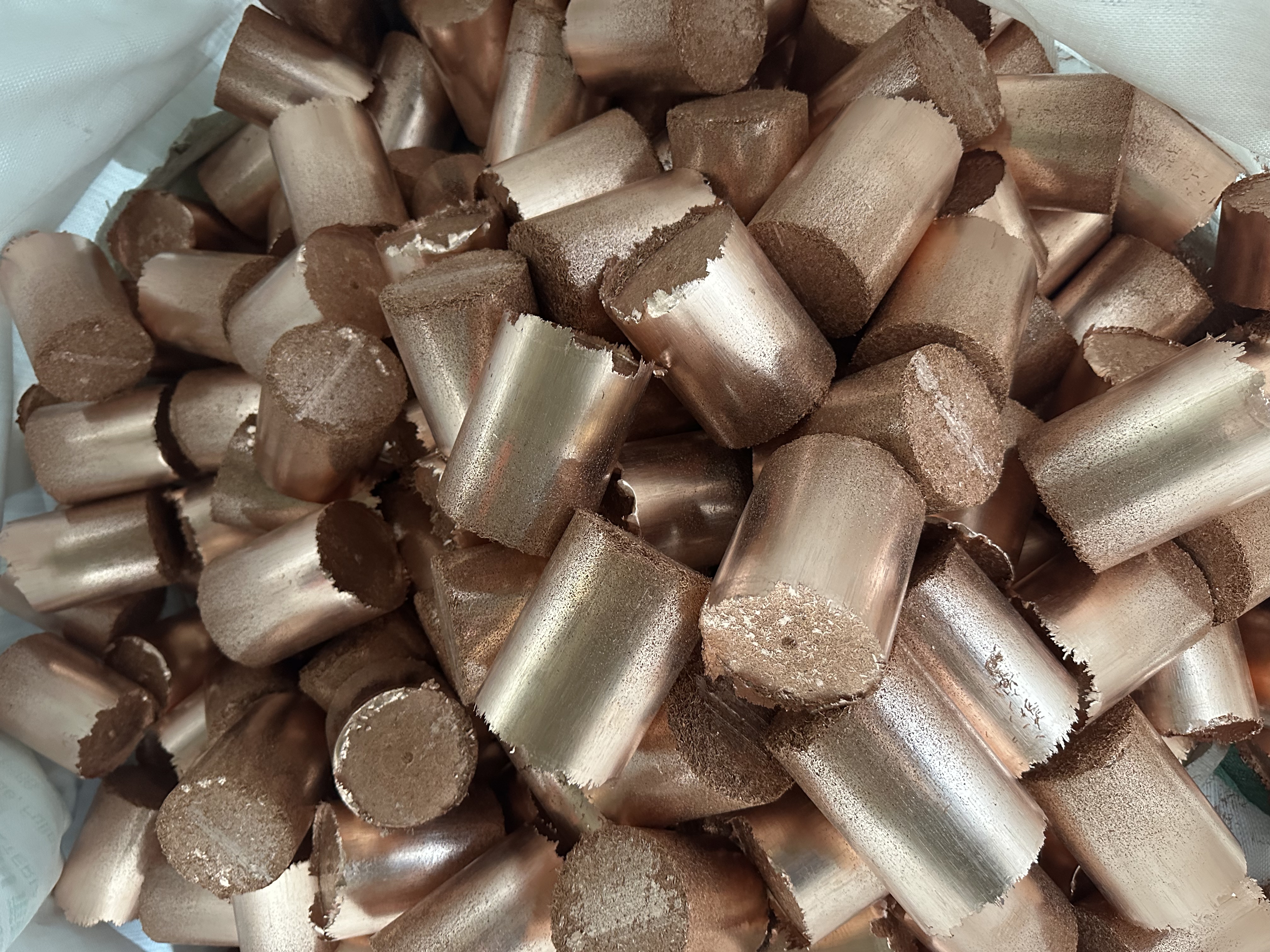
What are copper granules?
Copper granules are short, free-flowing copper particles produced by cable granulation, chopping, cutting or other recycling and manufacturing processes. Particle size, shape, alloy source and cleanliness vary, so the material should be identified before a briquetting system is selected.
Sort and inspect copper particles before compaction
Keep copper grades separate and remove steel, aluminum, plastic, rubber, dust and excessive moisture. Briquetting changes package form and bulk density; it does not purify the copper or remove contamination.
Measure particle size and bulk behavior
Short copper particles usually feed more consistently than long tangled swarf, but very fine or irregular granules can bridge, carry dust or fill the chamber unevenly. Record representative particle dimensions and bulk density, then review the hopper and metering method together with the press cycle.
Hydraulic briquetting of copper granules
A hydraulic metal chip briquetting press meters prepared copper granules into a chamber and applies controlled pressure to form compact cylindrical units. Achievable density, surface finish and briquette stability depend on the actual material, tooling and machine settings and should be verified by technical review or a material trial.
From loose granules to manageable recycling units
Compaction can reduce the space occupied by loose copper particles and create units that are easier to count, weigh, collect and transport. It can also support more orderly storage for recyclers, cable processors, copper-product manufacturers and remelting operations.
Copper granule briquetting FAQ
Why test copper granules if they already flow freely?
Easy pouring does not establish that granules will form a durable briquette. Particle size, shape, contamination and tooling affect the finished unit. Test the actual cable-granulation or chopping output and check both metering consistency and stability after discharge, collection and the handling method agreed with the receiving recycler.
Can insulation residue remain in copper granules before briquetting?
Residual insulation should be assessed against the buyer's specification and removed by the upstream separation process where required. A briquetting press does not separate plastic, rubber, aluminum or steel from copper. Bright-looking granules are not proof of purity; source records and suitable analysis are needed when a defined grade is sold.
How is copper-granule throughput verified?
Use granules sampled across the normal particle-size range and measure accepted briquette output during a timed production trial. Record loose density, moisture, feed settings, discharge delays and broken units. Keep the tested batch composition in the acceptance record so a capacity result is not applied to materially different granulation output.
Should copper granules always be compacted before sale?
Not necessarily. Some buyers accept loose granules, while others prefer a compact package for their handling system. Compare the requested delivery form, containment, weighing and storage arrangements before choosing briquetting. Compaction should solve an agreed logistics need; it does not by itself establish a higher copper grade or selling price.
Which maintenance observations matter for a copper-granule press?
Track consistent feed delivery, tooling condition and any loose granules escaping the intended collection path. Changes in briquette mass or discharge behavior should prompt a check against the original material sample as well as the machine manual. Cleaning and inspection must use the specified shutdown and energy-isolation procedure, not access during cycling.