
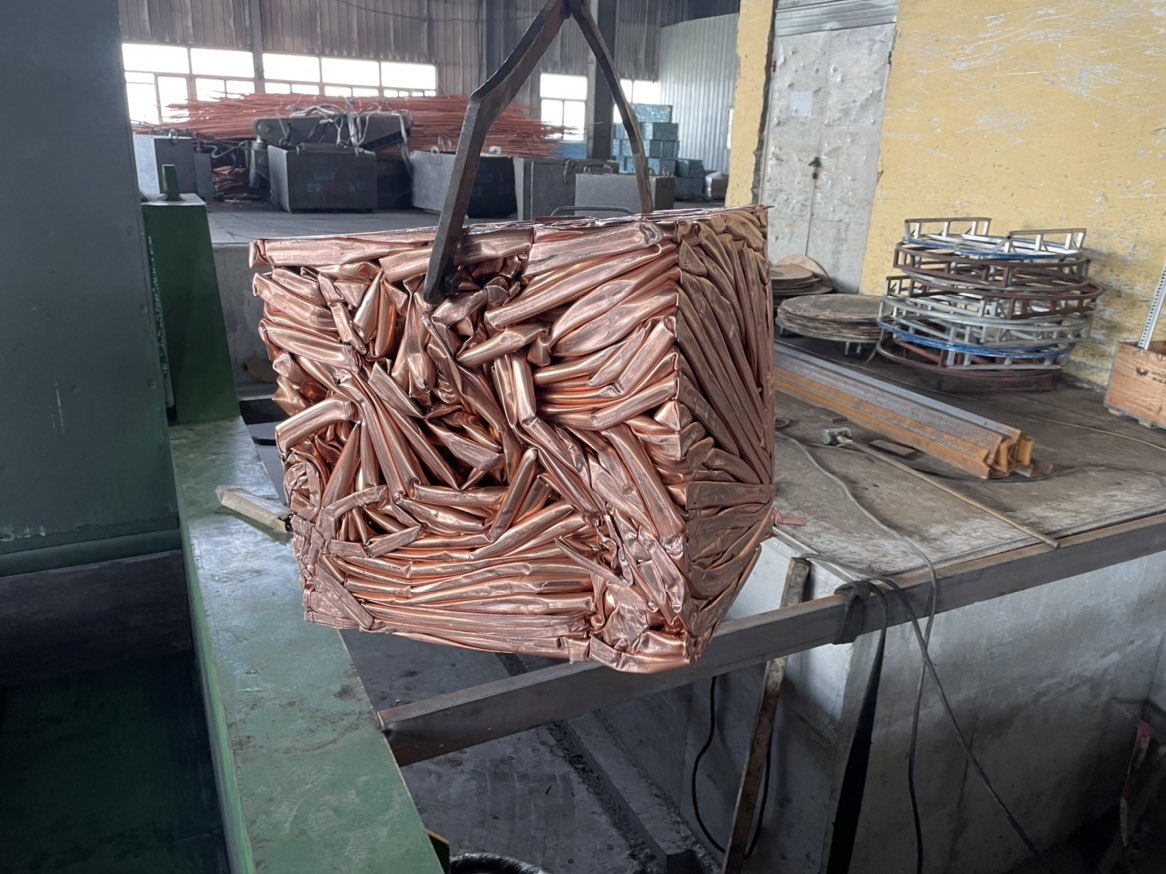
What is copper tube scrap?
Copper tube scrap includes straight pipe offcuts, bent tubing, rejected coils and production remnants from plumbing, HVAC, heat-exchanger and copper-product manufacturing. Clean tube scrap can retain strong recycling value, but long or irregular pieces occupy substantial space and are difficult to stack safely.
Sort and prepare copper tubing before baling
Keep copper grades separate and remove brass fittings, steel fasteners, insulation, plastic, rubber, oil and excessive moisture. Long tubing may need cutting or controlled folding so it can enter the compression chamber without bridging or projecting beyond the safe loading area.
Match the hydraulic baler to the actual tube scrap
A hydraulic metal baler compresses prepared copper tube scrap into dense, transportable packages. Chamber size, compression force, feeding method and bale discharge arrangement should be selected from representative material, hourly volume and the required bale dimensions—not from material name alone.
Compact copper tube scrap for storage and transport
Baling can reduce the space occupied by loose tubing and create units that are easier to weigh, label, stack and load. The finished bale shown here demonstrates the packaging result for clean tube offcuts; actual bale density and weight depend on tube geometry, wall thickness, alloy and machine settings.
Maintain grade separation and traceability
Do not mix clean copper tubing with insulated wire, brass, aluminum or coated components unless the downstream buyer accepts the combined grade. Label each bale by source and material class, and retain representative photos or inspection records when traceability is required.
Copper tube scrap baling FAQ
When should copper tube scrap be cut before baling?
Pre-cutting is considered when straight lengths, coils or bent tubes cannot fit completely within the approved loading envelope. Tube diameter, wall thickness and attached fittings also matter. Review the largest pieces rather than an average length, and select any shear against the actual tube section and loading method.
Can used HVAC tubing be baled as clean copper?
Not automatically. Used tubing may contain fittings, insulation, coatings or residual process fluids that affect safety and grade. Any refrigerant or hazardous residue requires qualified handling before scrap processing. Once accepted for processing, keep identified copper grades separate and verify cleanliness against the recycler's requirements rather than appearance alone.
How should output be tested for bent copper tubing?
Trial the real mixture of straight, coiled and bent pieces with the intended loading equipment. Measure accepted bale mass over the full loading, compression and discharge sequence. Record preparation time and interruptions separately, because a press-only cycle result can overstate the output of a line handling irregular tubing.
Is a briquetting press an alternative for copper tube offcuts?
A metal baler is normally the route considered for tube offcuts; a chip briquetting press is intended for suitably prepared small material. Hollow tubes and long springy sections should not be treated as machining chips. The choice follows the actual feed geometry and required package, not simply the fact that both materials contain copper.
What should be checked when tube bales become difficult to discharge?
Compare the latest tube sizes and loading pattern with the approved material specification, then arrange inspection of the chamber and discharge mechanism according to the manual. Protruding pieces or an unexpected increase in fittings may change bale behavior. Do not reach into the chamber or increase pressure beyond approved settings to force release.