
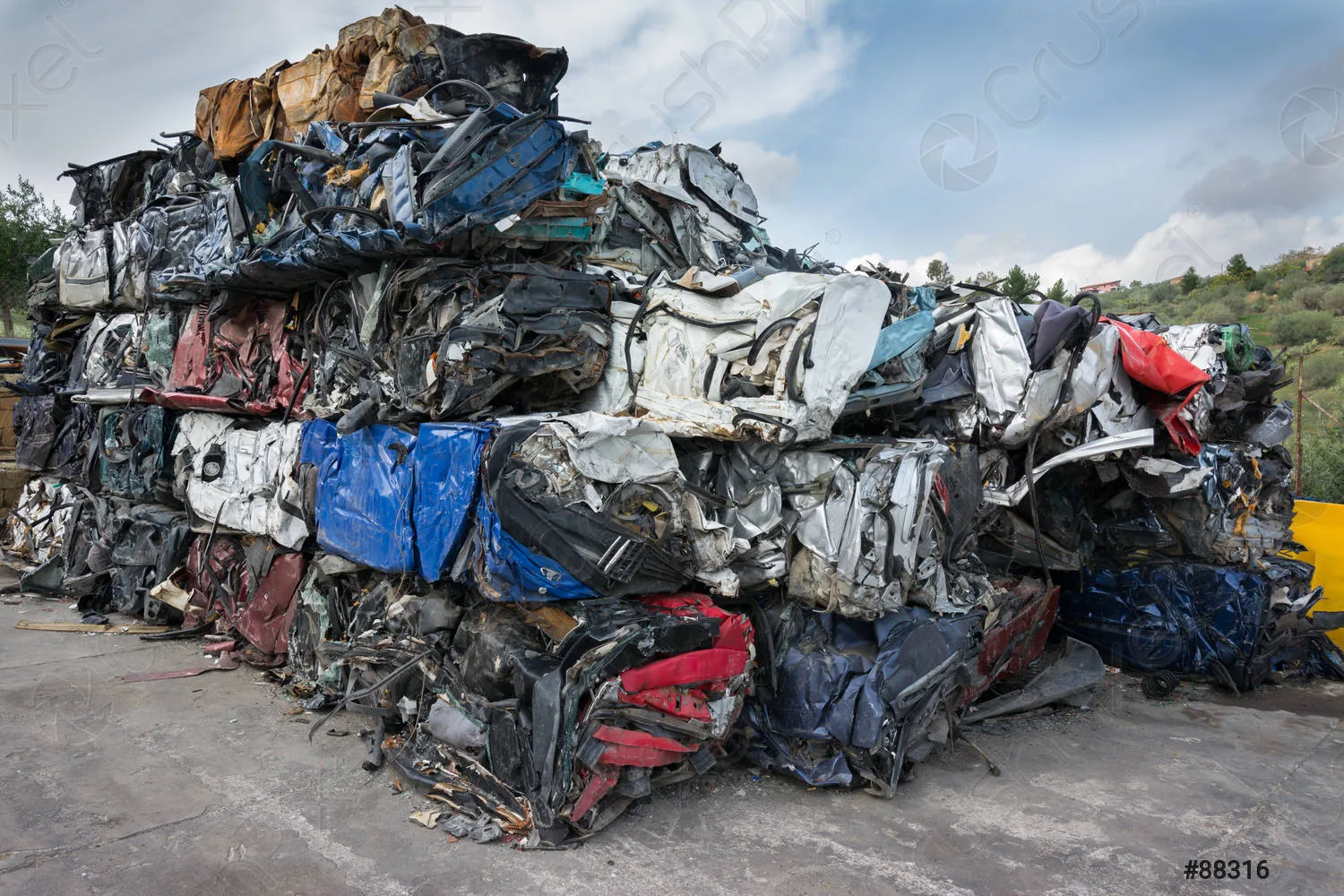
What is end-of-life vehicle scrap?
end-of-life vehicle scrap includes de-polluted vehicle shells, body panels and dismantled automotive metal. The value and processing route depend on grade, physical form, contamination and the receiving recycler or smelter specification.
How should end-of-life vehicle scrap be prepared?
Professional depollution must remove fuel, oil, batteries, airbags, refrigerants, tyres and other hazardous components before size reduction.
Baling or briquetting changes the package form; it does not purify mixed scrap. Confirm the accepted grade and contamination limits with the downstream buyer.
Recommended processing route
Prepared shells can be flattened, sheared or baled to support downstream separation and ferrous recovery.
The safest and most economical route can include sorting, draining, cutting, shearing, screening, baling or briquetting. The sequence must match the actual material rather than a generic material name.
How to select suitable equipment
Provide vehicle dimensions, depollution status, attachments, feeding method and downstream shredder requirements. Also confirm loading method, site voltage, available floor space, shift pattern and the required discharge arrangement.
Capacity, density and package dimensions are project-specific and should be verified through technical review or a representative material test.
Frequently asked questions
Can a complete end-of-life vehicle go straight to a scrap baler?
No. Professional depollution and dismantling must address fuel, oils, batteries, airbags, refrigerants and other hazardous components before size reduction. This application concerns verified prepared shells and dismantled metal, not untreated vehicles. Any uncertain item must stay outside the processing stream until qualified personnel establish its safe handling and acceptance.
How is the processing route selected for prepared vehicle shells?
Match the verified shell dimensions and remaining permitted components to the baler or shear's approved loading envelope. The downstream shredder or recycler may require a specific package or cut size. Review lifting, loading, discharge and separation together rather than choosing equipment solely from the approximate mass of a vehicle shell.
What must a vehicle-shell capacity trial include?
Use documented, depolluted shells representative of the intended vehicle types. Record accepted shell count and mass alongside loading, compression or cutting, discharge and interruptions. State whether upstream depollution is outside the measurement boundary, so the machine's processing rate is not mistaken for the capacity of the entire vehicle-recycling operation.
What should maintenance planning cover for vehicle scrap processing?
Include the feed chamber, cutting components where fitted, discharge route and protection against permitted sharp attachments in the supplier's inspection plan. Unexpected fluid, a battery or an unidentified enclosed component requires stopping material acceptance and qualified review. Machine servicing must follow the approved isolation procedure, including stored hydraulic and mechanical energy.