
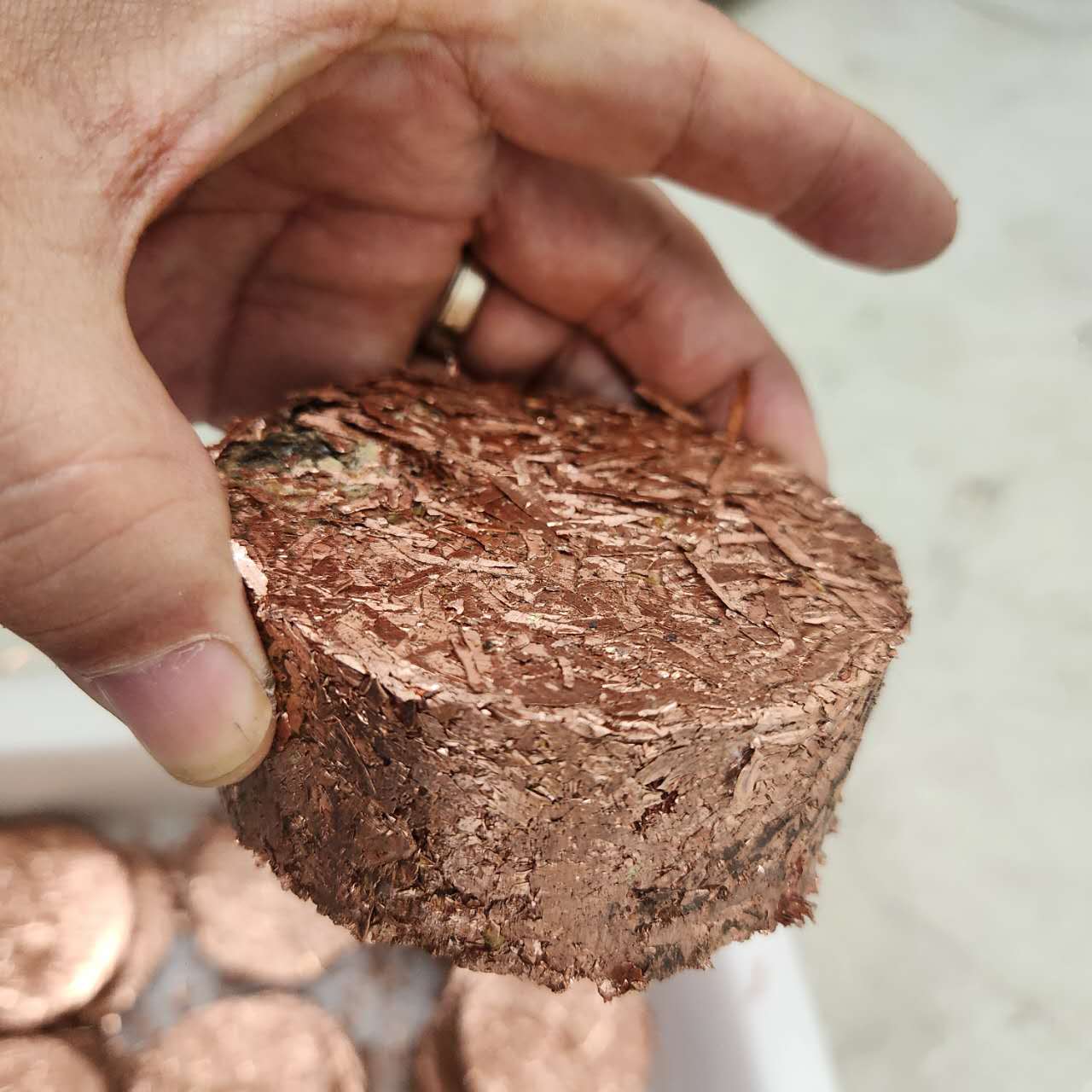
Turn loose fine copper chips into manageable recycling feedstock
Fine copper chips are short, needle-like or flake-shaped residues generated by cutting, trimming, milling and other copper-processing operations. Although valuable, they are bulky, sharp and difficult to handle when loose. A controlled briquetting process can create compact units for cleaner collection, weighing, storage and transport.
Protect copper value through sorting and preparation
Keep copper grades separate and remove steel, plastic, abrasive fines, oil and moisture before compaction. Confirm particle length, bulk density and flowability because very light chips can bridge in a hopper or feed unevenly.
Stable feeding matters as much as press force
Short fine chips may flow differently from curled copper swarf. The hopper, metering device and press cycle should be matched to the actual particle form. A sample test helps identify bridging, dust generation and inconsistent filling before the final configuration is confirmed.
Compact copper chips for cleaner handling and logistics
A hydraulic metal chip briquetting press applies controlled pressure to prepared copper chips. The resulting briquette can reduce loose-material volume and create a more manageable package, but achievable density and block stability depend on the actual material and must be confirmed by technical review or testing.
What should you send for a machine recommendation?
Provide clear material photos, copper grade, particle dimensions, bulk density, oil or moisture content, hourly or daily volume, target briquette size, loading method, available space and site voltage. These details allow the hopper, feeding system, hydraulic press and discharge arrangement to be evaluated as one complete process.
Important: Briquetting changes material density and package form; it does not remove contamination or certify copper purity. Sorting and quality control remain essential.
Next Steps
Is a briquetting press suitable for very fine copper chips?
A briquetting press can be evaluated for short copper chips, but fine needles and flakes do not behave like uniform granules. Check particle-size distribution, bulk density and dust content first. A representative trial should demonstrate controlled hopper feeding, consistent chamber filling and a briquette that survives the intended handling route.
Can fine copper chips be mixed with ordinary copper turnings?
Only if the combined grade is accepted and the feeding system has been assessed for that mixture. Long curls can change how fine particles move through the hopper. Keep production sources identifiable, disclose the proportion of each form, and include normal batch variation in the material trial.
How should capacity be confirmed for fine copper chips?
Measure accepted briquette mass over a timed run with representative fine chips, including normal replenishment and discharge. Record feed density, residual liquid, interruptions and rejected blocks. A short sequence of successful press strokes does not establish shift output when lightweight particles repeatedly bridge or fill the chamber inconsistently.
Does briquetting remove contamination from fine copper chips?
No. Steel particles, abrasive fines, plastic and mixed alloys remain quality concerns after compaction. Quantify oil and moisture before testing, and agree on the receiving recycler's limits. Any liquid expressed by the press needs a suitable collection arrangement; its recovery does not certify the copper or the liquid for reuse.
What maintenance needs special attention with fine copper chips?
Include the metering path, tooling condition and any fluid-collection passages in the machine-specific inspection plan. Fine particles left around feeding or discharge points also require an approved housekeeping method. Investigate changing fill weight or block quality rather than compensating with higher pressure; internal checks require trained personnel and safe energy isolation.