
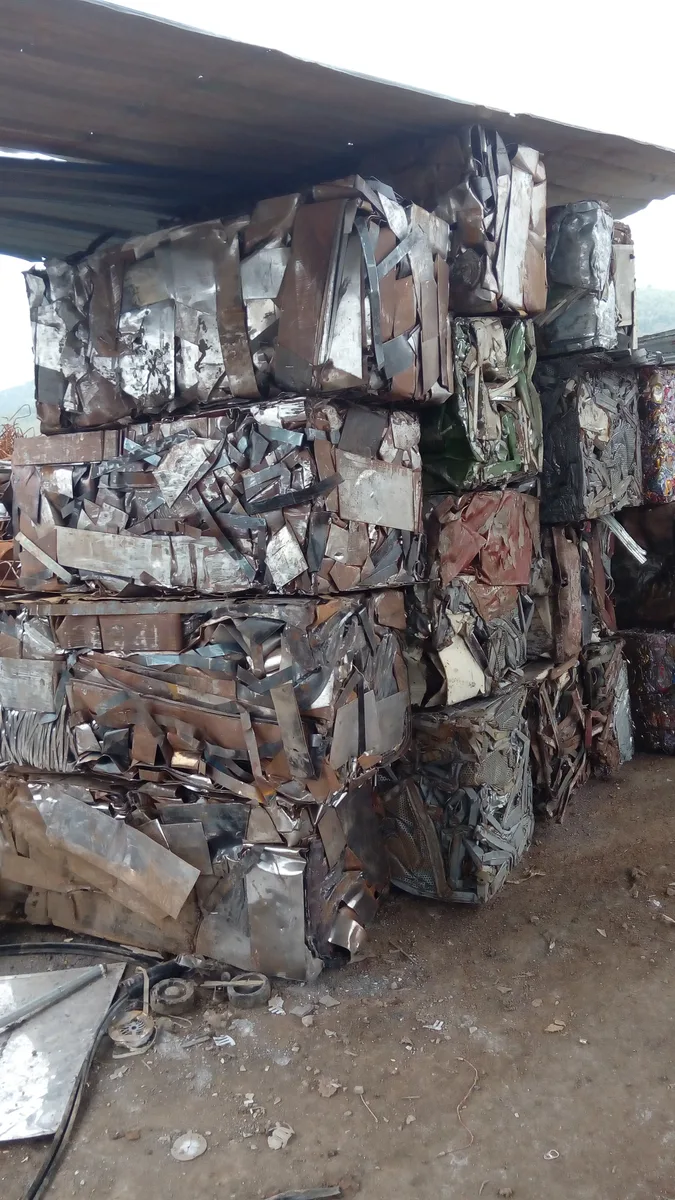
What is light-gauge ferrous scrap?
light-gauge ferrous scrap includes thin steel sheet, light iron offcuts and mixed low-density ferrous scrap. The value and processing route depend on grade, physical form, contamination and the receiving recycler or smelter specification.
How should light-gauge ferrous scrap be prepared?
Remove non-ferrous metal, sealed containers, hazardous residue and oversized rigid pieces before loading.
Baling or briquetting changes the package form; it does not purify mixed scrap. Confirm the accepted grade and contamination limits with the downstream buyer.
Recommended processing route
Hydraulic baling is commonly used to turn bulky light scrap into denser units for storage and transport.
The safest and most economical route can include sorting, draining, cutting, shearing, screening, baling or briquetting. The sequence must match the actual material rather than a generic material name.
How to select suitable equipment
Provide sheet thickness, maximum size, spring-back, bulk density and target bale specification. Also confirm loading method, site voltage, available floor space, shift pattern and the required discharge arrangement.
Capacity, density and package dimensions are project-specific and should be verified through technical review or a representative material test.
Frequently asked questions
Why does light-gauge ferrous scrap favor a material-specific baler review?
Thin sheet and light iron offcuts can occupy a large volume relative to their mass, making chamber filling and loading method important. Maximum piece dimensions, spring-back and loose density should be reviewed together. A higher force rating alone does not show that the machine can accept or process the intended scrap efficiently.
What should be removed from light ferrous scrap before loading?
Exclude sealed containers and hazardous residues, and separate non-ferrous metals and oversized rigid pieces according to the approved feed specification. Identify excessive moisture and non-metal contamination against the buyer's requirements. Baling does not sort mixed scrap or make an unknown container safe simply because it is small enough to enter the chamber.
How is light-scrap baling capacity confirmed?
Weigh accepted bales during a sustained trial using the actual sheet thicknesses, piece sizes and loading equipment. Include replenishment and discharge, and record interruptions from bridging or oversized pieces. The agreed capacity should describe that feed specification rather than borrowing a rate achieved with denser or more uniform ferrous material.
What maintenance checks matter when light scrap starts protruding from bales?
Review the incoming piece size and loading pattern against the approved trial, then inspect chamber and discharge condition through the supplier's safe maintenance procedure. Protrusions or changing release behavior should not be corrected by reaching into the operating machine. Record the symptom so preparation and machine condition can be assessed together.