
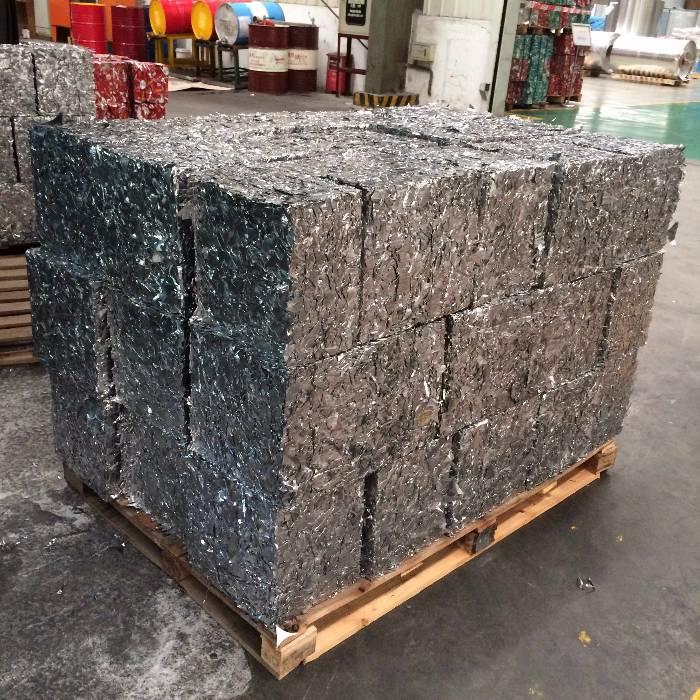
Mixed aluminum scrap: convert volume into value
Mixed aluminum scrap can include cast pieces, extrusion offcuts, shredded metal, sheet remnants and rejected components. In loose form it consumes valuable floor space, traps foreign material and creates inconsistent loads. Sorting and controlled compaction produce cleaner, easier-to-handle recycling packages.
Sort contamination before it costs you
Remove steel, copper wire, rubber, plastic, insulation, dirt, oil and sealed or hazardous components. Keep known 5xxx, 6xxx, cast and sheet grades separate when the buyer requires them. A cleaner, traceable batch can reduce disputes and makes the material easier to evaluate.
Prepare shredded and irregular aluminum for stable feeding
Shredded aluminum and irregular pieces can bridge, scatter or fill a chamber unevenly. Confirm the maximum dimensions, sharp edges, bulk density and loose flow behavior. Oversized parts may need cutting, while very fine or dusty material may require a different collection or compaction route.
Hydraulic baling creates shipment-ready packages
A hydraulic metal baler compresses prepared mixed aluminum into dense units that are easier to count, weigh, stack and load. Chamber size, compression force, feeding method and bale discharge must match the actual scrap mix and required throughput.
Protect grade value through storage and traceability
Label compacted bales by material source, alloy group and production date when traceability is required. Keep bales dry, separate incompatible grades and plan safe forklift or crane access. Consistent packages improve inventory visibility and outbound loading efficiency.
Mixed aluminum scrap baling FAQ
Can castings, extrusions and sheet share the same aluminum baler?
A baler may be assessed for several aluminum forms, but each must fall within its approved dimensions and material limits. Thick castings behave differently from light sheet or profiles. Define the expected mix and worst-case pieces during selection, and keep alloys separate whenever the buyer does not accept a mixed grade.
Does baling make mixed aluminum suitable for remelting?
Baling changes the package, not the alloy mixture or contamination. Steel inserts, rubber, plastic, coatings and residual fluids still require assessment and separation where specified. The receiving plant must accept the prepared composition and package; a compact bale is not evidence that mixed aluminum is ready for a particular melting process.
How should capacity be quoted for a changing aluminum mix?
Define representative feed categories and their expected proportions before testing. Compare sustained output for the normal mix and the most difficult approved batch, recording loading and discharge delays. A single capacity figure should state the tested composition, rather than implying that cast housings, profiles and light sheet produce identical results.
When is a separate route needed for aluminum fines or chips?
Machining chips, granules and dusty shred should be evaluated separately from bulky scrap. They may need metering, fluid management or a material-specific hazard review rather than the same baling arrangement. Fine aluminum powder must not enter a standard scrap process without specialist assessment and equipment approved for the identified hazards.
How should maintenance respond to changes in mixed aluminum feed?
Record new casting sizes, hard attachments, fines and unusual residue before changing the accepted feed. Review chamber, discharge and any cutting-component inspections with the supplier when the mix changes materially. The maintenance plan should follow the approved material and actual condition, rather than assuming every aluminum stream imposes the same duty.