
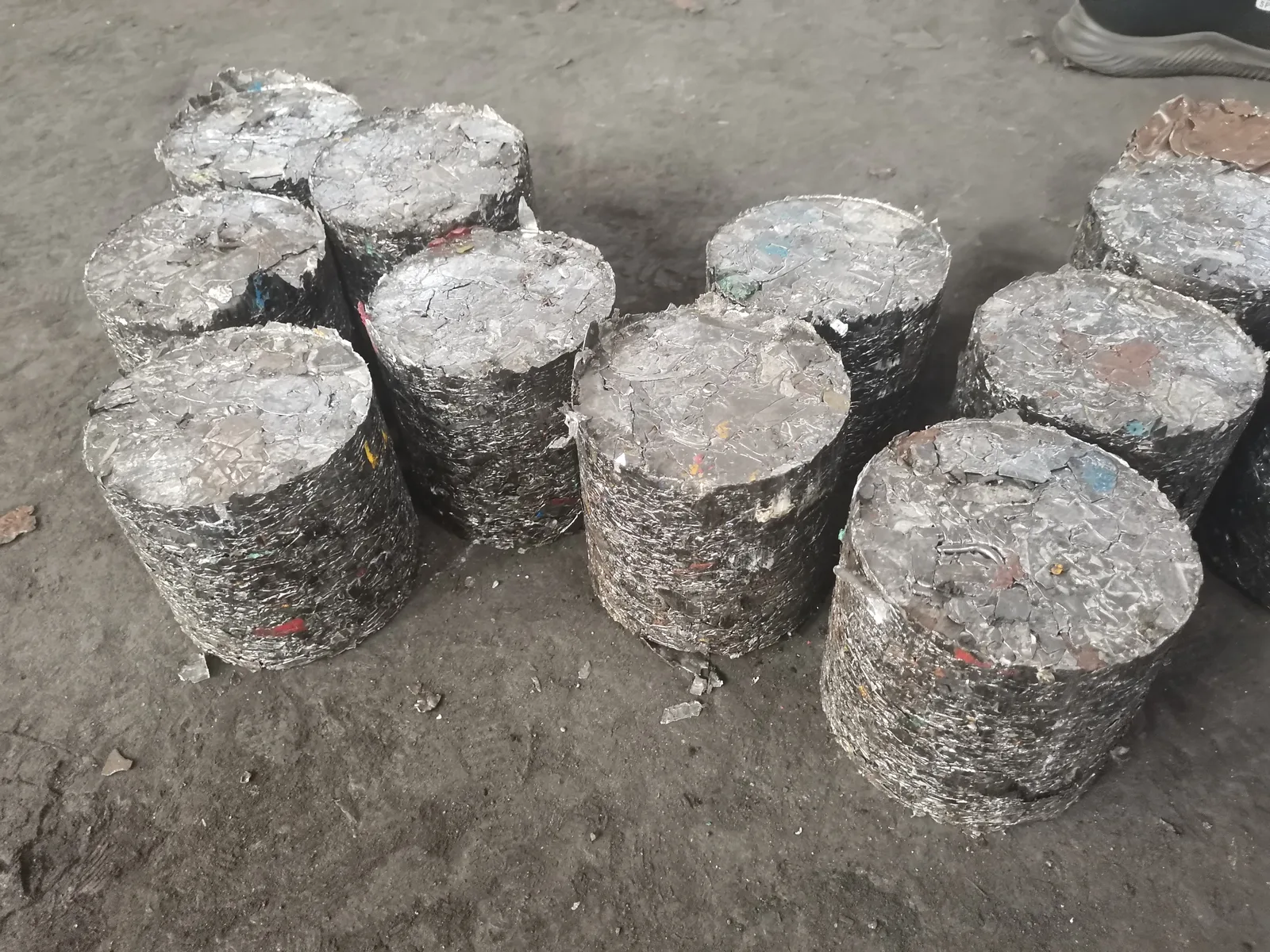
What is shredded aluminum can scrap?
shredded aluminum can scrap includes shredded UBC fragments and prepared can-processing output. The value and processing route depend on grade, physical form, contamination and the receiving recycler or smelter specification.
How should shredded aluminum can scrap be prepared?
Remove steel, plastic, glass, fines and moisture, and verify that coatings and contamination meet buyer requirements.
Baling or briquetting changes the package form; it does not purify mixed scrap. Confirm the accepted grade and contamination limits with the downstream buyer.
Recommended processing route
Prepared can shred can be compacted when particle size, flowability and package stability have been confirmed.
The safest and most economical route can include sorting, draining, cutting, shearing, screening, baling or briquetting. The sequence must match the actual material rather than a generic material name.
How to select suitable equipment
Provide particle size, contamination, bulk density, moisture and target package form. Also confirm loading method, site voltage, available floor space, shift pattern and the required discharge arrangement.
Capacity, density and package dimensions are project-specific and should be verified through technical review or a representative material test.
Frequently asked questions
How does shredded can scrap differ from whole cans for baling?
Can shred contains smaller coated fragments with different flow, containment and fines behavior from whole cans. Review particle-size distribution and loose density before using an existing can-baling configuration. A trial should confirm reliable filling and package stability, while the hazards of any fine aluminum fraction require separate assessment.
Does shredding remove coatings or collection contamination from cans?
No. Coatings may remain on fragments, while steel, plastic, glass and dirt require appropriate separation. The buyer must accept the prepared composition and moisture condition. Keep the shred source traceable, and do not describe a compacted package as clean aluminum solely because the original feed consisted mainly of beverage cans.
What should a shredded-can capacity test include?
Use the actual fragment-size range, moisture and approved contamination level from the upstream process. Measure accepted package mass through complete feed and discharge cycles, recording loose fragments and unstable units. State the tested feed condition because output with uniformly prepared shred does not establish performance for a fines-rich or poorly separated batch.
Which maintenance areas matter for shredded aluminum cans?
Include feed containment, chamber and discharge interfaces, and any approved fines-control equipment in the inspection plan. Residual coatings or foreign material should be recorded when buildup changes feeding. Cleanup must follow the assessed aluminum-dust hazards, and servicing requires the specified shutdown and isolation rather than reaching into an operating transfer point.