
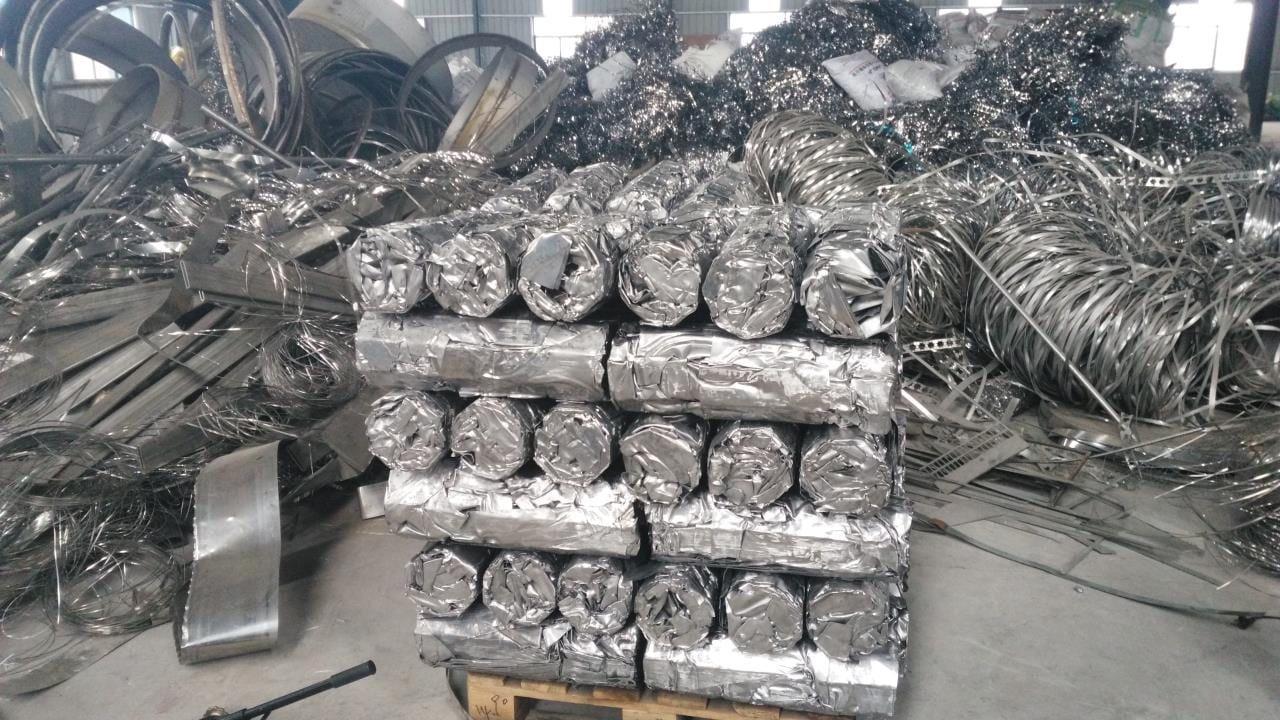
What is stainless steel scrap?
Stainless steel scrap includes sheet offcuts, trim strips, rejected components, punched skeletons, coils and fabrication remnants. Loose material is bulky, springy and difficult to stack, while mixed grades or attached contaminants can reduce recycling value.
Separate grades and remove contamination
Keep known stainless grades such as 304 and 316 separate when required by the recycler or remelting route. Remove carbon-steel attachments, rubber, plastic, insulation, oil and excessive moisture. Grade identification should rely on source records or suitable testing—not appearance alone.
Prepare long strips and springy scrap for stable feeding
Long, sharp or elastic strips can bridge in the feed area and may need cutting, controlled folding or staged loading. Maximum piece dimensions, chamber opening and loading method should be reviewed together before a hydraulic metal baler is selected.
Hydraulic baling of stainless steel scrap
A stainless steel scrap baling machine uses controlled hydraulic compression to form prepared sheet and strip scrap into transportable packages. Chamber size, compression force, bale discharge, motor power and cycle arrangement must be matched to the real material, required throughput and target bale dimensions.
Storage, handling and recycling logistics
Compaction can reduce the space occupied by loose stainless scrap and create units that are easier to count, weigh, label and transport. Store finished bales on a stable surface, keep grades separated and plan forklift or crane access around the bale dimensions and weight.
Stainless steel scrap baling FAQ
Can different stainless steel grades share one bale?
Only when the receiving buyer explicitly accepts that mixed grade. Keep known grades and production sources separate when alloy control matters, and retain identification after baling. Compression does not change alloy chemistry or remove carbon-steel attachments, so the sorting decision must be made before the material enters the chamber.
Why does springy stainless strip need a loading trial?
Long strips and punched skeletons can bridge or spring back differently from flat offcuts. The trial should confirm full containment, the approved preparation method and stable bale release. Maximum strip length, thickness and shape are as important as nominal press force when matching chamber dimensions and the feeding arrangement.
How can stainless scrap baling capacity be confirmed?
Use the actual stainless grade and mix of sheet, strip and components, with the planned loading method. Measure accepted bale mass across complete cycles and note preparation, loading and removal delays. A result obtained with light carbon-steel scrap is not a confirmed capacity for springy stainless production scrap.
Will a stronger press compensate for dirty stainless scrap?
Additional force does not remove rubber, plastic, insulation, oil or mixed metals. Contamination must be assessed and controlled upstream to meet the buyer's specification. Equipment selection then addresses the prepared scrap's dimensions and behavior; it should not use compression as a substitute for grade identification or material preparation.
Which maintenance areas deserve attention with stainless offcuts?
Include chamber wear surfaces, any fitted cutting edges, discharge guides and guarding in the supplier's inspection plan. Record sharp protrusions, changing bale release or longer cycles so the material and machine can be reviewed together. Required service intervals depend on the approved scrap and duty; maintenance access requires safe isolation.