
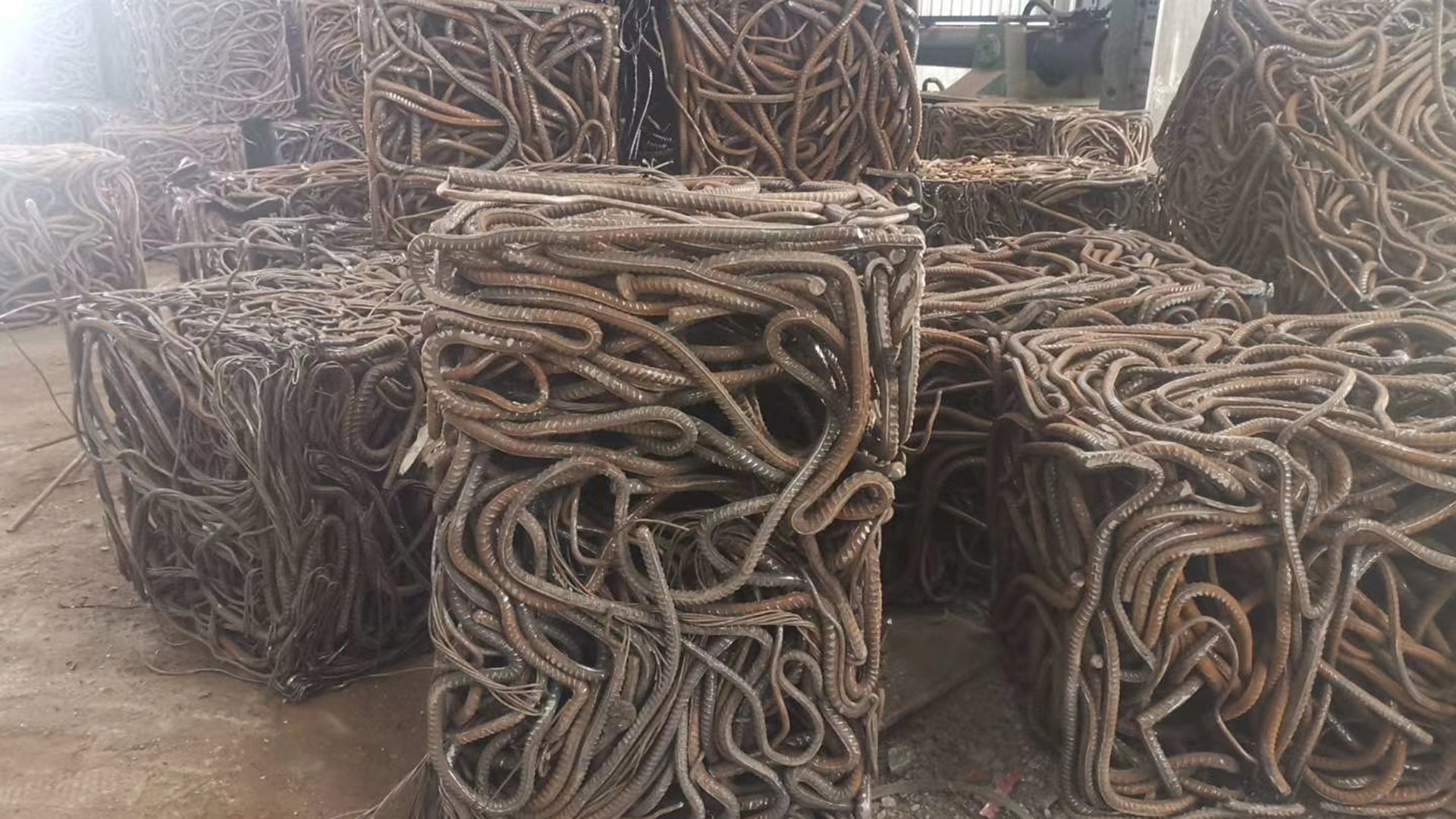
What is waste rebar and steel wire scrap?
Waste rebar and steel wire scrap includes reinforcing-bar offcuts, rejected bent bars, demolition steel, loose wire and fabrication remnants. These long, springy or irregular materials occupy substantial space and can be difficult to store, load and transport safely.
Sort and size the material before baling
Separate rebar and steel wire from concrete, soil, wood, plastic, non-ferrous metal and sealed components. Long bars may require shearing or cutting before loading. Short offcuts can usually be staged more consistently, but sharp ends and tangled pieces still require controlled handling.
Hydraulic baling for waste rebar and steel wire
A hydraulic metal baler compresses prepared rebar and wire scrap into dense packages for handling and transport. Chamber opening, compression force, loading method, bale discharge and wear protection should be selected from the real material dimensions, required throughput and target bale size.
Benefits for storage and recycling logistics
Compaction can reduce the space occupied by loose reinforcing steel and create units that are easier to count, weigh, stack and load. Finished bales should be placed on stable ground with safe forklift or crane access, and operators should follow the machine supplier’s loading and maintenance instructions.
How to select a rebar scrap baling machine
Equipment selection should be based on representative material rather than a generic tonnage label alone. Jiangyin Deshang reviews the maximum bar length and diameter, loose bulk density, hourly or daily volume, loading method, target bale dimensions, site voltage and available floor space before recommending a hydraulic baler configuration.
Waste rebar and steel wire baling FAQ
Can long rebar and tangled steel wire be loaded directly?
Only when the material fits fully within the approved chamber and loading envelope. Maximum bar diameter, length, bent shape and wire spring-back determine whether shearing or other preparation is needed. A baler should not be selected on average piece size when occasional oversized bars can interrupt the complete loading sequence.
Is rusty demolition rebar acceptable for baling?
Surface rust alone does not define suitability. Concrete, soil, wood, plastics, non-ferrous attachments and unknown components must be assessed against the machine and recycler requirements. Keep the preparation specification explicit, because baling does not remove embedded debris or convert a contaminated demolition batch into a clean steel grade.
How should rebar and wire baling capacity be tested?
Use the actual proportions of rigid bar offcuts and springy wire, with the proposed cutting and loading arrangements. Measure accepted bale mass over complete operating cycles and record preparation delays. A result from short clean offcuts should not be applied unchanged to long, tangled or heavily contaminated demolition steel.
Should rebar be sheared or baled for the receiving buyer?
Start with the buyer's required cut length or package and the site's handling method. Some prepared bar scrap may be shipped after shearing, while loose wire may benefit from baling. Review both routes rather than adding compression automatically; any shear must be rated for the actual section and material strength.
What maintenance checks are important with rebar scrap?
Include chamber wear protection, any shear blades, guides and the discharge path in the machine-specific inspection plan. Retained concrete or unexpected heavy sections should trigger a material-preparation review. Inspect abnormal loading or release behavior under the supplier's safe isolation procedure; do not use repeated overload cycles as a way to clear difficult pieces.