
Metal Shears
HS Vertical Gantry Shear Machine
Specify a vertical cutting station around your steel scrap
Evaluate the HS hydraulic gantry shear for steel scrap preparation. Explore the vertical cutting head, application requirements and equipment scope.
HSVertical gantry cutting headHydraulic scrap-metal shear
Suitable materials
PRODUCT VIDEO
HS Vertical Gantry Shear Machine video
01 / PRODUCT DESCRIPTION
Vertical Gantry Cutting for Scrap Preparation
A straight cutting stroke for suitable steel scrap.
HS Vertical Gantry Shear: Cutting Design and Project Selection
Understand the cutting head, assess your material and define a complete gantry-shear enquiry.
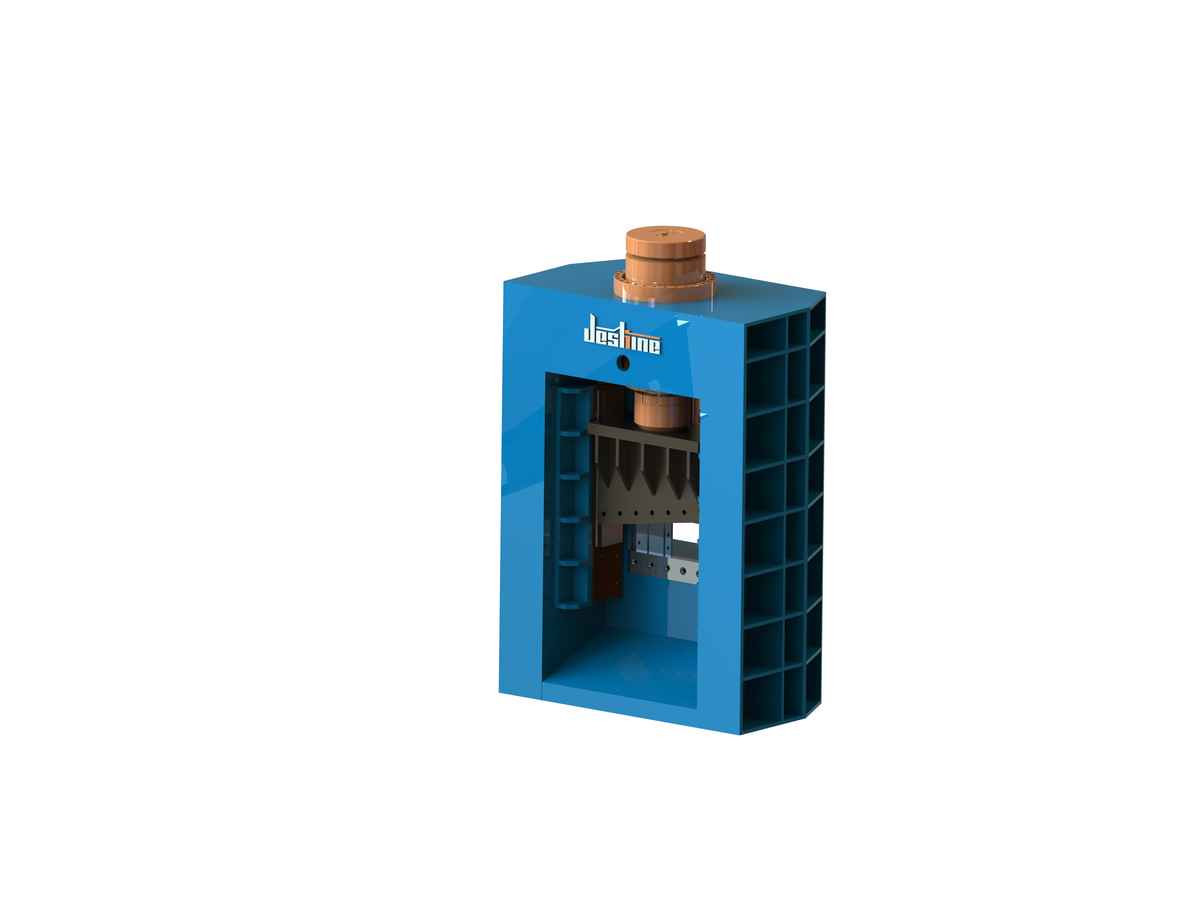
The HS Vertical Gantry Shear Machine is a hydraulic scrap-metal cutter with a vertically arranged cutting head inside a gantry frame. Its role is to reduce suitable metal scrap to shorter pieces for handling, sorting and downstream recycling. Unlike an alligator shear with a pivoting jaw, the illustrated HS head uses a vertically guided cutting assembly.
For recyclers evaluating a cutting station, the key question is how the shear fits the incoming material and the required output size. Assess the metal grade, largest section, loading method and cut-piece collection together rather than choosing a machine by a force rating alone.
The product renderings show the gantry cutting head from four angles. A complete installation must also define the feeding arrangement, hydraulic power system, controls and any separate compression equipment.
02 / MATERIALS & OUTPUT
Applications: Start with the Scrap Section
Assess material shape as well as metal grade.
Use the HS gantry-shear enquiry to evaluate steel scrap preparation in recycling yards and metalworking scrap streams. Relevant material forms include:
- Plate offcuts: specify the plate thickness and the width engaged in each cut.
- Pipe and tube: provide the outer dimensions, wall thickness and whether pieces arrive individually or mixed together.
- Rebar and bar stock: identify the grade, diameter or section dimensions, and the proposed feeding arrangement.
- Mixed steel offcuts: send photographs and identify the largest and most demanding pieces rather than only an average size.
Material suitability must be checked for the selected configuration. Steel grade, section geometry and the quantity presented to the blade affect the cutting requirement. If your stream includes non-ferrous alloys or unusual sections, include them in the application review instead of assuming a steel-scrap specification also covers them.
03 / STRUCTURE & FEATURES
Equipment features.
Gantry Head Design and Installation Scope
Review the cutting structure and the equipment around it.
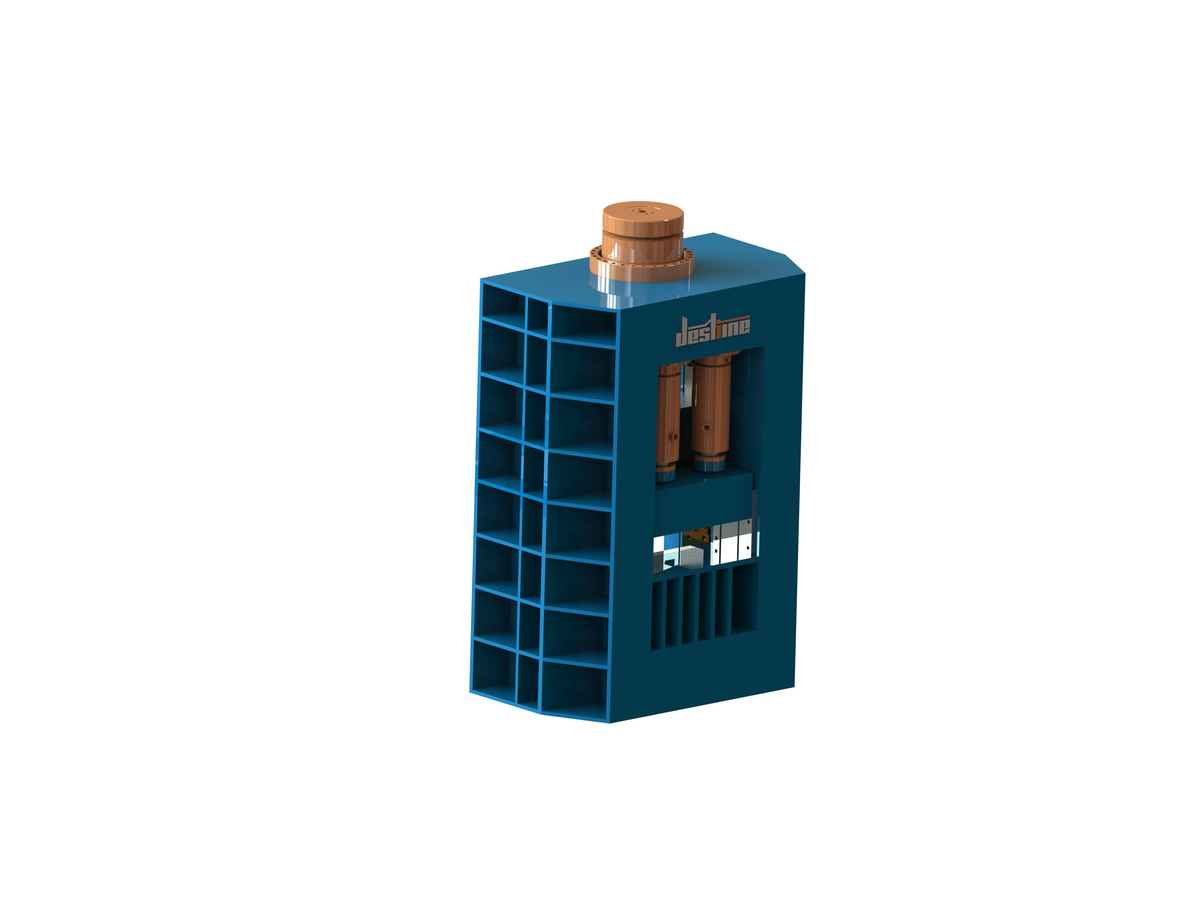
Hydraulic actuation. The renderings show a main cylinder above the head and additional cylinders on the opposite side. Confirm the function and control sequence of each assembly in the configuration drawing.
Ribbed frame construction. External reinforcement ribs are visible on the side faces of the gantry. Review the final frame dimensions and installation loads during site planning.
Visible blade assembly. The cutting-side views expose the blade mounting area, helping define access requirements for inspection and blade servicing.
A shorter scrap length can make subsequent handling and processing more manageable. The practical result depends on the incoming scrap, target piece size and handling equipment; no fixed output rate or volume-reduction percentage is assumed.
The illustrations depict the shear head, not a fully equipped production line. Feeding tables, conveyors, baling chambers, guarding and power-unit arrangements should be specified in the agreed supply scope.
04 / WORKING PRINCIPLE
Specify the Cut, Then Select the Configuration
Turn material information into a complete machine enquiry.
Document the cutting envelope.
List the toughest material grade and maximum plate, bar or tube dimensions. Include representative photographs.
Define the required output.
State the desired piece length and the requirements of the next handling or recycling stage.
Describe the working pattern.
Provide daily tonnage, operating hours, batch sizes and the proportion of oversized pieces. These are selection inputs, not a promised production rate.
Map the installation.
Show how scrap arrives at the blade and where cut pieces go. Include lifting access, service clearances, power supply and available floor space.
Separate shearing from baling.
If compacted bales are also required, specify their dimensions and intended use so the correct compression and discharge equipment can be considered.
Request a configuration-specific technical proposal covering cutting force, blade length, opening, stroke, installed power, dimensions and machine weight. Ask for the quoted performance basis to identify the material and feeding conditions used.
05 / TECHNICAL REFERENCE
HS Gantry Shear Specifications
Equipment format and information to confirm for your project.
| Item | HS gantry shear |
|---|---|
| Machine type | Vertical hydraulic gantry shear |
| Primary process | Cutting suitable metal scrap into shorter pieces |
| Cutting arrangement shown | Vertically arranged cutting assembly within a gantry frame |
| Frame detail shown | External side reinforcement ribs |
| Product views | Four renderings of the gantry cutting head |
| Baling equipment | Define separately if compacted bale output is required |
Cutting force, blade length, opening dimensions, cycle rate, motor power, machine weight and output capacity are configuration-dependent. Obtain the technical sheet for the proposed HS machine and confirm its suitability for your scrap before ordering.
07 / QUESTIONS & SUPPORT
Product questions,
answered.
Questions About Vertical Gantry Shears
Practical answers for a cutting-station enquiry.
Does the HS gantry shear also produce compacted bales?
The documented HS product is a hydraulic cutting head with a vertically guided blade assembly inside a gantry frame. Its purpose is scrap size reduction. The illustrations do not establish a baling chamber or complete production line. If compacted bales are required, define that separately so compression, feeding and discharge equipment can be assessed.
Which scrap dimensions are essential for an HS cutting proposal?
For plate, give thickness and the width engaged in a cut. For pipe or tube, provide outside dimensions and wall thickness; for bar or rebar, give grade and section size. Include the toughest pieces and the quantity presented together. An average scrap size cannot establish the most demanding cutting requirement for the selected gantry head.
Can HS steel-scrap suitability be extended to other alloys?
Not automatically. Steel-scrap preparation is the principal application described, and even steel grades and section geometries need configuration-specific checking. Include non-ferrous alloys, unusual sections and mixed bundles in the application review. The vertically guided cutting arrangement identifies the mechanism, not a universal approval for every metal that fits the opening.
How should HS output be verified when only the cutting head is shown?
Define the full proposed loading and cut-piece collection arrangement before testing capacity. Use representative sections and the required finished lengths, recording processed mass over elapsed operating time. Cutting frequency alone excludes material presentation and removal. The performance basis should identify the head configuration, supporting equipment and feed conditions used in the assessment.
What installation scope should accompany an HS quotation?
Confirm the feeding arrangement, hydraulic power system, controls, guarding and cut-scrap collection as well as the gantry head. Review frame dimensions, installation loads, lifting access and maintenance clearance in the final drawings. Feeding tables, conveyors and separate compression equipment should be listed explicitly rather than assumed to be included with the illustrated shear head.
What maintenance access is important around the HS vertical cutting head?
Plan access for blade inspection and servicing, the guided cutting assembly and hydraulic components according to the manufacturer's drawing and manual. The maintenance plan should also cover guards, interlocks and controls for the complete installation. Qualified personnel must use lockout and stored-energy procedures before protected access; the gantry opening is not a safe access route during operation.
What should an HS sample test prove before we accept the configuration?
Agree material grades, largest sections, target cut lengths and how scrap reaches the blade. Include normal feed and collection conditions, with the selected hydraulic and control configuration documented. Review completed cuts and elapsed production, not only a successful cut of one piece. Record any limits so the result is not extended to untested alloys or bundles.
Equipment Recommendation
Tell Us About Your Material and Capacity
Share the key operating conditions below so our team can compare suitable equipment and prepare a practical configuration.
✓ Material & Capacity Review✓ Configuration Recommendation✓ Pricing & Lead-Time Inquiry