
Metal Shears
WS Horizontal Box Shear Machine
Hydraulic box-type shearing for bulky metal scrap
Explore the WS horizontal box shear for scrap metal recycling. Compare hydraulic cutting specifications and request a configuration matched to your material.
WSHorizontal hydraulic box shearConfiguration-specific cutting capacity
Suitable materials
PRODUCT VIDEO
WS Horizontal Box Shear Machine video
01 / PRODUCT DESCRIPTION
A box-type cutting solution for bulky scrap
A dedicated cutting stage for bulky recyclable scrap.
WS Horizontal Box Shear: Applications and Technical Selection
Assess your scrap stream, compare configuration ranges and plan a practical cutting installation.
Turn bulky metal scrap into manageable pieces with a hydraulic box shear built around your material and processing requirements. The WS series combines a top-loading hopper, reinforced box-type body and horizontal shearing layout for scrap recycling applications.
Long pipe sections, plate offcuts and irregular metal scrap can be difficult to handle and store. A horizontal box shear reduces these materials to smaller pieces for onward recycling. Its hopper and box-type processing layout give scrap yards a dedicated cutting stage between incoming material handling and downstream transport or processing.
02 / MATERIALS & OUTPUT
Applications for Scrap Metal Size Reduction
Select around material grade, shape and dimensions.
- Scrap recycling yards: Size-reduce mixed steel scrap before storage and onward transport, with the configuration selected for the actual incoming material.
- Metal fabrication offcuts: Process suitable plate, pipe and tube offcuts from manufacturing into more manageable lengths.
- Rebar and recovered steel: Prepare suitable rebar and recovered steel sections for recycling after checking material strength, thickness and feed dimensions.
Material suitability must be confirmed for the selected configuration. Identify the toughest grade and largest section in the incoming scrap, not only the average piece.
03 / STRUCTURE & FEATURES
Equipment features.
Box Shear Design and Configuration
Plan the loading area, processing body and hydraulic system.
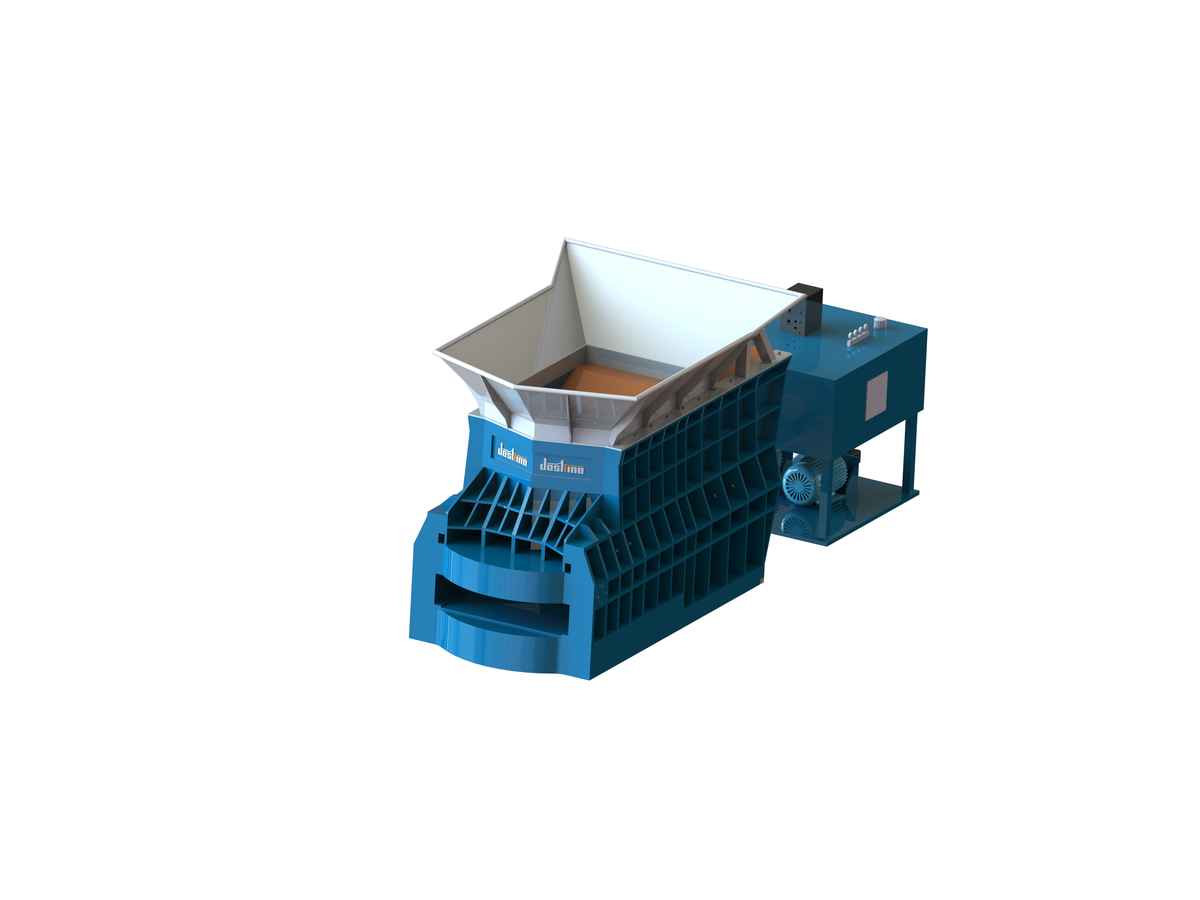
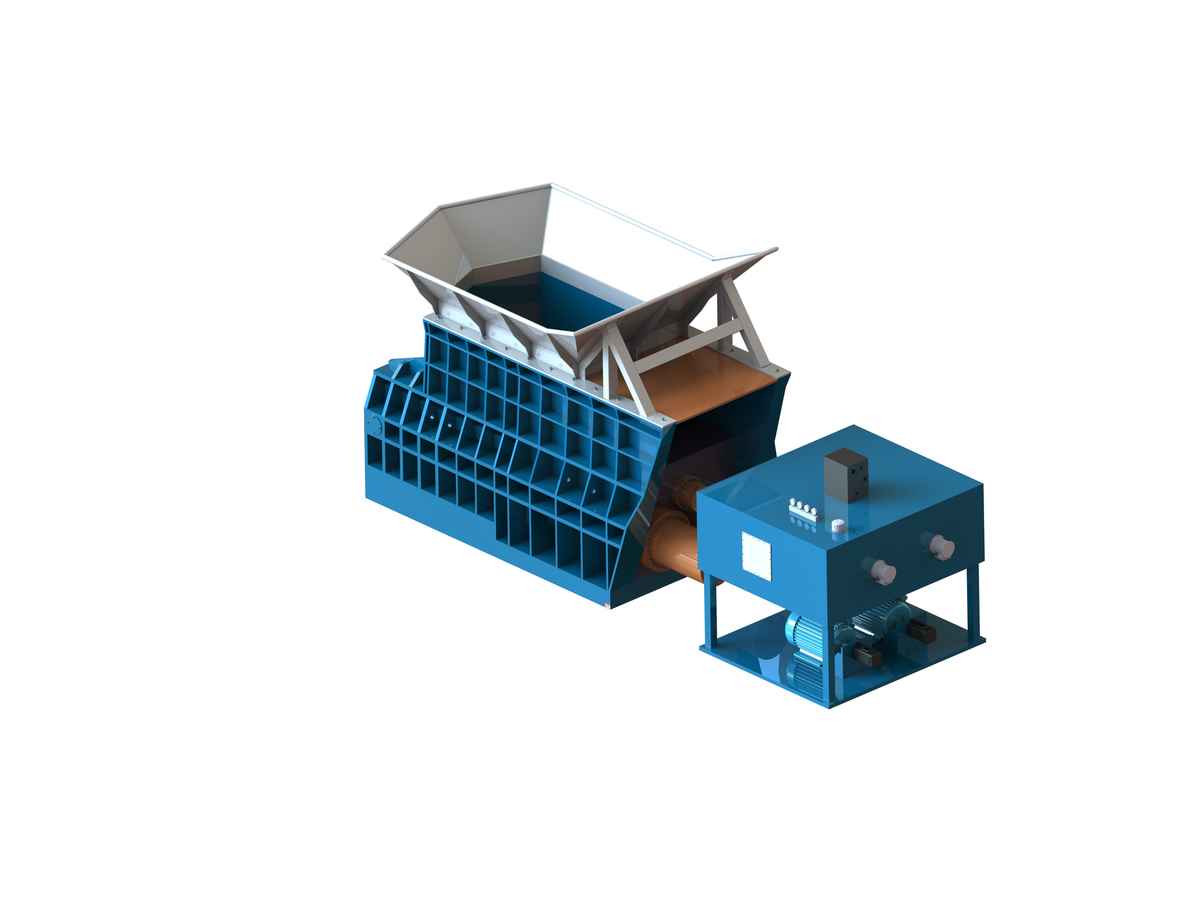
Reinforced box-type structure: The ribbed body supports the horizontal processing layout. The supplied renderings show the hopper, machine frame and hydraulic power unit from four angles.
Hydraulic cutting power: Hydraulic drive applies the cutting force required for scrap size reduction. Match the configuration to the toughest material in your feedstock, not only average throughput.
Control configuration: Discuss automatic PLC, manual and remote-control requirements when specifying the machine. Confirm the supplied controls and operating procedures for the selected WS configuration.
04 / WORKING PRINCIPLE
Specify the machine around your scrap stream
Define material and site requirements before selecting a machine.
A useful specification begins with the material you need to cut. Share representative scrap photos and the maximum material size, thickness and grade, then define your hourly processing target and desired cut size. Confirm the loading arrangement, available footprint, access for maintenance and site electrical supply before selecting the final configuration.
05 / TECHNICAL REFERENCE
WS Series Technical Specifications
Configuration ranges rather than one universal machine rating.
These source specification ranges depend on the selected WS configuration and are not the rating of a single machine. Processing output is indicative, not guaranteed, and varies with material grade, thickness, shape and feeding conditions. Confirm all ratings, material limits, blade dimensions and power requirements in the final technical specification.
| Parameter | WS configuration range or requirement |
|---|---|
| Cutting force | 3,150–10,000 kN |
| Press force | 1,250–3,150 kN |
| Working pressure | 21 MPa |
| Cutting frequency | 3–4 cuts/min |
| Indicative processing output | 3–15 t/h; material- and feed-dependent |
07 / QUESTIONS & SUPPORT
Product questions,
answered.
Questions About Horizontal Box Shears
Answers for a material-specific box shear enquiry.
What distinguishes the WS box shear from an alligator shear?
The WS uses a top-loading hopper, reinforced box-type body and horizontal shearing arrangement rather than a pivoting alligator jaw. It is assessed as a cutting stage for suitable bulky and irregular scrap. The choice depends on the incoming sections, loading equipment and required cut output, not only a comparison of nominal cutting-force ratings.
Which bulky steel scrap details matter most for WS selection?
Provide the toughest grade, largest dimensions and thickness for plate, pipe, tube, rebar and recovered sections, together with representative mixed-load photographs. Identify how much oversized material occurs in normal production. A piece fitting into the top hopper does not establish that the selected cutting configuration can process it or the proposed combination of pieces.
Is the WS indicative output range guaranteed for mixed yard scrap?
No. The published 3–15 t/h is indicative and depends on configuration, grade, thickness, shape and feeding conditions. Confirm capacity with the expected scrap mix and actual loading method. Measure accepted cut output over elapsed production time, including normal handling and collection, rather than treating the series maximum as a commitment for every load.
Does the WS press-force specification mean it is also a baler?
The WS is described as a horizontal box shear for size reduction. A press-force entry in its specification does not establish finished-bale production or a bale-discharge system. If you require compacted bales as well as cut scrap, state both outputs and ask for the relevant equipment scope instead of assuming the cutting machine supplies both.
What should be planned around the WS top-loading hopper?
Confirm loading height, equipment reach and the clear area needed to handle the longest approved scrap, then define cut-piece collection and service access. Review the complete layout rather than only the box body's footprint. Automatic, manual or remote-control requirements should be confirmed in the selected specification together with guarding and the approved handling workflow.
What maintenance areas require attention on a WS box shear?
Include the hopper and processing area, blades and mountings, specified wear surfaces, hydraulic power unit and protective controls in the machine-specific plan. Confirm safe service access around the box body before installation. Qualified personnel must follow the manufacturer's lockout and stored-energy procedures before inspection inside protected areas, blade servicing or blockage clearing.
What should a WS acceptance run demonstrate with mixed scrap?
Agree the material mix, maximum approved sections, target cut size and loading method before the test. Include demanding pieces as well as typical scrap, documenting processed mass, elapsed time, collection and interruptions. Check the finished material against downstream requirements. The resulting capacity basis should name the tested configuration and feed conditions, not simply quote the series range.
Equipment Recommendation
Tell Us About Your Material and Capacity
Share the key operating conditions below so our team can compare suitable equipment and prepare a practical configuration.
✓ Material & Capacity Review✓ Configuration Recommendation✓ Pricing & Lead-Time Inquiry