
SolutionMetal Chip Briquetting Solution
DSS Lifting, Tipping & Large-Hopper Briquetting Solution
Connect chip-cart unloading, buffer storage, screw feeding and a DSS single-output briquetting press in one coordinated metal-chip handling arrangement.
Cart lifting and tipping → large buffer hopper → screw feeding → DSS briquetting → collection
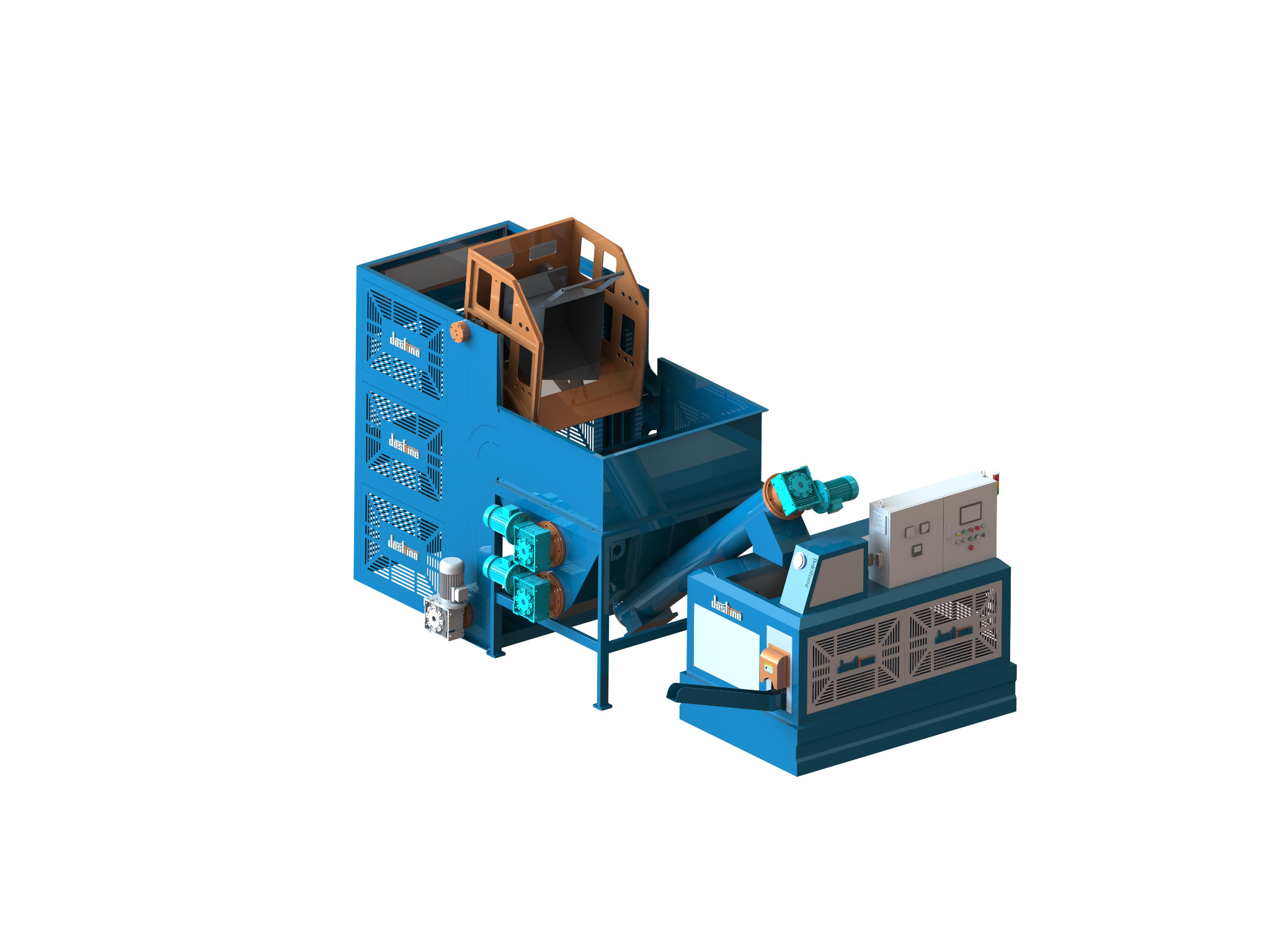
System overview & equipment views
This DSS solution links a chip-cart lifting and tipping unit to a large receiving hopper, an inclined screw feeder and a single-output metal-chip briquetting press. It is intended for workshops that collect machining chips in carts and want a coordinated route from unloading to compact briquettes. The hopper provides a buffer between batch delivery and controlled feeding to the press.
The DSS metal chip briquetting press supplies the hydraulic compaction stage; the cart lift, hopper and screw feeder handle loading and metering.
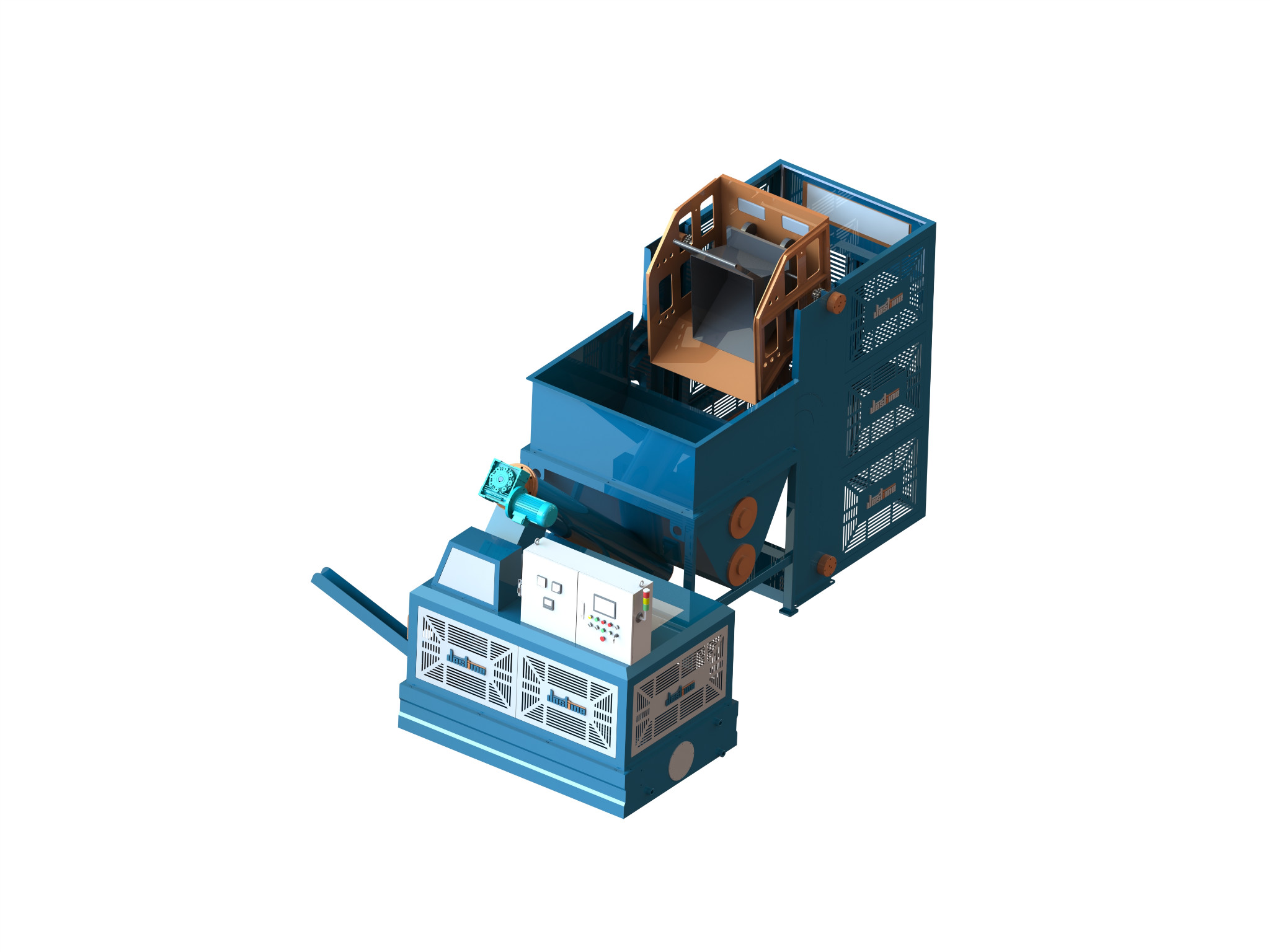
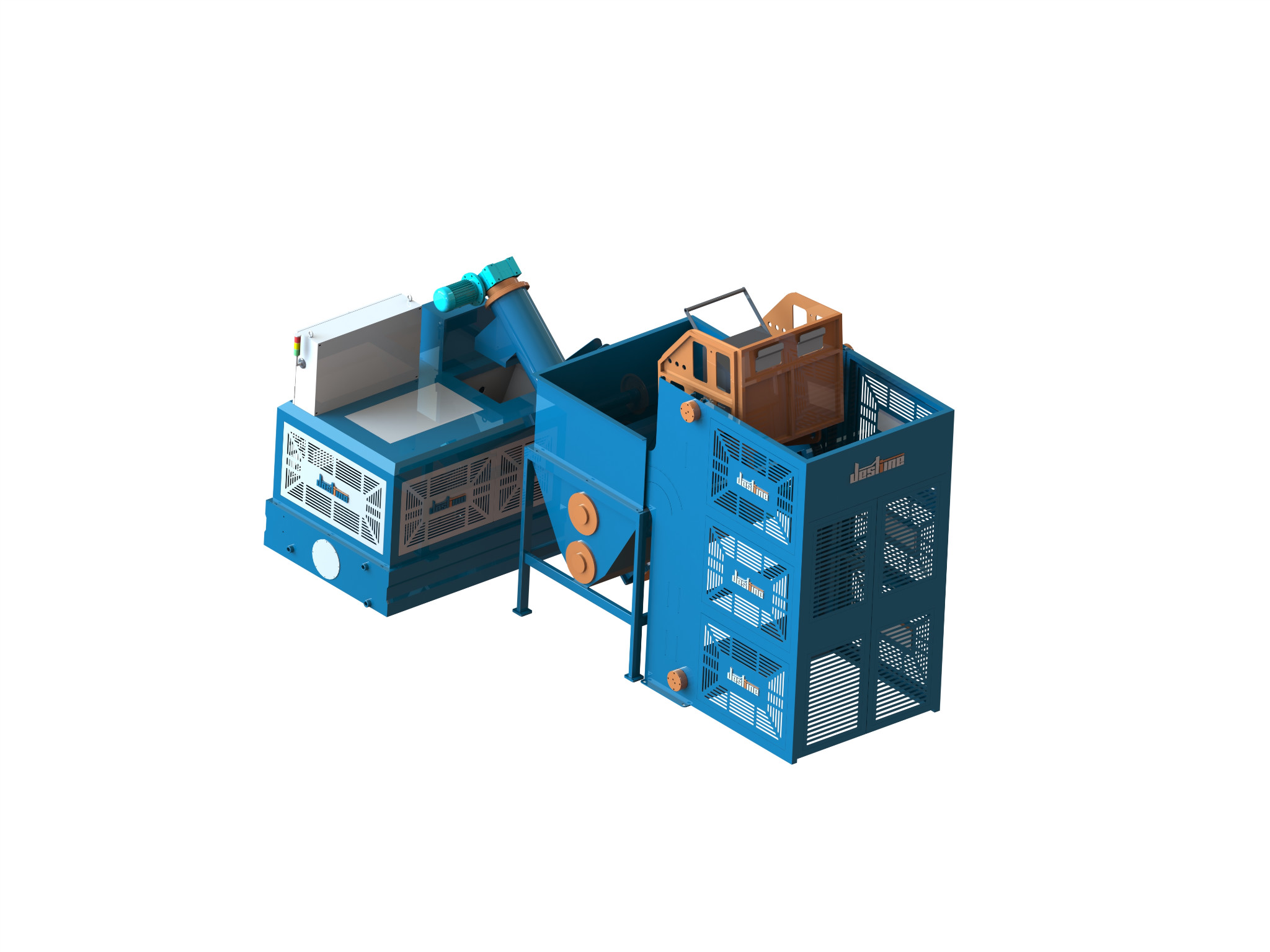
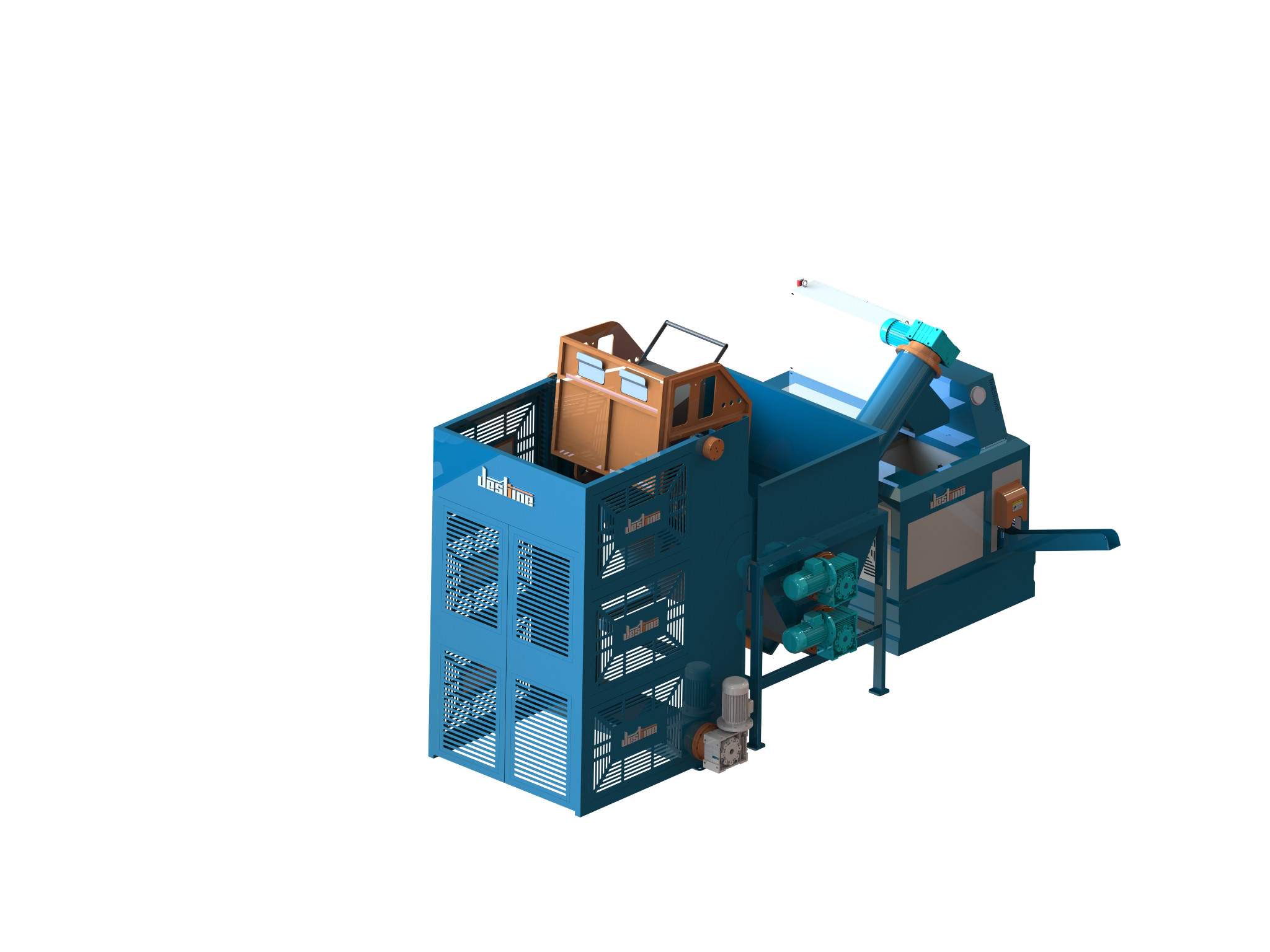
The four supplied equipment views show the same arrangement from different sides, including raised and lowered cart positions. They illustrate the relationship between the lift enclosure, hopper, feeder and briquetting unit; they are not photographs of a verified customer installation.
Suitable chips & project requirements
The referenced DerShan solution addresses suitable short metal chips, including aluminium, copper and iron chips. Assess each feedstock separately: alloy, chip length, loose bulk density, residual cutting fluid and contamination all affect handling. Long tangled swarf may need preparation before it can feed reliably; suitability should be checked with representative material.
Before selecting the line, provide daily chip volume, peak delivery frequency, cart dimensions and loaded weight, available floor space and required briquette handling arrangements. Keep alloys separated when the receiving recycler requires separate grades. Do not assume that compaction removes contamination or changes metal chemistry.
How the material moves through the line
- Collect and identify: collect the intended chip stream in compatible carts and check it against the agreed feedstock specification.
- Lift and tip: the cart-handling unit raises and tips the load into the receiving hopper using the specified operating sequence.
- Buffer and feed: the large hopper holds the batch while the screw-feeding arrangement transfers material toward the press.
- Compact and discharge: the DSS press forms briquettes and discharges them through its single outlet for collection.
- Coordinate the line: define how feeding, hopper level and press availability interact during commissioning, including stops and restart conditions.
The process should be configured around the actual chip flow. The upstream cart cycle and the downstream press cycle do not need to have the same duration, but the hopper and control sequence must accommodate the difference.
2D arrangement & installation planning
The supplied 2D drawing below belongs inside the layout discussion. It shows front and side projections alongside an isometric arrangement, helping the project team locate the lift, hopper, feeder and press.
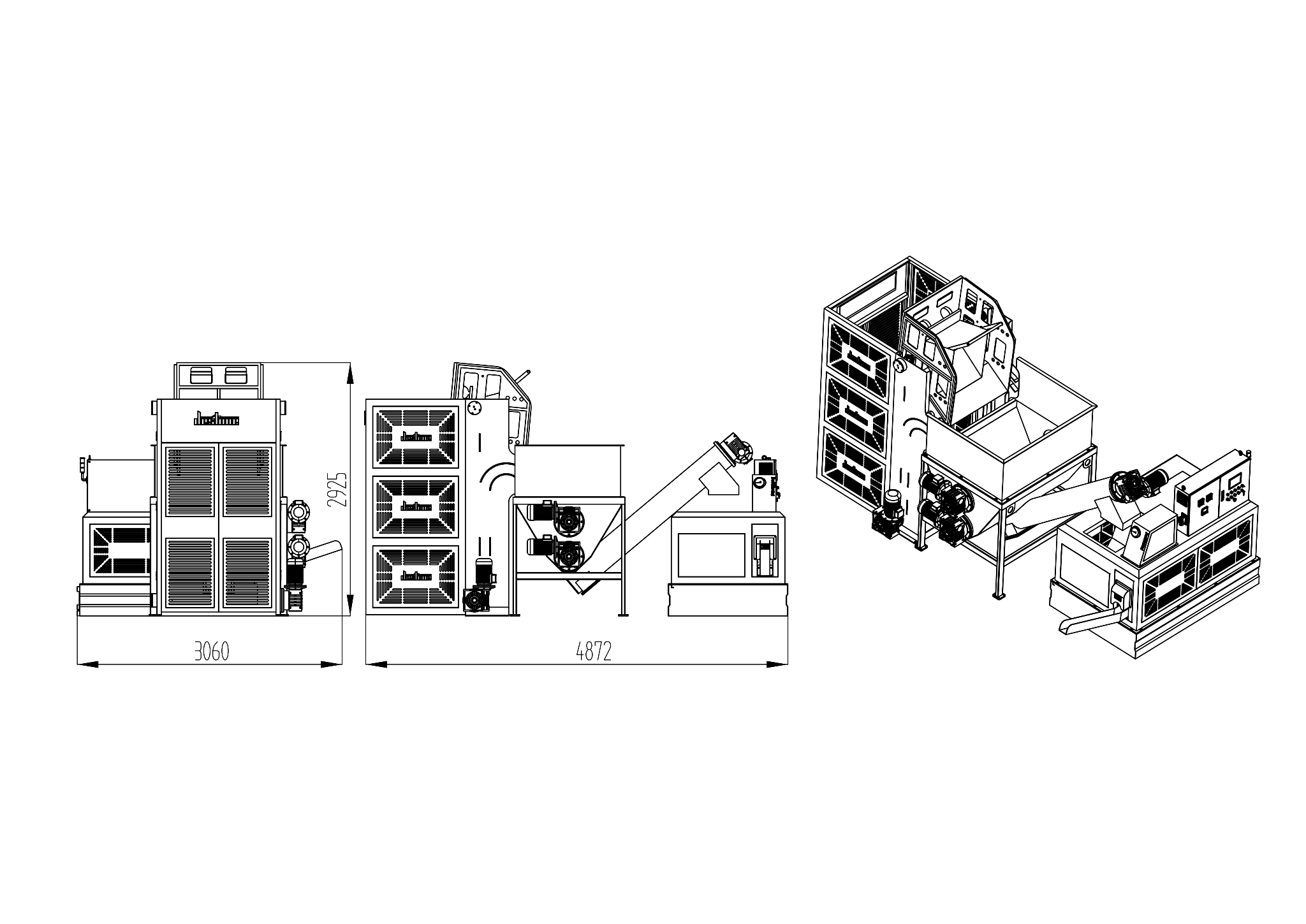
The visible dimension labels are 3060, 4872 and 2925. This image does not state their unit or drawing revision, so confirm both and obtain the approved project drawing before using these values for installation. They are not specifications for every DSS model.
Allow for the cart approach, full lifting and tipping envelope, access to the hopper, briquette collection, electrical cabinet access and maintenance routes. Confirm floor loading, anchoring and service clearances with the final equipment documentation. Do not scale dimensions from the rendering.
Configuration & acceptance checks
Choose the press and feeding arrangement together. Review hopper working volume, screw-feeder suitability, cart compatibility, operating hours and collection-bin changes before agreeing on a configuration. Lifting limits, guards, interlocks and safe isolation procedures must be specified for the actual installation and checked during commissioning.
| Selection item | Project basis |
|---|---|
| System family | DSS single-output briquetting configuration |
| Upstream arrangement | Cart lifting and tipping, large hopper and screw feeding |
| Throughput, power and pressing force | Confirm for the selected model and material |
| Briquette dimensions and handling properties | Confirm through tooling selection and material trials |
| Installed dimensions and utilities | Approved project drawing and equipment schedule |
For an acceptance trial, agree on the feedstock batch, run duration and measurement method. Record accepted output mass, interruptions, feeding behaviour and briquette handling stability. Keep measured results separate from catalogue ranges.
Frequently asked questions & next steps
What does the large hopper do?
It provides intermediate storage between cart unloading and feeding to the press. Its working volume and discharge arrangement should match the material and delivery pattern.
Can this DSS solution process long tangled swarf?
Do not assume direct feeding is suitable. Review chip length and flow behaviour; preparation may be needed before screw feeding and briquetting.
Are the drawing dimensions and machine ratings fixed?
No. Confirm the drawing unit, revision, selected model, utilities and material-specific performance for the project.
Discuss your DSS configuration
Send your chip photos, material description, daily volume, cart measurements and available layout. Include the required briquette form and collection method so the system can be reviewed as a complete handling arrangement.
Explore the DSS single-output briquetting press · Large screw-feed hopper · Get a Quote
Reference
The process overview references DerShan’s Auto Lift Flipping Briquetting Line and trolley lifting and tipping solution. The equipment views and drawing were supplied for this configuration. Installation and testing points are planning guidance.