
Briquetting Presses
DSL Vertical Pre-Press Aluminium Chip Briquetting Press
Pre-compression and vertical hydraulic briquetting for prepared aluminium chips
The Dershan DSL vertical pre-press briquetting press combines pre-compression with vertical hydraulic forming for suitable aluminium chips and machining swarf. Review feedstock preparation, machine configuration and briquette handling requirements for your application.
Pre-compression stageVertical hydraulic pressingAluminium chip focusConfiguration to confirm
Suitable materials
PRODUCT VIDEO
DSL Vertical Pre-Press Aluminium Chip Briquetting Press video
01 / PRODUCT DESCRIPTION
DSL Vertical Pre-Press Briquetter Overview
Pre-compress loose chips before vertical briquette forming.
DSL Pre-Press Briquetter: Materials, Operation and Selection
Review aluminium chip preparation, the pre-press briquetting process, material examples and configuration information for DSL series selection.
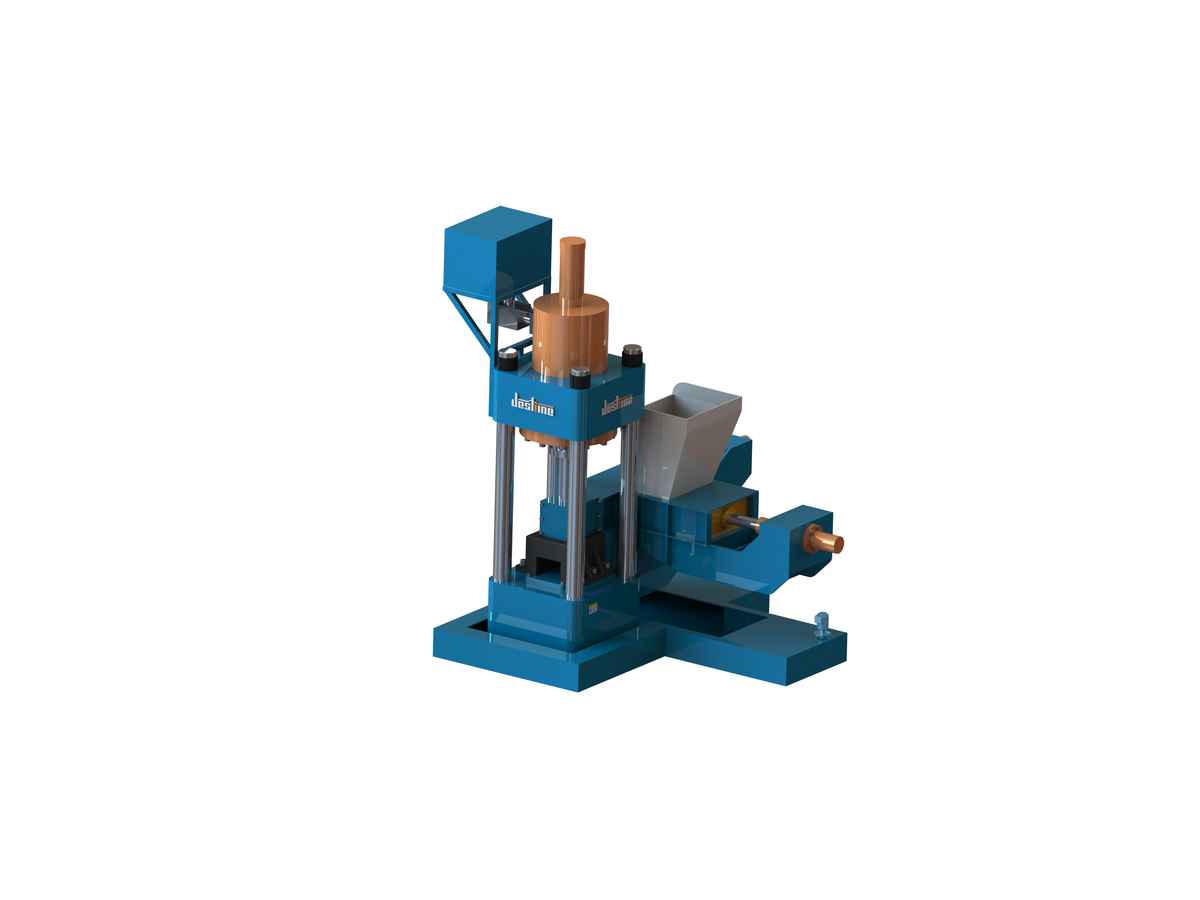
The DSL Vertical Pre-Press Aluminium Chip Briquetting Press combines a pre-compression stage with vertical hydraulic briquette forming. It is intended for assessing bulky, low-density aluminium machining chips and swarf that need controlled charging before final compaction.
Pre-pressing brings a loose charge together before the main pressing stage forms a cylindrical briquette. A suitable installation connects chip preparation, feeding, pre-compression, final pressing and briquette collection around the actual material stream.
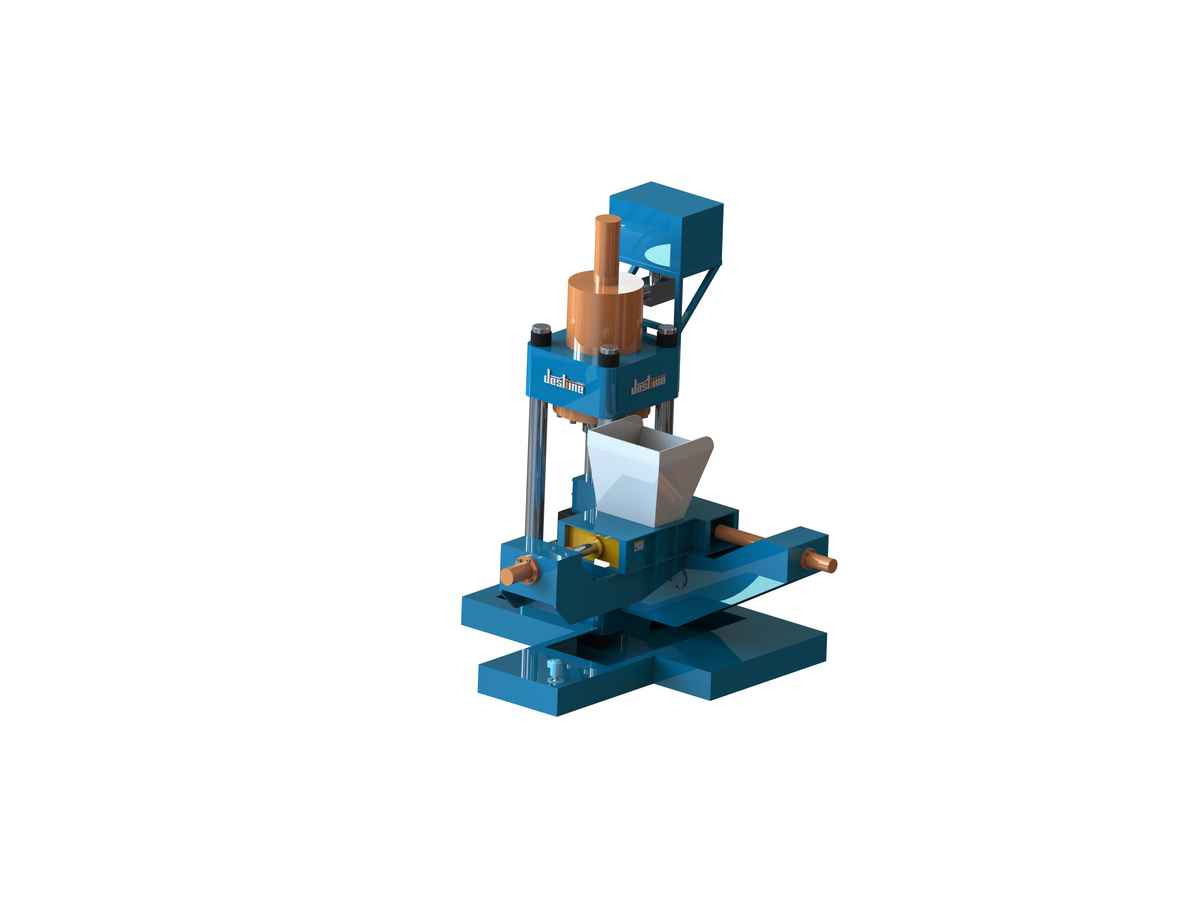
DSL is the confirmed series designation. The supplied equipment renderings show four views of the proposed machine arrangement; final equipment, accessories and performance require a configuration-specific proposal.
02 / MATERIALS & OUTPUT
Aluminium Chips & Briquette Examples
Confirm the material condition before selecting equipment.
Aluminium chips and machining swarf are the principal material focus for this DSL configuration. Review the alloy, chip length and shape, loose bulk density, residual cutting fluid and contamination before selecting the press or feeding arrangement.
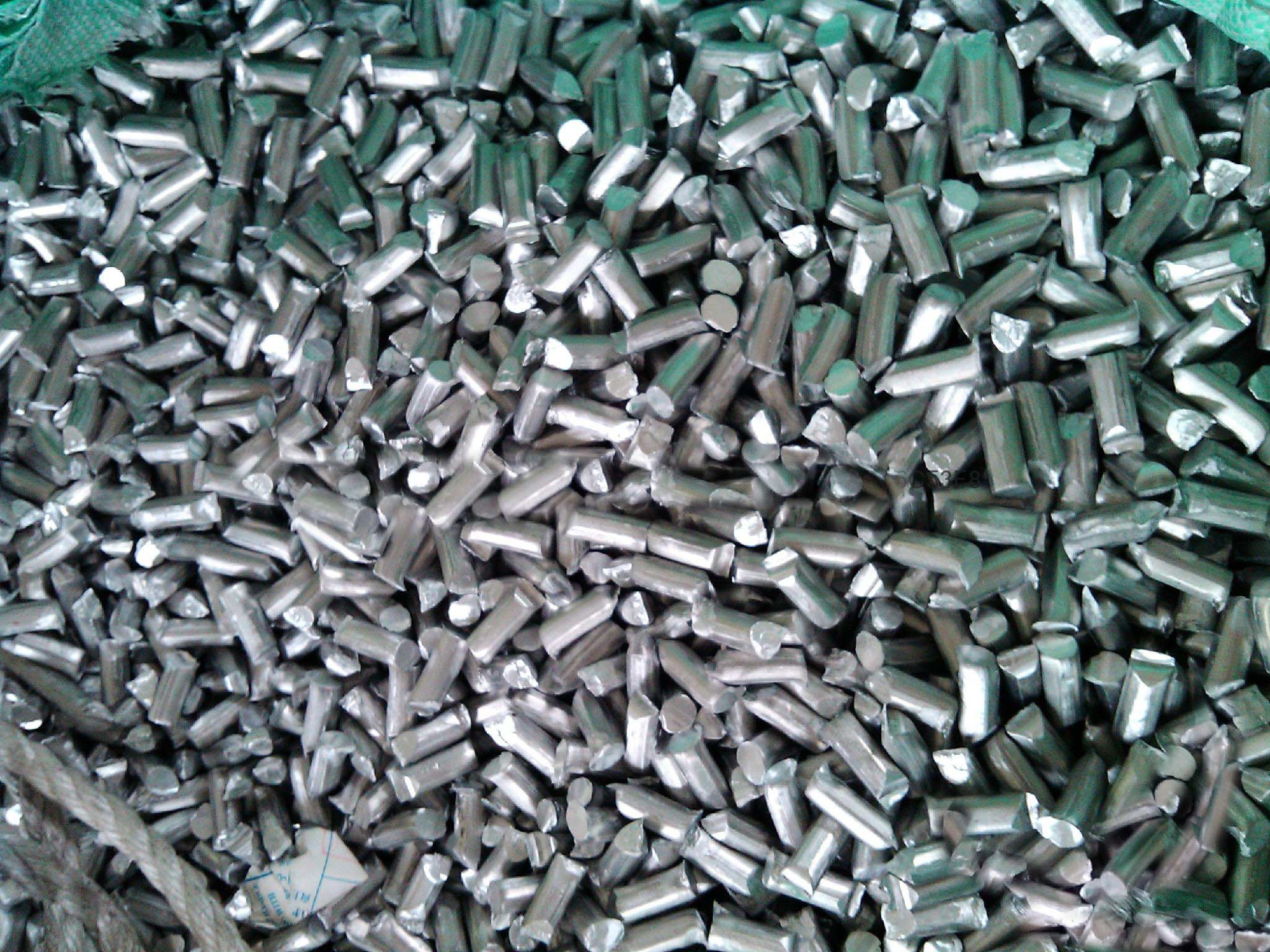
- Loose aluminium scrap: the supplied photograph illustrates the feedstock form; identify the alloy and verify compatibility with the selected machine.
- Long or tangled chips: assess size reduction and metering before loading. Pre-compression does not replace material preparation.
- Wet or oily chips: specify drainage and fluid collection for the actual coolant or lubricant.
- Other metal chips: require a separate suitability assessment and tooling review.
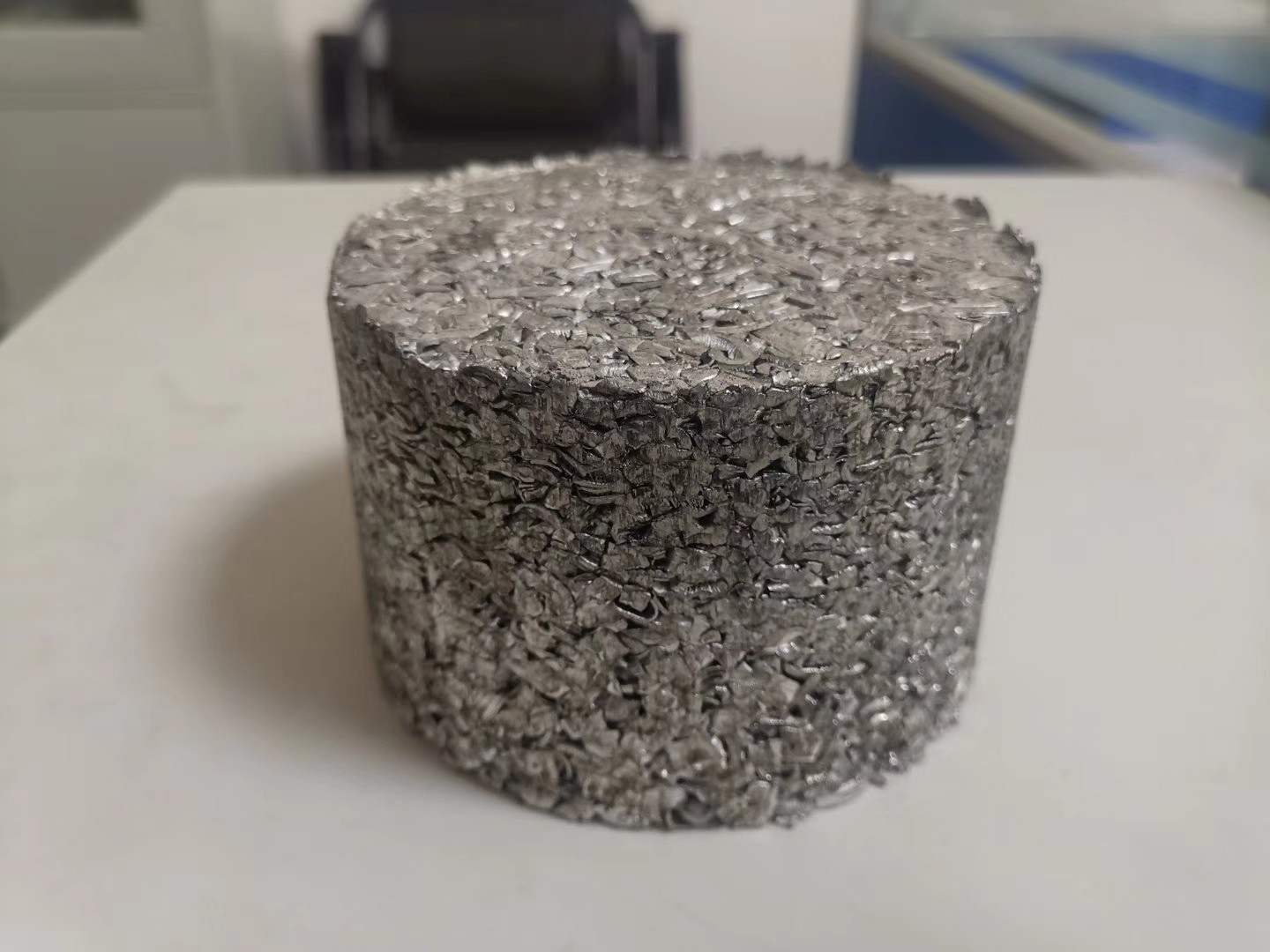
The photographs show loose aluminium scrap and a cylindrical chip briquette as separate material examples. They are not a verified before-and-after trial or a guaranteed DSL production result. Remove foreign objects and hazardous contamination; fine powders, grinding sludge and unfamiliar mixtures require a separate assessment.
03 / STRUCTURE & FEATURES
Equipment features.
Pre-Press Design & Equipment Configuration
Match the pressing and handling arrangement to the feedstock.
Vertical hydraulic pressing: forms the prepared charge in the selected briquette die.
Feed handling: match hopper loading, metering and any conveying or chip-preparation equipment to the material.
Briquette collection: confirm the discharge sequence, receiving container and handling layout.
Control and protection: confirm operating modes, interfaces, guards, interlocks and emergency stops in the final scope.
Fluid management: specify drainage, collection and any filtration separately where residual cutting fluid is present.
Component brands, certifications, accessories and cooling equipment are configuration-dependent and must be confirmed in the final machine documentation.
04 / WORKING PRINCIPLE
How Pre-Press Briquetting Works
Prepare, feed, pre-compress, briquette and collect.
Prepare:
identify and sort the feedstock; assess chip size, bulk density, fluid content and contamination.
Feed:
deliver a controlled charge through the approved loading and metering arrangement.
Pre-compress:
consolidate loose chips before the final pressing stage.
Briquette:
apply vertical hydraulic compression using the selected tooling and settings.
Discharge and collect:
transfer the formed briquette to the designated receiving area and manage separated fluid through the specified system.
Monitor feed consistency, briquette condition and equipment status. Operate according to the supplied machine manual and site isolation procedures; inspect hydraulic lines, guards, interlocks and feeding and discharge paths routinely.
05 / TECHNICAL REFERENCE
Technical Configuration & Selection
Confirm the selected machine against representative material.
The series is confirmed as DSL. Numerical specifications are not listed until the selected machine configuration and material requirements have been verified.
| Parameter | DSL configuration guide |
|---|---|
| Series | DSL |
| Machine type | Vertical pre-press hydraulic briquetting press |
| Material focus | Prepared aluminium chips and machining swarf |
| Process | Pre-compression followed by vertical briquette forming |
| Briquette form | Cylindrical; tooling to confirm |
| Pressing force and hydraulic pressure | Requires configuration confirmation |
| Throughput and cycle time | Requires configuration and material confirmation |
| Motor power and electrical supply | Requires configuration confirmation |
| Briquette diameter, weight and density | Requires tooling and material confirmation |
| Machine dimensions and weight | Requires configuration confirmation |
| Feeding, discharge, controls and cooling | Confirm the selected equipment and site requirements |
For selection, provide material photographs, alloy, chip dimensions, loose bulk density, residual-fluid condition, required production volume, target briquette requirements, electrical supply and a floor plan. Evaluate capacity, briquette density and fluid separation with representative material when these outcomes are important to the project.
07 / QUESTIONS & SUPPORT
Product questions,
answered.
DSL Briquetter Questions & Support
Practical answers for aluminium chip briquetting.
Why does the DSL include a pre-compression stage for aluminium chips?
The DSL brings a loose, bulky chip charge together before the main vertical pressing stage forms a cylindrical briquette. It is intended for assessing low-density aluminium machining chips and swarf. Whether that arrangement suits your production depends on chip geometry, bulk density, feeding consistency and the final briquette requirements, not the presence of pre-compression alone.
Does DSL pre-pressing eliminate the need to shorten tangled turnings?
No. Pre-compression does not replace material preparation. Long or tangled aluminium chips may still need size reduction and controlled metering before the press. Provide samples showing the normal chip form and the longest pieces, along with loose bulk density, so feeding and any preparation equipment can be assessed together with the pre-press stage.
Can the DSL be specified for aluminium sheet, cans or other metals?
The principal focus is prepared aluminium machining chips and swarf, not unrestricted bulky aluminium scrap. Sheet, cans or unfamiliar forms should not be assumed suitable because they contain aluminium. Other metal chips also require a separate suitability and tooling review. Identify alloy, physical form and contamination before deciding whether DSL or another machine type fits the task.
How should capacity be verified for a two-stage DSL process?
Measure accepted briquette mass through the complete feeding, pre-compression, vertical pressing and collection process over agreed elapsed time. A pre-press cycle alone does not establish production capacity. Test the actual aluminium chip bulk density and variability, and identify the selected tooling and configuration in the performance agreement rather than assuming an output from the series name.
What must be agreed for wet aluminium chips on the DSL?
Specify the alloy, coolant or lubricant and normal residual-fluid condition. Drainage, collection and any filtration should be defined separately in the project scope. Test briquette condition and fluid separation using representative chips. Pre-compression does not establish a guaranteed liquid-recovery rate, and collected fluid needs its own assessment before any planned reuse.
What installation details are important for DSL vertical pre-pressing?
Check the height and access needed for loading and metering, the space occupied by the pre-press and main press arrangement, and the confirmed discharge and receiving method. Include any chip-preparation equipment, fluid collection and cooling in the layout. Final dimensions and accessories must come from the selected configuration rather than the illustrative machine views.
Which DSL maintenance points differ from a single-stage press?
The inspection plan must cover the pre-compression stage as well as the main vertical tooling, with attention to feeding interfaces, hydraulic condition, guards, interlocks and discharge. Follow the manufacturer's intervals and service instructions for the supplied configuration. Qualified personnel must isolate the machine and control stored energy before accessing either pressing stage or clearing protected areas.
What aluminium samples should be used to accept a DSL configuration?
Include representative alloys and the meaningful variations in chip length, loose density and residual fluid expected in production. Agree target briquette dimensions, integrity, required density and sustained output beforehand. Observe the whole two-stage sequence and collection arrangement. Keep the test record linked to those materials; separate photographs of chips and briquettes are not acceptance evidence.
Equipment Recommendation
Tell Us About Your Material and Capacity
Share the key operating conditions below so our team can compare suitable equipment and prepare a practical configuration.
✓ Material & Capacity Review✓ Configuration Recommendation✓ Pricing & Lead-Time Inquiry