
Metal Balers
Front-Out HBQ Baler for Copper Production Scrap
Preserve Copper Feed Identity from Production to Collection
Assess separately prepared copper production streams with an HBQ front-out baling arrangement. Match the approved copper forms, loading method and collection area to the selected configuration. Keep grade identity and contamination requirements clear throughout sorting, compression and finished-bale handling, without treating all copper-colored material as interchangeable feed.
PRODUCT VIDEO
Front-Out HBQ Baler for Copper Production Scrap video
01 / PRODUCT DESCRIPTION
Product Overview
Purpose, machine structure and its role in the recycling process.
Keep production copper identifiable through consolidation
Copper production scrap has value because of its known origin and condition, not merely because it can be compressed. A Front-Out HBQ Baler for Copper Production Scrap should be selected around the specific factory stream: clean offcuts, prepared tube ends, approved wire remnants or other reviewed forms. They should not be treated as interchangeable feed simply because they share a copper color.
This page covers procurement and handling decisions for separately prepared copper production streams. It does not claim that every copper component, insulated cable or alloy is suitable. Identify the actual copper grade and the receiving buyer's requirements before deciding which batches can share a machine or a finished bale.
The HBQ arrangement uses hydraulic compression with forward push-out bale discharge. Its front receiving position should be planned as part of the route from production containers to the outgoing scrap area. The HBQ front-discharge overview provides machine-family context, while the material assessment determines the suitable order configuration.
02 / MATERIALS & OUTPUT
Applications & Materials
Suitable scrap materials, industries and operating scenarios.
Define separate feed specifications for separate forms
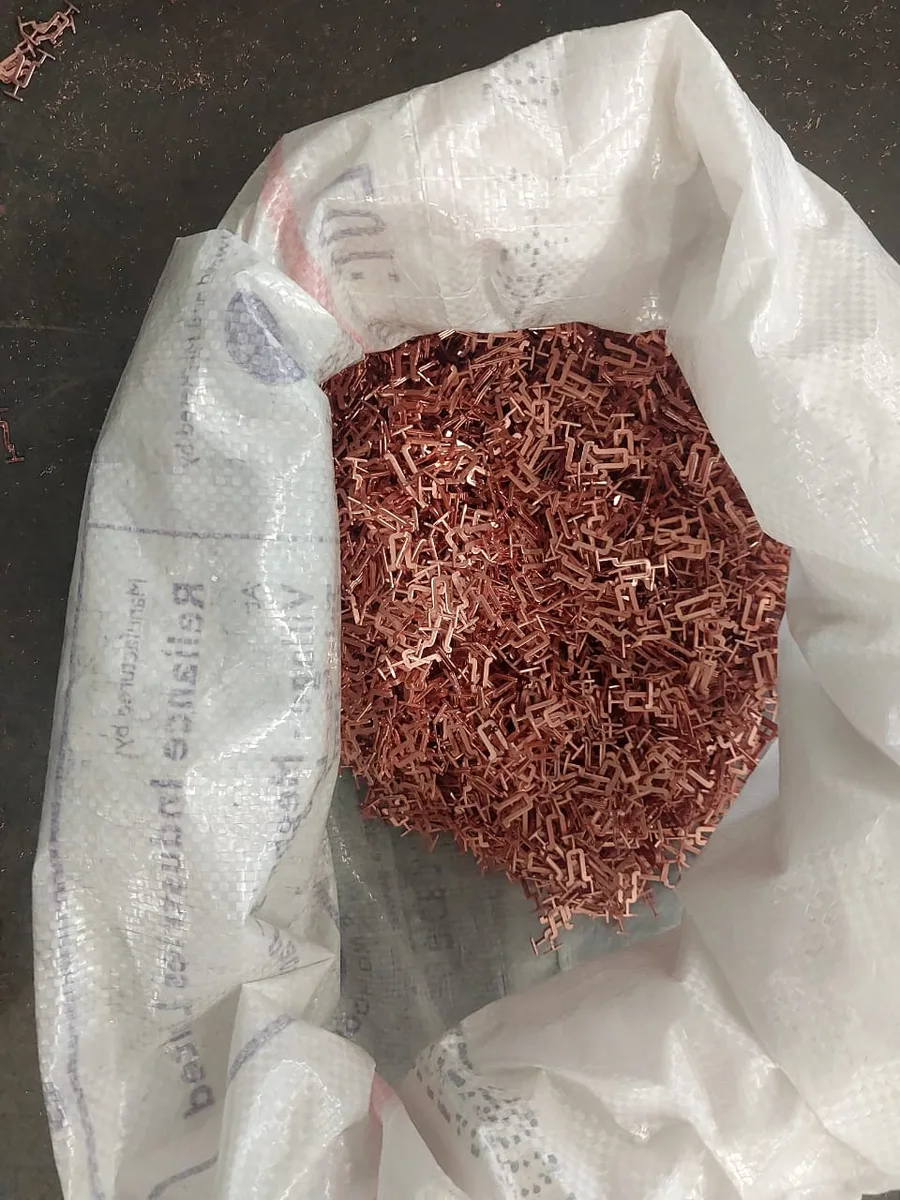
Record the source process, grade, dimensions and surface condition of each proposed copper stream. Describe whether material is flat, curled, hollow, tangled or formed. Long pieces, connected strips and nested tube ends require particular attention because their presentation to the loading equipment can differ from a small hand-selected sample.
Separate brass, steel fasteners, aluminum, insulation, connectors and other incompatible material according to the approved scrap specification. Copper-colored surfaces are not proof of composition. Plating, solder, oil and attached components should be identified rather than concealed by blending them into a larger batch.
Prepared tube offcuts must have their contents and origin understood. Do not admit unknown closed items, pressurized components or assembled equipment under a general description of copper scrap. Where additional dismantling or size preparation is required, define that work separately; the baler is not presented as an unrestricted cutting, cleaning or dismantling system.
Keep rejected material in a distinct route. Repeatedly returning a contaminated batch to the accepted feed makes the preparation standard meaningless. Agree what information accompanies each released container so that the operator is not expected to identify every alloy or contaminant at the chamber.
03 / STRUCTURE & FEATURES
Equipment features.
Features & Benefits
Operational advantages and configuration benefits for buyers.
Build useful control around the front collection point
A defined front discharge position can support a dedicated handover between the compression process and finished-bale collection. For copper streams, that handover is also an opportunity to retain the batch label and check that the output remains assigned to the intended grade. Automatic identification or weighing is not implied.
Separately approved feed descriptions help compare proposals on the same basis. One supplier demonstration using short clean pieces should not be treated as evidence for long tube ends or tangled remnants. Requiring representative loads makes configuration discussions more specific without inventing a universal output figure for every copper form.
The machine information lists control, component and cooling alternatives. These should be selected for the actual loading arrangement, operating environment and service expectations. A listed brand or option does not mean that every HBQ machine is supplied with it, and automatic hydraulic control does not establish automatic material feeding.
Wear access and housekeeping also affect the installation. Reserve space for the prescribed inspection procedure, and plan how small scrap residues are managed during grade changes. The advantage is a maintainable process whose responsibilities are clear, not a promise that compression removes contamination or eliminates all handling.
04 / WORKING PRINCIPLE
Operation & Maintenance
Practical guidance for safe operation and routine maintenance.
Use a documented material review and acceptance load
Send the supplier photographs of each proposed stream, typical and longest dimensions, surface-treatment details and the normal container condition. Include the intended batch separation rules and a drawing showing incoming material, loading equipment and the front bale receiving area. Identify any restrictions imposed by the scrap buyer.
For acceptance, use a representative approved load prepared in the same way as production material. Observe its loading, compression, discharge and collection. Record the exact machine configuration and the preparation applied, together with the agreed buyer checks. Do not infer a promised bale weight, density or processing rate from an unrelated reference photograph.
Establish operating and maintenance procedures from the selected machine's manual and training. Keep employees out of the chamber and discharge area during operation. Stop and isolate using the specified method before permitted blockage removal, cleaning or service. Inspect hydraulic leaks, damaged wear surfaces and unusual operating behavior through the documented service routine.
The Front-Out Baler Reference Video is the user-specified general equipment/process reference. It is not evidence that the filmed configuration tested your copper grade or produced the output illustrated in material photographs.
05 / TECHNICAL REFERENCE
Technical Parameters
Key selection data and model-dependent specification ranges.
Configuration reference
The six attributes below are selected from the supplied HBQ series information. Listed brands, cooling arrangements and controls are configuration choices rather than a promise that every machine includes them. Numeric ranges refer to the series, not to one adjustable machine. Confirm the exact model, electrical supply, loading arrangement and agreed acceptance conditions in the order specification.
| Attribute | Series reference / option |
|---|---|
| Remote control | Optional |
| Arrangement | Horizontal |
| Wear steel plates | Interchangeable |
| Series working pressure reference | 21.5 MPa; confirm selected model |
| Feeding alternatives | Grabber or manual, according to configuration |
| Baler arrangement | Three rams |
06 / SOLUTIONS & CUSTOMER CASES
Plan the complete process.
RELATED NEWS
News & buying guides
APPLICATIONS
Material preparation guides
These are related material guides. Follow each guide’s feedstock limits; a related material is not automatically approved for every machine configuration.
07 / QUESTIONS & SUPPORT
Product questions,
answered.
Delivery, Service & FAQ
Delivery scope, technical support and frequently asked questions.
Frequently asked questions
Can all copper production scrap be combined?
No. Define acceptable grades, forms and contamination conditions with the receiving buyer. Sharing a material name does not make every stream compatible.
Can insulated cable be processed as ordinary copper feed?
Not under this page’s stated prepared-copper scope. Identify insulation and connectors, and obtain a separate material/process assessment.
Are copper tubes and wire loaded in the same way?
Not necessarily. Their geometry and containment needs differ. Review each stream and the selected loading arrangement before including it.
Does front-out discharge determine bale quality?
No. Material preparation, configuration and operating conditions remain important. The HBQ overview explains the machine family, not a universal quality guarantee.
Can the machine identify copper grades automatically?
No such identification feature is established here. Preserve grade identity through documented sorting, labels and batch procedures.
Can I compare other discharge arrangements?
Yes. The side-turn-out copper page describes a different collection layout. Its machine images and references are not HBQ front-out test evidence.
Equipment Recommendation
Tell Us About Your Material and Capacity
Share the key operating conditions below so our team can compare suitable equipment and prepare a practical configuration.