
Metal Balers
Side Turn-Out Copper Scrap Baler
Preserve Copper Lot Identity During Side Turn-Out
A Side Turn-Out Copper Scrap Baler is considered for suitable prepared copper production scrap that needs consolidation into manageable bales. The HBF arrangement uses horizontal hydraulic compression and turns the formed package toward a side collection zone. The application decision combines material identity, feed geometry and the condition of the bale after release.
PRODUCT VIDEO
Side Turn-Out Copper Scrap Baler video
01 / PRODUCT DESCRIPTION
Preserve Copper Lot Identity During Side Turn-Out
Material preparation and side turn-out selection for the HBF family.
Preserve Copper Lot Identity During Side Turn-Out
Review HBF copper scrap baling with grade separation, prepared tube and sheet feed, controlled side collection and traceable bale acceptance.
A Side Turn-Out Copper Scrap Baler is considered for suitable prepared copper production scrap that needs consolidation into manageable bales. The HBF arrangement uses horizontal hydraulic compression and turns the formed package toward a side collection zone. The application decision combines material identity, feed geometry and the condition of the bale after release.
For copper operations, keeping lots identifiable can be as important as reducing the space occupied by irregular pieces. Mixing uncertain material into a clean lot before compression makes later inspection more difficult. The loading plan should therefore begin with a clear accepted stream and a route for pieces that do not meet it.
This guide covers the evaluation of prepared copper forms, not an unrestricted authorization for every copper-containing object. Wire, tubing and sheet require their own preparation review, and downstream grade acceptance remains separate from the mechanical task of forming and collecting a bale.
02 / MATERIALS & OUTPUT
Document Copper Grade and Feed Geometry
Define the accepted feed and its preparation.
Separate the declared grade from what has actually been checked. Copper-colored scrap may include plated pieces, brass components or attached dissimilar metals. Baling is not a metal identification process, and an apparently uniform bale cannot establish composition. Keep uncertain items outside a clean lot until the receiving requirements are resolved.
Describe copper sheet offcuts, tube lengths and wire forms separately. Long tube pieces can span the charging envelope, while tangled wire can connect pieces that appear manageable in a photograph. Their preparation needs may differ even when they come from one workshop. Provide the largest dimensions and show exceptional items rather than only neatly cut samples.
Remove or declare fittings, insulation, oils and other contamination through the approved preparation route. Closed vessels and hazardous articles are excluded. This page does not authorize whole cable assemblies, electrical equipment or sealed copper components. Review the actual prepared form with the supplier before it is included in the loading plan.
The material images are form references for the preparation discussion, not proof of copper grade or a documented trial of this HBF configuration. Review the identity and condition of actual incoming material rather than accepting it because it resembles a photograph.
04 / WORKING PRINCIPLE
Keep the Receiving Zone Clean and Traceable
Review the complete turn-out and collection arrangement.
The HBF forms the bale by horizontal hydraulic compression and turns it toward the designated side receiving area. Confirm the complete movement and receiving arrangement on the machine drawing. A valuable segregated copper lot should not be discharged into an area still containing pieces from an earlier material run.
Plan the changeover between lots without requiring entry into an operating machine. Approved housekeeping and inspection procedures should identify when the receiving area and collection equipment are ready for the next grade. Any clearing of trapped pieces or access to protected areas requires the prescribed shutdown and isolation procedure, not a quick reach during a pause.
Inspect the bale after normal turn-out and removal. Check whether loose pieces separate from the package, whether projecting ends affect collection and whether its identity remains attached through storage. A successful compression event alone does not establish that the final package meets the buyer's physical or compositional acceptance conditions.
05 / TECHNICAL REFERENCE
Selected HBF Mechanical Attributes
Five sourced attributes; series references and options require configuration confirmation.
These five attributes are selected from the supplied HBF side turn-out series information. They describe family features or configuration choices, not a complete specification for one machine.
| Technical attribute | HBF reference |
|---|---|
| Core components | Pump and motor |
| Electrical supply phase | Three-phase |
| Supply frequency | 50 Hz or 60 Hz, selected for the installation supply |
| Structural steel plate | Q235B |
| Bale discharge | Side turn-out |
The selected configuration must be confirmed for the actual prepared scrap. A listed cross-section range does not include bale length or mean that every machine adjusts across the whole range. Force, output, power and bale weight are not inferred from the product title or photograph.
Control choices in the supplied information include PLC automatic or manual control; Dershan also confirms a semi-automatic option. Confirm the included actions and operator responsibilities in the proposal. These labels do not establish automatic loading, sorting or unattended operation.
Agree Evidence Before Committing to a Configuration
Agree selection evidence, acceptance and maintenance responsibilities.
An informative copper inquiry includes source records, grade information where known, representative photographs, piece dimensions and the proposed preparation process. State the available loading equipment and the collection method beside the baler. Include any need to keep multiple copper grades physically separate within the working area.
Agree how representative trial material will be identified and how the finished bales will be checked. Record actual feed conditions, complete production time and handling observations if output is being assessed. Copper value does not justify assuming a guaranteed density, fixed bale weight or improved sale price from the equipment title.
Use the supplied manual to plan checks of hydraulic connections, protective devices and specified wear surfaces. Unexpected movement, leaks or damaged guards require qualified assessment before continued use. Maintenance must address stored energy as well as electrical isolation. Refer to the HBF machine overview for the discharge concept and send Dershan the actual material information for selection.
The linked South Africa project is a turn-out layout and segregated-batch handling reference only; it is not a copper trial or a performance guarantee for this HBF configuration.
06 / SOLUTIONS & CUSTOMER CASES
Plan the complete process.
RELATED NEWS
News & buying guides
Buying a Scrap Metal Baler: What to Include in Your RFQ
A useful scrap metal baler quotation starts with representative scrap, the buyer’s bale specification and a complete handling plan. Use this checklist to compare proposals on the same basis.
Read details ↗Scrap Metal Baler Throughput: How to Plan Real Production
Plan baler capacity around saleable output per working hour, including loading and discharge. A nominal press cycle is only one part of the production picture.
Read details ↗CUSTOMER CASES
Related project references
Each reference identifies its own equipment and project scope; it is not a test record for every material on this product page.

APPLICATIONS
Material preparation guides
These are related material guides. Follow each guide’s feedstock limits; a related material is not automatically approved for every machine configuration.
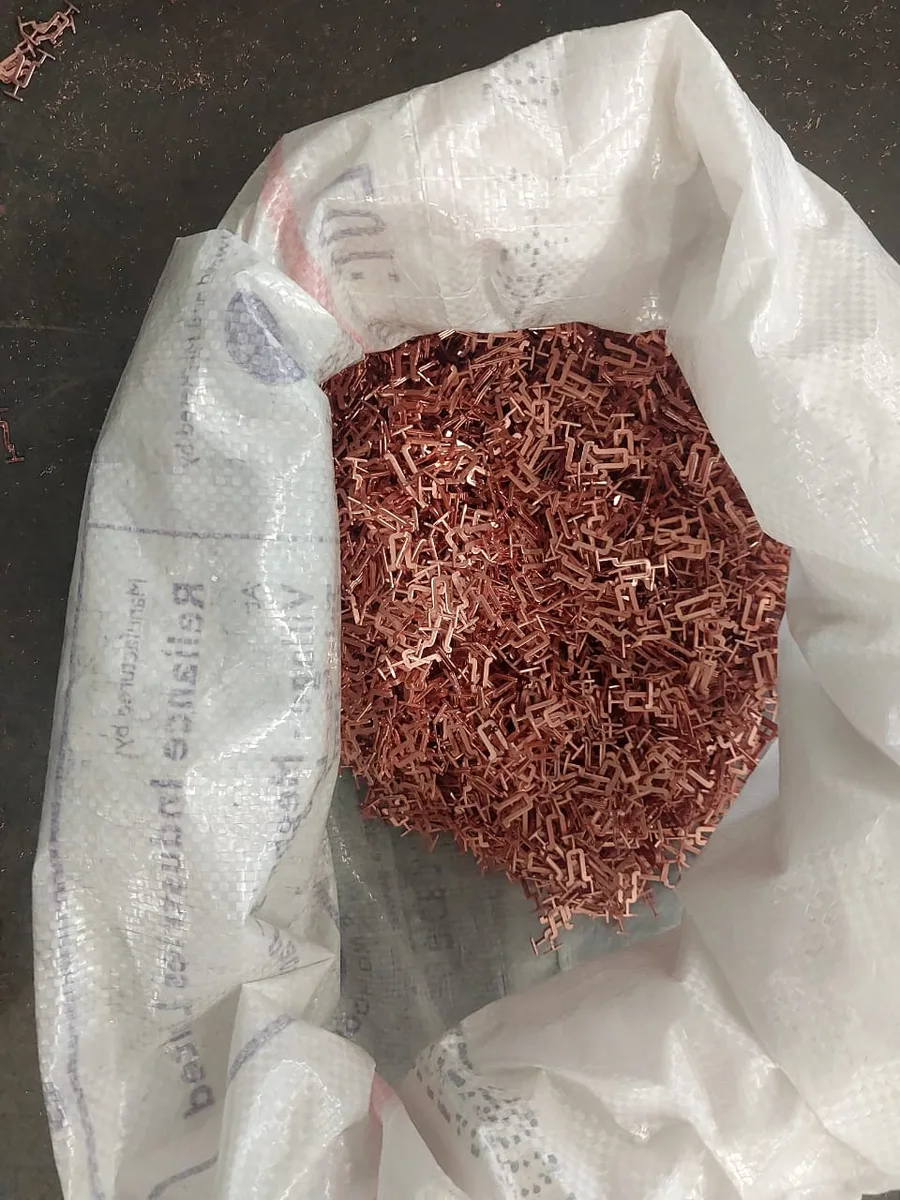
Copper Sheet Scrap Baling
Practical sorting, preparation and equipment-selection guidance for copper sheet scrap, supported by representative material photos.
Read application guide ↗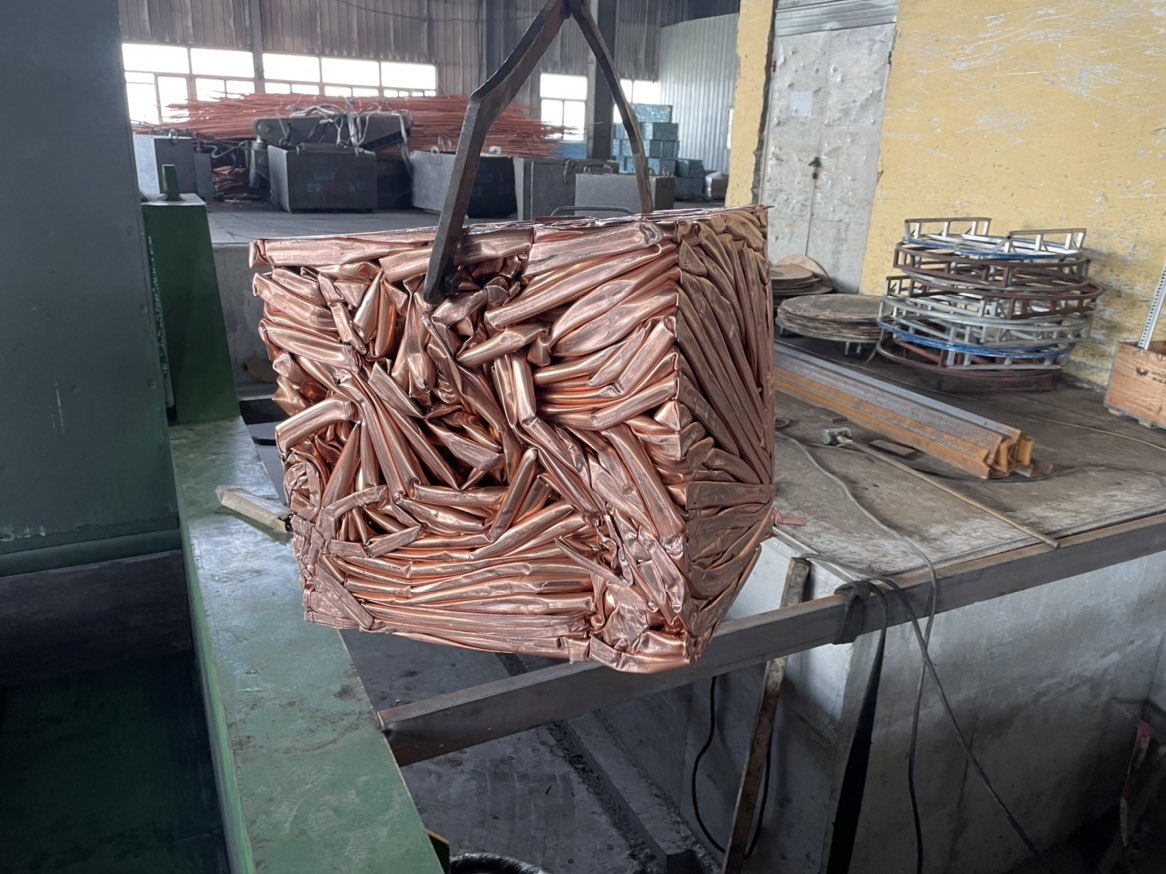
Copper Tube Scrap Baling & Recycling
Prepare copper tube offcuts, pipes and bent tubing for hydraulic baling to reduce volume, simplify storage and improve non-ferrous scrap handling.
Read application guide ↗07 / QUESTIONS & SUPPORT
Product questions,
answered.
Side Turn-Out Copper Scrap Baler FAQ
Practical answers for this material and discharge arrangement.
Can copper and brass be placed in the same bale?
Only if the receiving specification explicitly accepts that mixture. Keep them separate when sold as distinct grades. Compression does not resolve composition or reverse an unwanted alloy mixture.
Does this page approve insulated cable without preparation?
No. Insulation, connectors and the actual wire form need a specific review. State what remains after preparation, and do not assume that the baler strips or separates cable materials.
Why is receiving-area housekeeping important for copper?
Residual pieces from another lot can compromise the declared outgoing material. Plan safe changeover, collection and identification procedures that keep the accepted input lot connected to its finished bales.
Can long copper tubes be loaded whole?
Only when their actual dimensions and form fit the approved loading conditions. Oversize pieces may require upstream preparation; the closing mechanism should not be used to force an unsuitable load into place.
What should a copper trial demonstrate?
Use representative prepared material and inspect the bale after turn-out and collection. Review handling integrity, released pieces and the buyer’s agreed acceptance conditions, without treating appearance as proof of composition.
Is a fixed bale weight available from the copper name?
No. The feed mix, charge and selected configuration determine the result. State the required handling range and verify it under agreed conditions rather than treating a general reference as a guarantee.
Equipment Recommendation
Tell Us About Your Material and Capacity
Share the key operating conditions below so our team can compare suitable equipment and prepare a practical configuration.