
Metal Balers
Front-Out Y81Q Baler for Mixed-Gauge Steel Sheet Offcuts
Assess the thickness mix before choosing a sheet-scrap baling configuration
Review mixed-gauge steel sheet offcuts for a front-out baler enquiry, covering thickness distribution, piece geometry, batch control and material trials.
PRODUCT VIDEO
Front-Out Y81Q Baler for Mixed-Gauge Steel Sheet Offcuts video
01 / PRODUCT DESCRIPTION
Product Overview
Purpose, machine structure and its role in the recycling process.
A thickness range is only the start of the enquiry
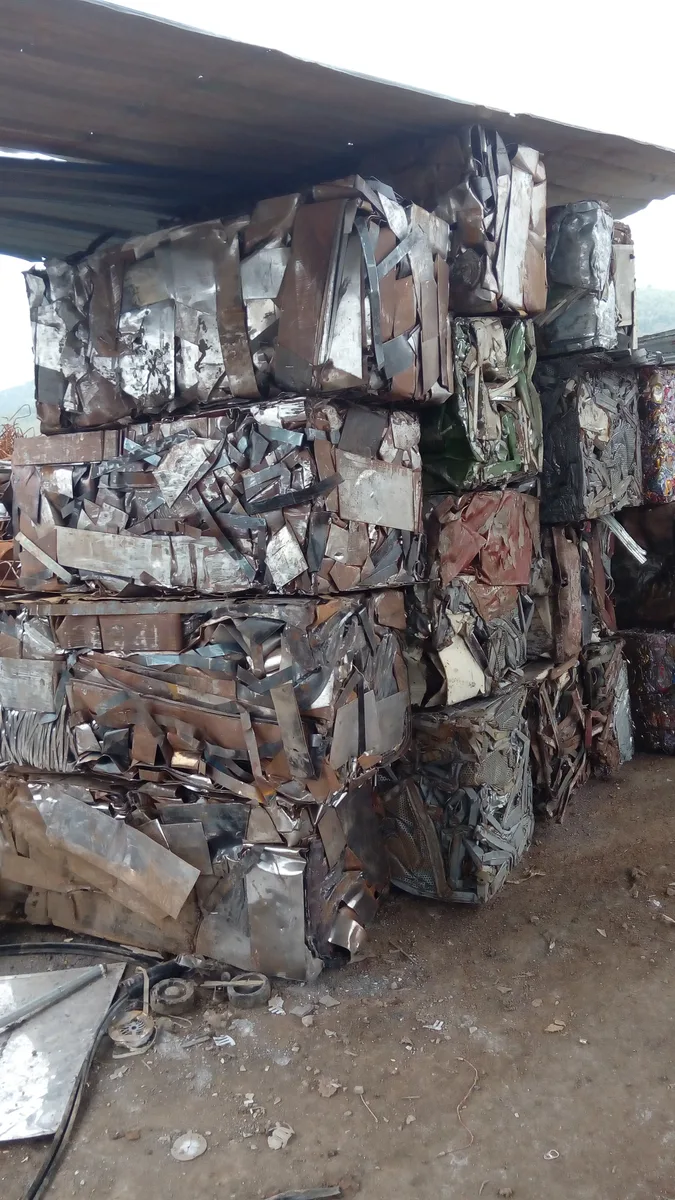
Mixed-gauge sheet scrap can come from several cutting jobs collected in one container. Thin flexible trim, broad sheet ends and thicker compact offcuts may share a steel grade but behave differently during handling and compression. The Front-Out Y81Q Baler for Mixed-Gauge Steel Sheet Offcuts is an application enquiry for that variable production stream. The title does not establish a verified Y81Q model specification; the supplied HBQ information provides front-out series references for supplier review.
Selection should begin with the distribution of material, rather than a single maximum thickness. Identify the gauges normally present, their approximate share of the batch and the exceptional pieces that appear after a job change. A sample dominated by thin trim will not represent a container with a much greater proportion of thicker offcuts. Ask the supplier to assess the credible difficult batch as well as the everyday mix.
02 / MATERIALS & OUTPUT
Applications & Materials
Suitable scrap materials, industries and operating scenarios.
Describe gauge, geometry and condition together
Keep representative examples of broad flats, narrow strips, folded edges and small dense pieces. Record length and width alongside thickness and identify the steel grade where known. Equal thickness does not establish equal suitability when strength, shape or prior forming differs. Unknown grades, heavily corroded material or attached components need separate assessment instead of being absorbed into an apparently familiar sheet-scrap description.
Define an intake rule for pieces outside the approved envelope. Large sheet ends can span available space, while nested or curled trim can conceal a dense accumulation underneath. These are reasons to review preparation and the loading method, not instructions to force material into the chamber. Any required cutting, segregation or other preparation must use a separately approved method before the material reaches the baler.
Review oils, coatings, moisture and nonmetal attachments with both the equipment supplier and the intended scrap buyer. Keep hot pieces, sealed containers, batteries, pressurized items and unknown residues out of the proposed feed. Where the collection stream changes frequently, identify the generating job on each container so an operator does not have to guess the gauge mix from its visible top layer.
03 / STRUCTURE & FEATURES
Equipment features.
Features & Benefits
Operational advantages and configuration benefits for buyers.
Compare the configuration against a variable feed
The proposed hydraulic front-out arrangement gives the enquiry a defined compression and discharge concept. It does not establish a universal sheet-thickness limit or confirm every listed option on a Y81Q machine. Request the actual chamber dimensions, loading instructions and approved material limits for the proposed configuration. A series chamber range is not sufficient to decide whether a broad sheet end can be accepted.
Discuss how the normal mix will be presented to the machine. Manual loading and grabber loading introduce different handling considerations, particularly when small heavy pieces are hidden among flexible sheets. Use the hand-fed offcut workflow when that loading method is proposed, and have the supplier confirm its applicability. Do not infer an automatic thickness sensor or recipe system from the availability of a control option.
At the discharge end, plan a receiving and collection method for the actual bale produced by the agreed mix. Bale weight, shape and handling behavior should be checked during evaluation rather than calculated from a generic chamber size. Different proportions of compact pieces and flexible sheet may change the result. A repeatable incoming-material description makes these comparisons more useful than an isolated photograph of a finished bale.
04 / WORKING PRINCIPLE
Operation & Maintenance
Practical guidance for safe operation and routine maintenance.
Use controlled comparisons to define acceptance
Prepare identifiable samples covering the normal gauge mix and an agreed challenging combination within the proposed approval scope. Record the material grades, gauge proportions, largest pieces and contamination condition for each sample. Keep the machine configuration and observations with those records so a successful result is not later applied to a different material stream without review.
Agree acceptance criteria with the supplier and scrap buyer before the evaluation. These can include safe loading under the machine instructions, acceptable discharge and collection, material segregation and the buyer's bale requirements. If production expectations are important, assess the complete agreed workflow, including preparation and collection. An unloaded cycle reference is not a throughput result for mixed-gauge sheet.
During routine operation, use the approved intake checks and revisit the assessment when the gauge distribution, steel grade or cutting process changes. Do not clear bridging or reposition scrap by entering a movement zone. Follow the delivered stop, isolation and clearance procedure. Treat an unexpected loading problem as evidence that the material or preparation may have moved outside the accepted conditions.
05 / TECHNICAL REFERENCE
Technical Parameters
Key selection data and model-dependent specification ranges.
Configuration references for the enquiry
The six attributes below are drawn from the supplied front-out series information in the HBQ sheet. They are reference choices for discussion, not a verified Y81Q model specification. Confirm each selected attribute against the proposed Y81Q machine, its drawings and the order. The HBQ series name is not being renamed as a Y81Q model.
Keep full series ranges intact when comparing quotations. Do not combine their endpoints into a new machine size or infer production from a no-load cycle. Final acceptance should use the actual material and agreed operating conditions. Ask for the machine-specific manual, layout and configuration list before approving the installation.
Front-Out Baler Reference Video is the designated equipment/process reference. It is not proof that this exact material or configuration was tested, and does not establish a production rate.
| Attribute | Reference value |
|---|---|
| Supply frequency alternatives | 50 Hz or 60 Hz; specify applicable supply |
| Discharge arrangement | Forward push-out |
| Listed cooling option | Fan cooling; confirm system selection |
| Series oil tank volume | 800–3,000 L; confirm selected model |
| Construction steel reference | Q235B; confirm specified construction |
| Foundation reference | Level concrete ground; confirm installation drawing |
06 / SOLUTIONS & CUSTOMER CASES
Plan the complete process.
RELATED NEWS
News & buying guides
APPLICATIONS
Material preparation guides
These are related material guides. Follow each guide’s feedstock limits; a related material is not automatically approved for every machine configuration.
07 / QUESTIONS & SUPPORT
Product questions,
answered.
Delivery, Service & FAQ
Delivery scope, technical support and frequently asked questions.
Frequently asked questions
Is maximum sheet thickness enough to select the machine?
No. Supply the gauge distribution, steel grades, piece sizes and formed shapes. A maximum thickness alone does not describe the loading behavior or establish approval for the complete mix.
Can thin and thicker sheet offcuts share one batch?
Only within a mixture approved for the selected machine and accepted by the buyer. Confirm whether segregation is needed when the proportion or grade of thicker pieces changes.
Can operators hand-load every approved offcut?
Material approval does not automatically approve manual handling. Review the hand-fed workflow and the actual piece weights, edges and loading instructions.
Does this page confirm a Y81Q model or thickness rating?
No. The HBQ front-discharge overview is the series reference. Obtain a machine-specific Y81Q proposal with explicit material and configuration confirmation.
Should the trial use only the most common gauge?
No. Include representative normal mixtures and an agreed challenging batch. Keep each sample identifiable so its results can be linked to its actual gauge distribution.
When should an accepted material stream be reviewed again?
Review new grades, unusually thick pieces, major changes in gauge proportions, different formed shapes or new coatings. Prior acceptance of one mixture does not automatically cover those changes.
Equipment Recommendation
Tell Us About Your Material and Capacity
Share the key operating conditions below so our team can compare suitable equipment and prepare a practical configuration.