
Metal Balers
Front-Out Y81Q Baler for Steel Coil Edge Trimmings
Assess strip length, curl and entanglement before loading
Review prepared steel coil edge trimmings for a Front-Out Y81Q baler, with strip control, grade separation, loading limits and representative trials.
PRODUCT VIDEO
Front-Out Y81Q Baler for Steel Coil Edge Trimmings video
01 / PRODUCT DESCRIPTION
Product Overview
Purpose, machine structure and its role in the recycling process.
Control the strip before choosing the compression cycle
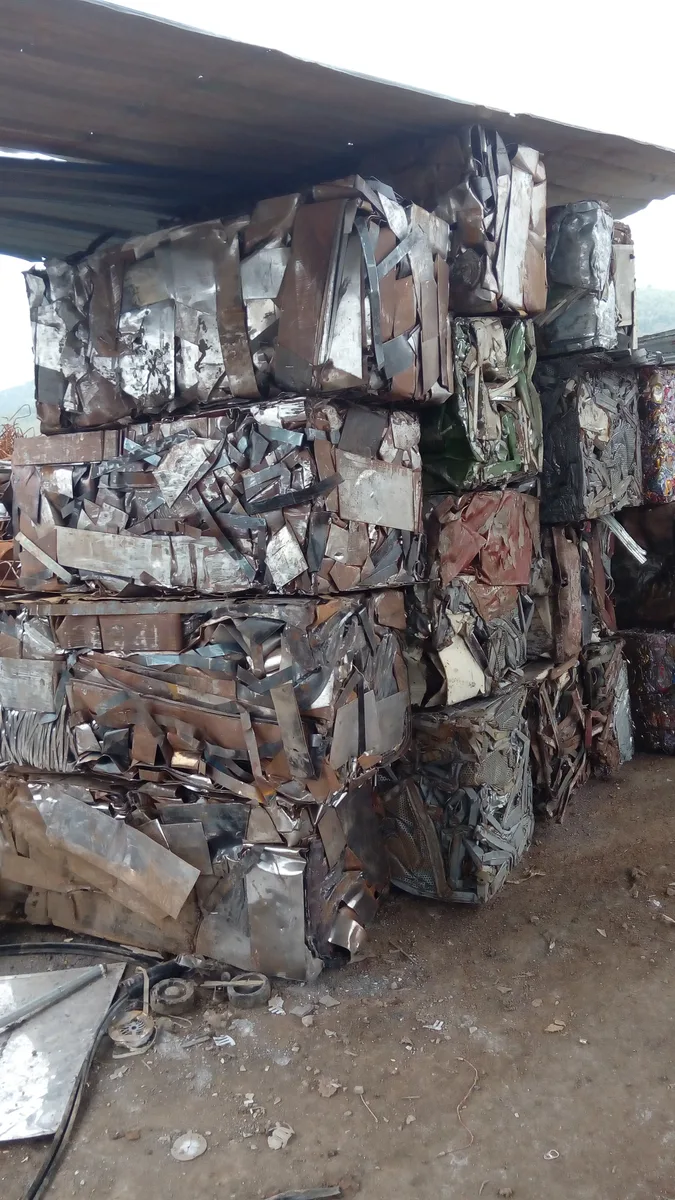
Steel coil edge trimming can produce long, narrow and curled scrap that behaves differently from short flat offcuts. The Front-Out Y81Q Baler for Steel Coil Edge Trimmings is a selection guide for material brought into an approved, manageable condition. It is not a promise that continuous strip from a production line can be fed directly into the machine.
Begin with strip width, thickness, length, curl and collection form. A loose bin, a tightly tangled bundle and a prepared short-strip batch are different feed presentations. The supplier needs to know which will reach the chamber and how handling will occur. A volume estimate alone does not describe springing or entanglement risk.
02 / MATERIALS & OUTPUT
Applications & Materials
Suitable scrap materials, industries and operating scenarios.
Make preparation and grade identity explicit
Keep the steel grade and coating state identifiable as the scrap leaves the coil-processing operation. Where multiple coils or grades share collection equipment, define the batch boundary and clearing procedure. Baling does not restore grade identity once incompatible scrap has been mixed. Disclose normal oil or process contamination to the equipment supplier and receiver.
Long strips may require a separate preparation method before baling. Agree that method with the responsible technical team rather than improvising by pulling a strip into an active chamber. Do not assume the baler contains a strip chopper, recoiler or continuous feed mechanism; these are not established by the supplied series information.
Exclude foreign attachments, sealed objects, hot material and unknown residues. Treat tangled strip as a handling issue, not a reason to reach into the working area. For related batch-control questions, see the separate-batch workflow, while retaining a steel-specific grade and preparation specification.
03 / STRUCTURE & FEATURES
Equipment features.
Features & Benefits
Operational advantages and configuration benefits for buyers.
Match the loading method to the prepared strip form
The hydraulic baler compresses approved feed in its chamber and discharges the resulting bale forward. Selection should establish that the prepared strip can be loaded under the specified procedure without bridging, uncontrolled springing or manual restraint. Neither chamber dimensions nor nominal hydraulic force alone proves that a tangled strip mass is suitable.
A defined preparation and staging process can make the work more predictable. Operators can compare incoming material with the approved sample and hold a nonconforming container for review. The advantage is control over the feed condition; no guaranteed throughput, density or labor saving is implied.
Confirm the loading alternative and its movement envelope. A grabber may handle some prepared batches differently from manual loading, but the source does not approve either method for every strip form. The grabber-loading guidance is a useful interface checklist, not evidence of an automatic feeding system.
Discuss the receiver requirements for protruding strip, loose ends and bale handling condition. Forward discharge should lead to a defined receiving point rather than into a traffic route or unplanned pile. Do not secure or pull a loose end while machine movements are possible. The selected machine instructions govern intervention and collection.
04 / WORKING PRINCIPLE
Operation & Maintenance
Practical guidance for safe operation and routine maintenance.
Trial normal curl and the difficult extremes
Use a representative prepared batch, including the normal range of widths, thicknesses and curl within the proposed specification. Record how strip length is controlled and how material is collected. A demonstration with short flat pieces cannot establish results for the long curled feed named in the enquiry.
Observe loading, compression, discharge and approved collection. Record any retained strip, snagging or release of loose ends and agree how these findings affect preparation or model selection. Evaluate bale handling against the receiver specification. Avoid calculating output by multiplying a general series bale weight by an unrelated cycle figure.
Maintain accessible wear surfaces and inspect for retained strip under the machine-specific plan. Stop and isolate before any clearing or internal inspection. Recurring entanglement should trigger a review of the incoming strip condition, not a faster improvised loading routine. Reassess the approved feed when the slitting line changes width, grade, thickness or collection method.
05 / TECHNICAL REFERENCE
Technical Parameters
Key selection data and model-dependent specification ranges.
Configuration references for the enquiry
The six attributes below are drawn from the supplied front-out series information in the HBQ sheet. They are reference choices for discussion, not a verified Y81Q model specification. Confirm each selected attribute against the proposed Y81Q machine, its drawings and the order. The HBQ series name is not being renamed as a Y81Q model.
Keep full series ranges intact when comparing quotations. Do not combine their endpoints into a new machine size or infer production from a no-load cycle. Final acceptance should use the actual material and agreed operating conditions. Ask for the machine-specific manual, layout and configuration list before approving the installation.
Front-Out Baler Reference Video is the designated equipment/process reference. It is not proof that this exact material or configuration was tested, and does not establish a production rate.
| Attribute | Reference value |
|---|---|
| Bale shape reference | Square/cube; confirm actual dimensions |
| Series chamber length | 800–2,000 mm; confirm matched chamber dimensions |
| Series steel plate thickness | 12–30 mm; location and model dependent |
| Listed electrical components | Schneider; confirm the ordered configuration |
| Baler arrangement | 3 rams |
| Discharge arrangement | Forward push-out |
06 / SOLUTIONS & CUSTOMER CASES
Plan the complete process.
RELATED NEWS
News & buying guides
APPLICATIONS
Material preparation guides
These are related material guides. Follow each guide’s feedstock limits; a related material is not automatically approved for every machine configuration.
07 / QUESTIONS & SUPPORT
Product questions,
answered.
Delivery, Service & FAQ
Delivery scope, technical support and frequently asked questions.
Frequently asked questions
Can continuous edge strip feed directly into this baler?
That capability is not established. Define the required strip preparation and any separate upstream equipment before choosing a loading arrangement.
Which strip measurements matter?
Provide width, thickness, prepared length, curl and collection form. Photos and samples should show normal variation rather than only neatly arranged short pieces.
Does the baler include a strip chopper?
No chopper is established by the supplied front-out reference information. Any resizing equipment must be specified and assessed separately.
Can a grabber load tangled strip?
Do not assume it can safely handle every tangled form. Review the actual feed and the loading interface with the supplier.
How are grades kept separate?
Identify each source batch and define the changeover before mixing occurs. The batch-control guidance provides related planning questions.
What should acceptance include besides compression?
Check the prepared feed, loading behavior, loose strip ends, forward receiving condition and approved handling. A compact appearance alone does not establish suitability.
Equipment Recommendation
Tell Us About Your Material and Capacity
Share the key operating conditions below so our team can compare suitable equipment and prepare a practical configuration.