
Metal Balers
Front-Out Y81Q Baler for Steel Press Brake Offcuts
Plan handling for bent profiles, flanges and sharp sheet remnants
Review steel press-brake offcuts for a Front-Out Y81Q baler, including bent geometry, nesting, contamination and representative acceptance checks.
PRODUCT VIDEO
Front-Out Y81Q Baler for Steel Press Brake Offcuts video
01 / PRODUCT DESCRIPTION
Product Overview
Purpose, machine structure and its role in the recycling process.
Treat bent scrap as a shape problem, not only a thickness value
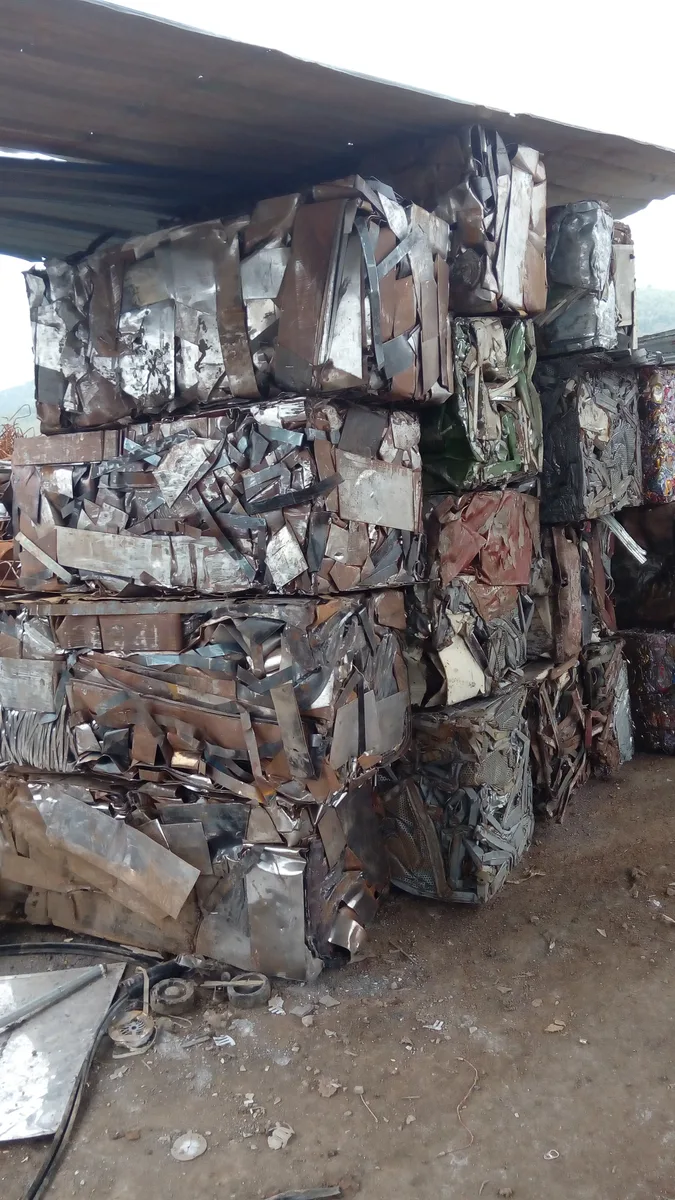
Press-brake operations can leave folded test pieces, flange trimmings, short channels and rejected formed sheet components. The Front-Out Y81Q Baler for Steel Press Brake Offcuts is aimed at assessing suitable light formed remnants. A piece that was thin before bending may occupy an awkward volume or hook around another piece after collection.
This is not an approval to bale any structural section or fabricated assembly. Supply the actual scrap description and representative samples. The machine choice must account for the greatest folded dimensions, springback, sharp corners and the handling method. A sheet-thickness number alone cannot show whether the proposed load enters and compresses predictably.
02 / MATERIALS & OUTPUT
Applications & Materials
Suitable scrap materials, industries and operating scenarios.
Sort the formed remnants before they become an interlocked pile
Separate approved light sheet remnants from heavy sections, solid bars and components carrying fasteners or other materials. Identify the steel grade and normal coating condition. Include bend radii, flange depth and the longest pieces when describing the waste stream. Loose pieces may nest tightly in a bin yet separate into much larger shapes when lifted.
Where parts hook together, define a preparation method that avoids manual disentangling in the machine working area. Do not force a tangled bundle into a chamber simply because its individual pieces fit. Any resizing or removal of attachments should be agreed before loading, with suitable equipment and the applicable site procedure.
Exclude sealed or pressurized objects, hot scrap and unknown hazardous residues. A rejected fabricated item may contain something that ordinary production trimmings do not. Maintain a clear rejection route rather than asking the operator to improvise at the baler. For general feed selection, see the light-steel offcut guidance.
03 / STRUCTURE & FEATURES
Equipment features.
Features & Benefits
Operational advantages and configuration benefits for buyers.
Match the chamber and collection area to the formed shapes
The front-out arrangement provides a defined exit for the bale after approved hydraulic compression. This can help place the receiving operation on a predictable route, provided the selected bale and handling equipment are compatible. It does not remove the need to inspect protruding flanges, loose pieces or an unstable receiving condition.
The value of a controlled press-brake scrap stream is consistency. Separating heavy or attached components and agreeing a manageable folded envelope gives the supplier a clearer basis for model selection. It also gives the operator a practical acceptance standard at intake. These are process benefits, not a promise that every folded part will compress to the same density.
Ask how the chosen loading alternative handles springy or nested forms. Manual and grabber loading are alternatives in the source information, not a guarantee that both are suitable at the same installation. The grabber-loading interface raises useful visibility and movement questions, but is not evidence of a specific Y81Q option package.
Do not infer a shearing function or an automatic untangling mechanism from a baler description. The quotation should state the accepted feed dimensions and any required preparation. If a test reveals repeated catching or poor retention, revise the preparation or equipment choice before relying on routine output.
04 / WORKING PRINCIPLE
Operation & Maintenance
Practical guidance for safe operation and routine maintenance.
Use a trial that includes the awkward pieces
Select representative samples across the normal production mix, including the deepest flanges and the usual nested pieces. Record grade, thickness, dimensions, coatings and preparation. A trial based only on flat leftovers does not establish performance on the bent material named in this product title.
Observe the approved loading, compression, release and front-end collection sequence. Agree how bale handling condition and protrusions are assessed with the receiver. Keep people outside machine movement zones; do not hold a flange in position or reach into the chamber to improve a load. Follow the machine-specific stop and isolation procedure for any intervention.
Inspect wear surfaces and discharge areas under the maintenance plan. Bent sharp edges can make recurring contact points important to track. Report abnormal wear, retained scrap and repeated jams with material photos and batch details. Review the accepted envelope when the press-brake shop introduces a new section or deeper fold, even if the steel thickness remains unchanged.
05 / TECHNICAL REFERENCE
Technical Parameters
Key selection data and model-dependent specification ranges.
Configuration references for the enquiry
The six attributes below are drawn from the supplied front-out series information in the HBQ sheet. They are reference choices for discussion, not a verified Y81Q model specification. Confirm each selected attribute against the proposed Y81Q machine, its drawings and the order. The HBQ series name is not being renamed as a Y81Q model.
Keep full series ranges intact when comparing quotations. Do not combine their endpoints into a new machine size or infer production from a no-load cycle. Final acceptance should use the actual material and agreed operating conditions. Ask for the machine-specific manual, layout and configuration list before approving the installation.
Front-Out Baler Reference Video is the designated equipment/process reference. It is not proof that this exact material or configuration was tested, and does not establish a production rate.
| Attribute | Reference value |
|---|---|
| Supply voltage alternatives | 220–660 V; select the ordered supply configuration |
| Electrical supply | Three-phase; according to installation specification |
| Feeding alternatives | Grabber or manual; according to approved configuration |
| Wear plate arrangement | Interchangeable wear steel plate |
| Listed PLC option | Siemens; confirm the ordered control configuration |
| Series steel plate thickness | 12–30 mm; location and model dependent |
06 / SOLUTIONS & CUSTOMER CASES
Plan the complete process.
RELATED NEWS
News & buying guides
APPLICATIONS
Material preparation guides
These are related material guides. Follow each guide’s feedstock limits; a related material is not automatically approved for every machine configuration.
07 / QUESTIONS & SUPPORT
Product questions,
answered.
Delivery, Service & FAQ
Delivery scope, technical support and frequently asked questions.
Frequently asked questions
Are all bent steel parts suitable?
No. Light sheet remnants must be assessed separately from heavy sections and fabricated assemblies. Provide the actual shapes, dimensions and attachments for approval.
Why does flange depth matter?
It changes the loading envelope, nesting and contact behavior. A flat sheet-thickness value does not describe the formed piece entering the chamber.
Can the baler untangle nested profiles?
Do not assume that capability. Agree an upstream preparation method and reject unsuitable tangled loads before they enter the working area.
Should a grabber be used for these offcuts?
The handling method depends on the actual pieces and installation. Review the grabber interface with the proposed equipment.
How should the acceptance sample be chosen?
Include typical folded shapes and the difficult extremes within the proposed specification. The general offcut checklist is a starting point, not a substitute for those samples.
Does a successful flat-sheet trial approve bent scrap?
No. The sample must represent the material geometry actually intended for production, and acceptance must cover discharge and handling as well as compression.
Equipment Recommendation
Tell Us About Your Material and Capacity
Share the key operating conditions below so our team can compare suitable equipment and prepare a practical configuration.