
SolutionMetal Chip Fluid Separation Solution
Metal Chip Drying and Briquetting Solution
Plan a coordinated metal chip drying and briquetting line with centrifugal oil or coolant separation, separate fluid collection and briquetting of the discharged chips.
Wet-chip collection → controlled feeding → centrifugal drying + fluid collection → briquetting → briquette collection
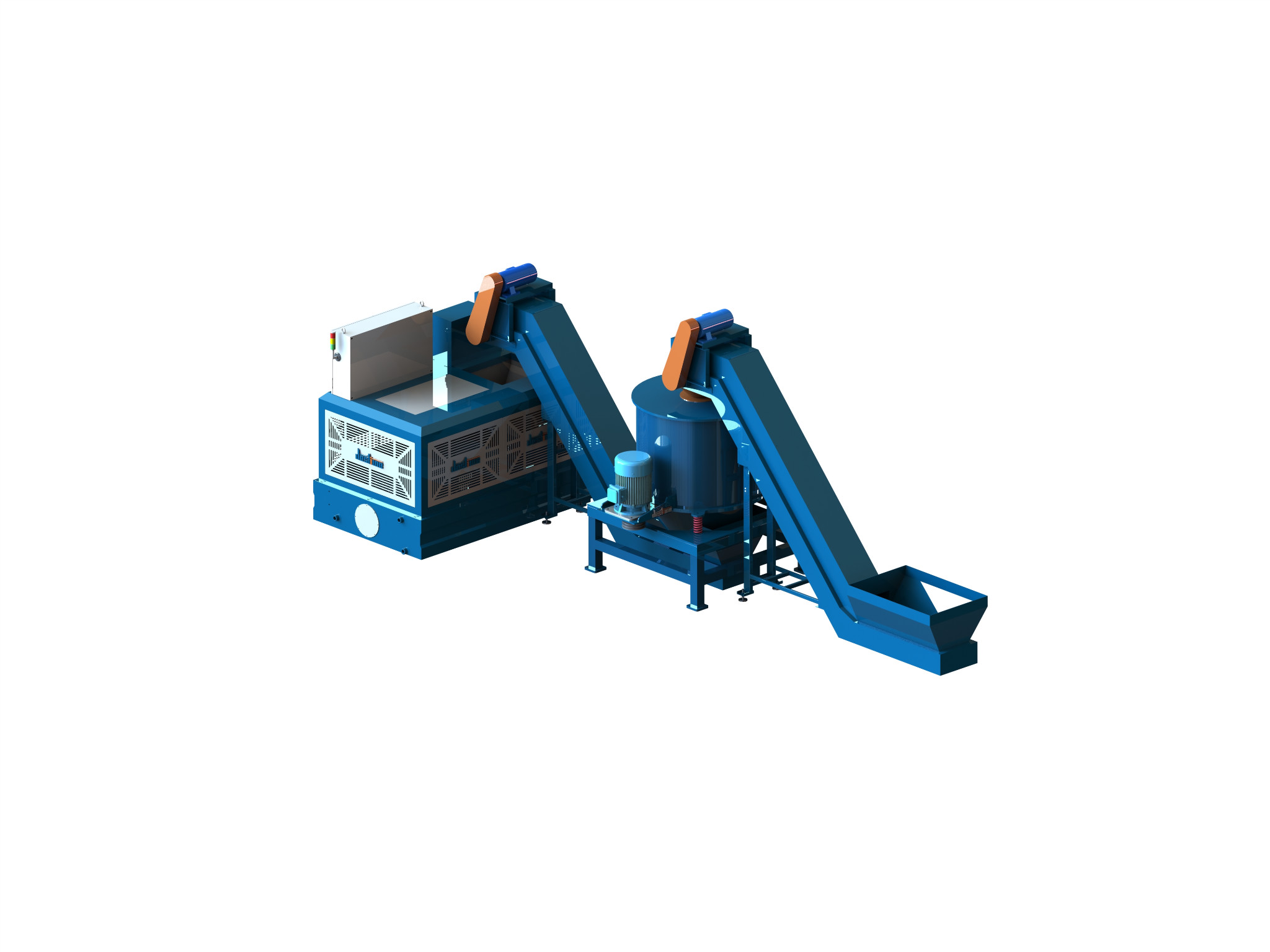
Metal chip drying & briquetting overview
A metal chip drying and briquetting solution combines centrifugal separation of attached cutting oil or coolant with a downstream briquetting stage for the discharged chips. Also called chip wringing or centrifugal de-oiling, this mechanical separation step prepares chips for further handling while collecting the separated liquid through its own recovery route.
The centrifuge separates attached liquid, while the downstream metal chip briquetting press forms compact metal briquettes.
Here, “drying” means reducing attached liquid by spinning the chips, rather than evaporating it with heat. The final residual-liquid level depends on the feedstock, fluid and selected operating conditions.
The four system renders below show the proposed equipment arrangement from different sides. Review feeding, centrifugal drying, chip transfer, briquetting and controls as one coordinated process.
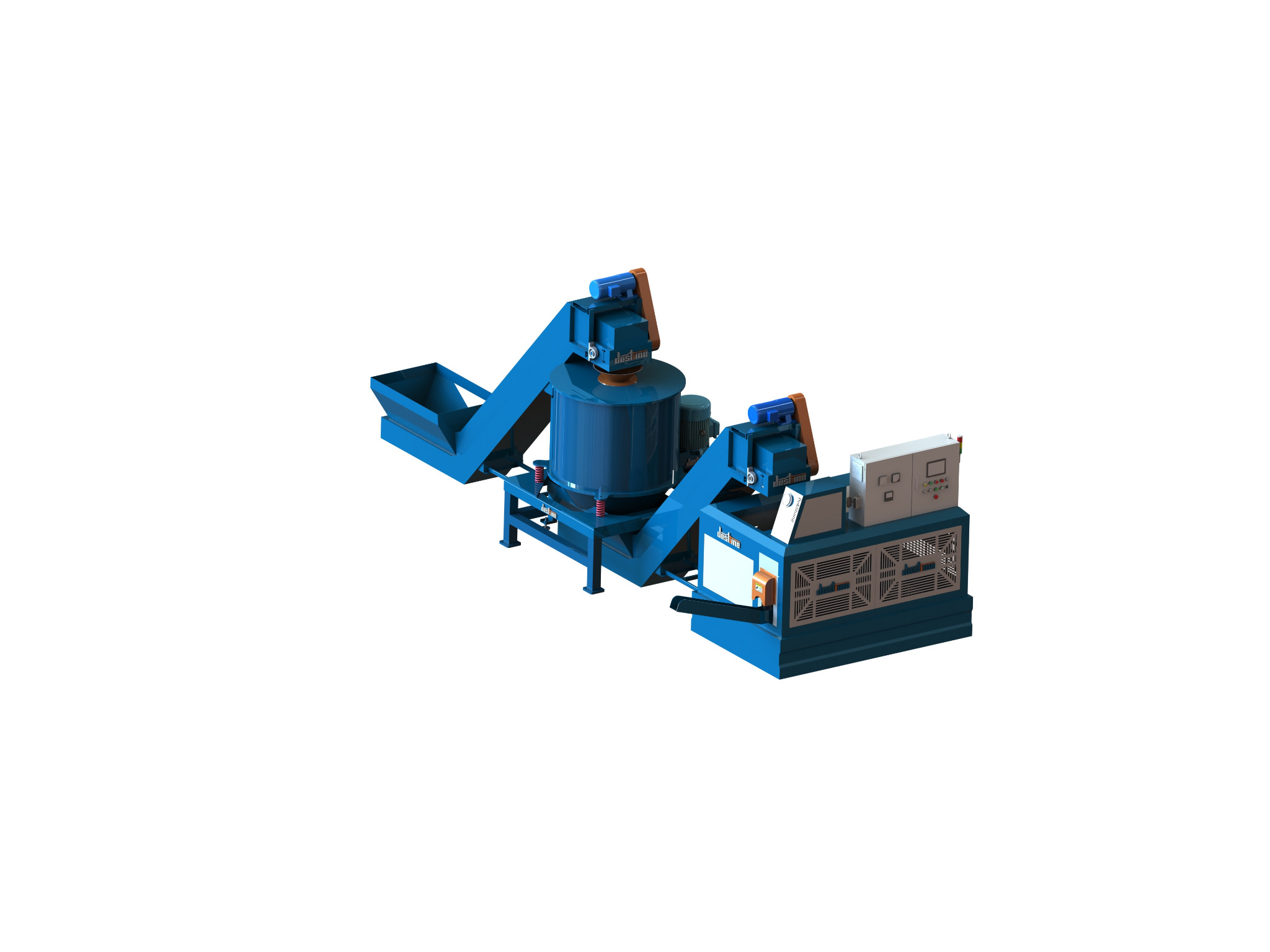
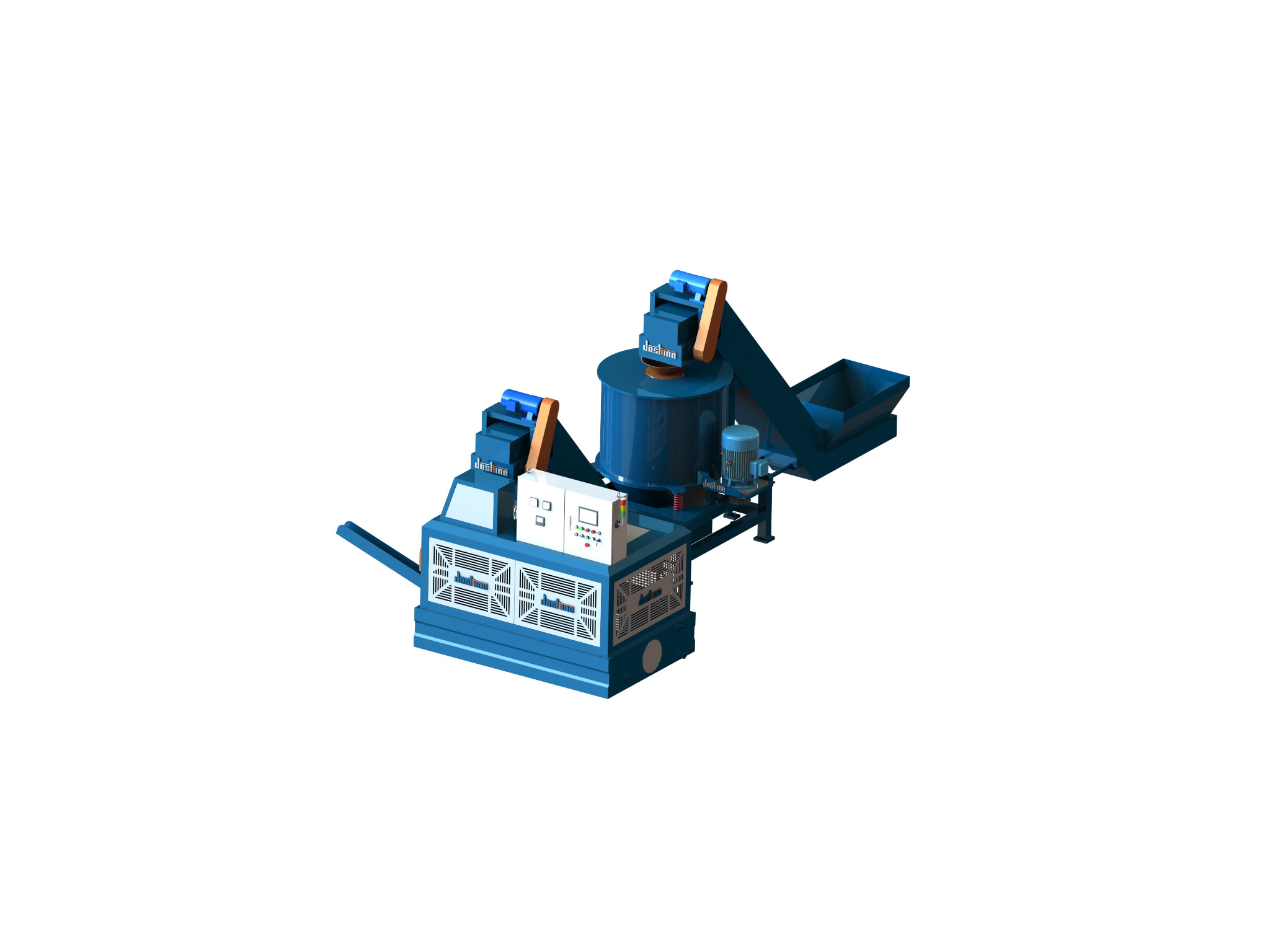
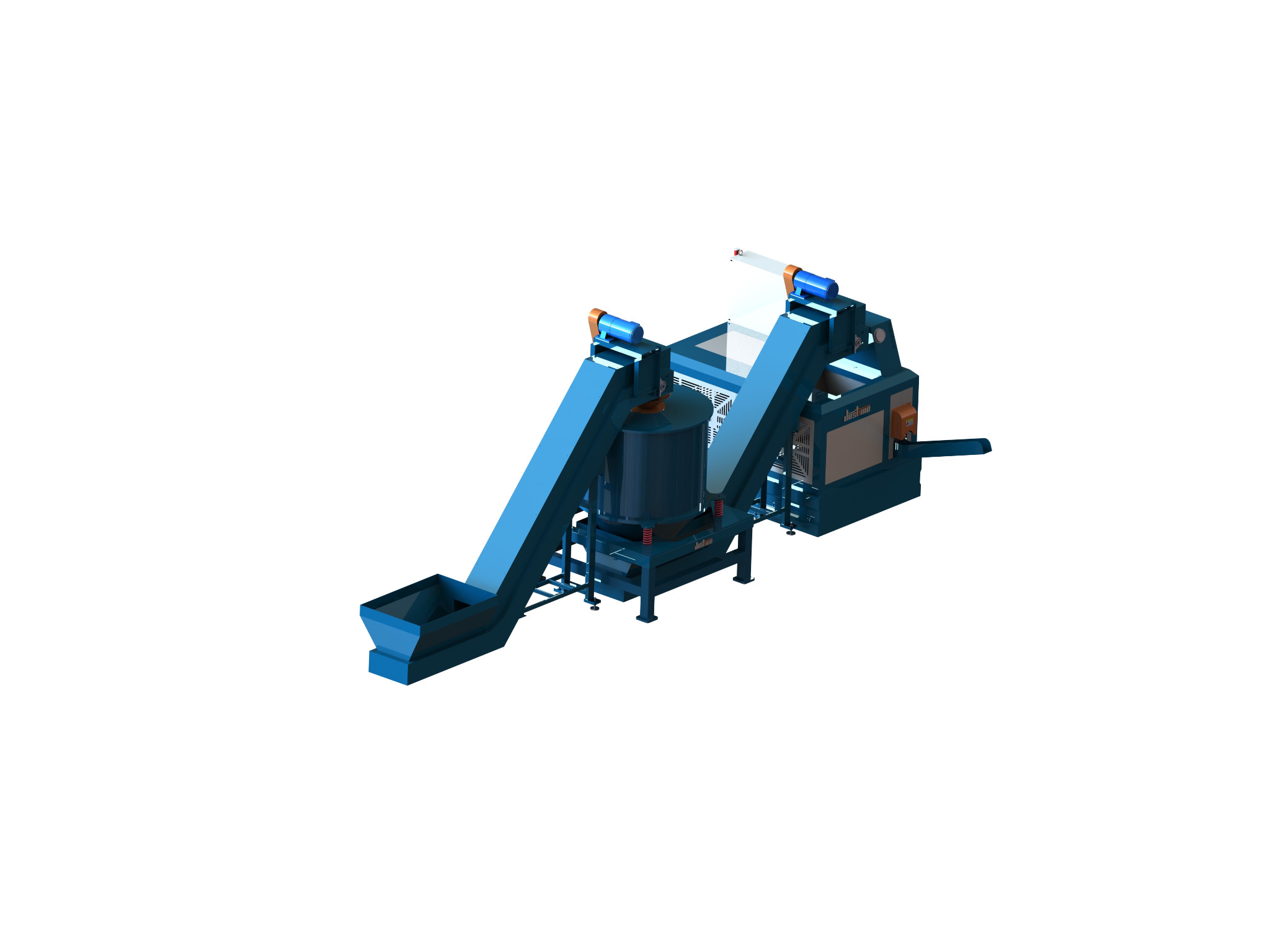
Wet-chip assessment & feed preparation
Start with representative wet chips from the actual machining process. Identify the metal grade, chip shape and length, loose bulk density, cutting-fluid type and contamination. Keep material streams separate where the downstream recycling or fluid-handling process requires it.
Long, stringy or tangled turnings may need size reduction before feeding. Confirm this through an application review rather than assuming every chip form will flow through the same equipment. Include normal production and peak collection quantities when assessing the feed arrangement.
Discuss oversized pieces, fines and foreign objects with the equipment supplier. Agree on the accepted material specification and any required screening or preparation before selecting the dryer.
Chip drying, fluid recovery & briquetting workflow
- Collect and assess wet chips: establish the agreed material stream and collection method.
- Prepare and meter the feed: arrange size reduction where required and deliver suitable chips at a controlled rate.
- Separate attached liquid: the centrifuge spins the chips to separate oil or coolant mechanically.
- Collect the separated fluid: provide a dedicated drainage and collection route, with filtration or further treatment where required.
- Transfer and briquette the chips: convey the centrifugally dried chips to a suitable briquetting machine, then collect the formed briquettes. Confirm material suitability, feed rate and control interfaces for the selected equipment.
Recovered fluid is not automatically ready for reuse. Check its condition against the machining process requirements before returning it to production. Agree on how the line responds to interrupted feed, unavailable downstream equipment and a fluid collection system that cannot accept more liquid.
System layout & installation planning
Use the system layout to discuss equipment positions, feeding access, chip discharge and service space. The drawing includes multiple equipment views; the full-sheet version below presents the same arrangement with more surrounding space.
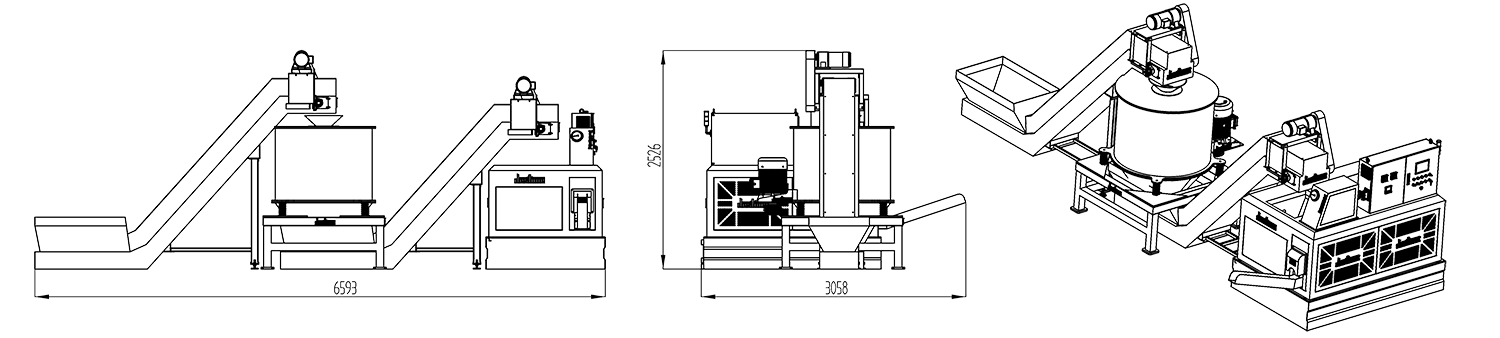
Open the alternate full-sheet layout drawing
Confirm the approved project drawing, units and revision before using dimensional annotations for installation. Plan the container approach, conveying route, fluid collection access, maintenance clearances and downstream collection area. Confirm floor loading, anchoring, electrical services and drainage requirements for the selected equipment.
Equipment selection & acceptance checks
Select the complete arrangement around the material and required output, rather than a rendering alone. Agree on the following project inputs before specifying the equipment:
| Selection item | Information to confirm |
|---|---|
| Chip and fluid characteristics | Metal grade, chip geometry, contamination, fluid type and representative samples |
| Production demand | Normal and peak wet-chip quantities, operating hours and collection pattern |
| Separation target | Required residual-liquid level, sampling method and acceptance criteria |
| Equipment configuration | Feed preparation, dryer specification, discharge method and controls |
| Fluid handling | Collection capacity, quality checks and any filtration or treatment needed for reuse |
| Installation | Approved layout, utilities, access and downstream interfaces |
For an acceptance trial, agree on a representative material batch and measurement method. Record feed consistency, throughput, residual liquid and interruptions under the agreed conditions. Confirm loading limits, guarding, interlocks, stopping and isolation procedures against the final equipment documentation with qualified personnel.
Frequently asked questions & next steps
Is centrifugal chip drying a heat-drying process?
No. Centrifugal drying mechanically separates attached oil or coolant by spinning the chips. It does not imply heated evaporation or guarantee completely dry, oil-free chips.
Can the recovered coolant be reused immediately?
Reuse depends on its condition and the machining process requirements. Filtration, testing or other treatment may be needed before it returns to production.
Can long or tangled metal turnings be processed?
They require an application review and may need size reduction before feeding. Confirm compatibility using representative material and the selected equipment limits.
Can centrifugal drying be combined with briquetting?
Yes, it can be planned upstream of a suitable briquetting stage. Confirm the chip transfer, feed rate and control interfaces for the selected line; the renders do not establish a universal equipment specification.
Plan your chip drying solution
Send chip photos, metal grade, cutting-fluid type, normal and peak chip quantities, operating hours and available floor layout. Include your desired residual-liquid target, downstream chip handling and fluid-reuse requirements.
Discuss your metal chip drying project
Related equipment and handling guidance
- Centrifugal metal chip dryer technical guide
- Steel chain conveyor guide
- Short-chip lifting, tipping and briquetting solution
Configuration note
The renders and reference drawings illustrate a system arrangement for project discussion. Confirm the selected model, material suitability, performance and installation requirements in the approved project documentation.