
Metal Balers
Front-Out HBQ Baler for Prepared Copper Tube Offcuts
Tube-specific preparation and front-discharge handling for approved copper batches
Review prepared copper tube offcuts for HBQ hydraulic baling, with clear checks for open and drained material, fittings, input geometry and front bale collection.
PRODUCT VIDEO
Front-Out HBQ Baler for Prepared Copper Tube Offcuts video
01 / PRODUCT DESCRIPTION
Product Overview
Purpose, machine structure and its role in the recycling process.
Specify the tube feed before selecting the baler
A Front-Out HBQ Baler for Prepared Copper Tube Offcuts is considered for an identified, separately prepared stream of copper tubing, rather than complete plumbing or refrigeration assemblies. Cut ends, bends and short sections need review of their dimensions, wall thickness, attachments and previous use. Copper color alone does not establish composition, cleanliness or suitability.
The HBQ arrangement uses hydraulic compression and forward push-out discharge. Planning therefore includes both how prepared tube pieces reach the chamber and how the finished bale is collected ahead of the machine. Long, hooked or nested pieces can require different handling from loose sheet offcuts, even when the metal grade is similar.
Use the HBQ front-discharge overview for machine-family information. This page adds tube-specific feed release, loading and acceptance questions. It does not establish a universal tube diameter, wall thickness, input length or output rate.
02 / MATERIALS & OUTPUT
Applications & Materials
Suitable scrap materials, industries and operating scenarios.
Release prepared tubing, not unknown closed components
Identify the source process and previous service before accepting a container. Only approved metal that is open, depressurized and properly drained belongs in this prepared-tube scope. Unknown closed items, sealed cylinders, pressurized parts and assembled equipment are excluded. Do not use the baler to release pressure or remove fluids.
Separate brass fittings, steel brackets, insulation, plastic sleeves and other attachments according to the receiving buyer's specification. Record soldered joints, coatings and contamination instead of assuming they disappear during compression. Material requiring hazardous-fluid removal or specialist dismantling must follow an appropriate separate preparation route.
Measure the usual and largest tube pieces, including bends and projecting ends. Review wall thickness and the way pieces nest in their normal container. Any cutting or other size preparation should be agreed before loading; this page does not claim the baler cuts unrestricted lengths or accepts arbitrary thick sections.
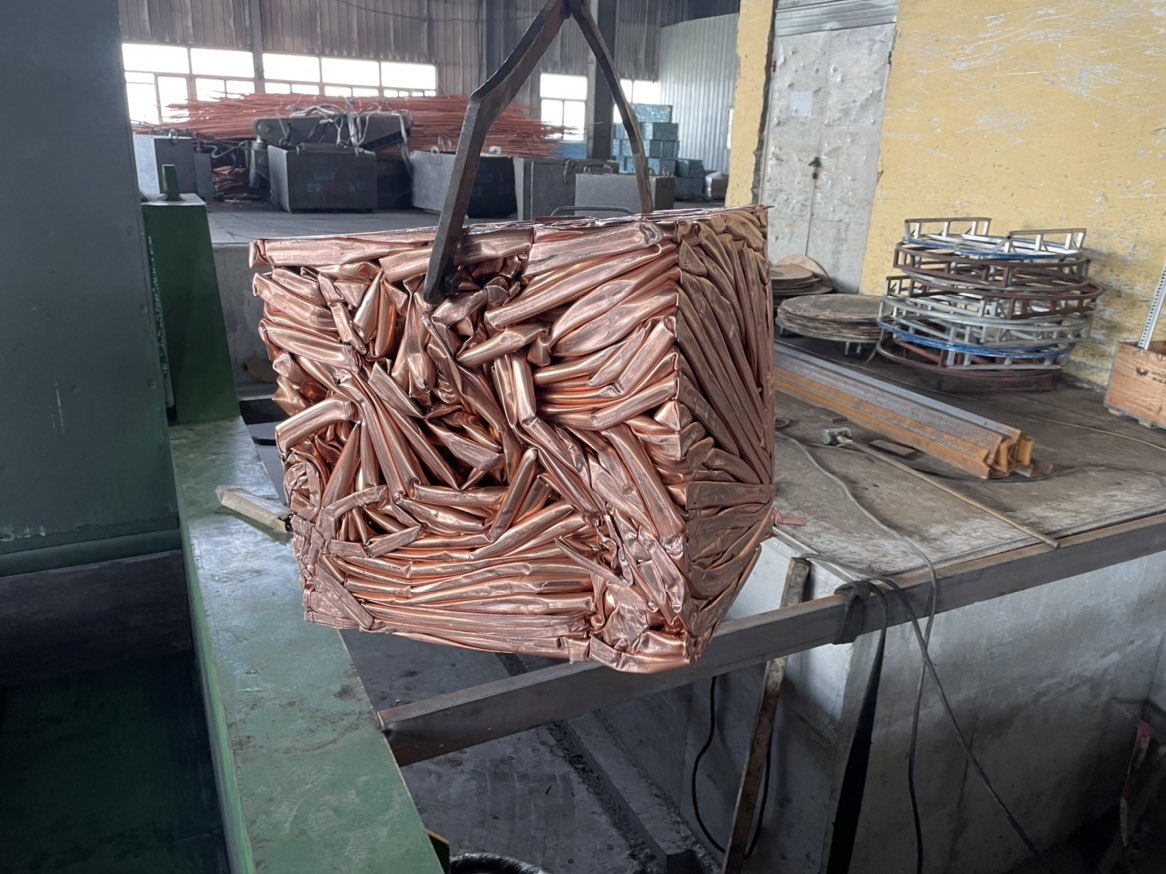
Keep approved and rejected containers visibly separate. The material photographs are tubing and offcut references before preparation, not proof that every pictured attachment is acceptable or that the material has already been drained and checked. Preserve source identity when batches move to the loading position.
03 / STRUCTURE & FEATURES
Equipment features.
Features & Benefits
Operational advantages and configuration benefits for buyers.
Evaluate benefits against the actual tube-handling route
A defined forward collection point can help keep the approved copper batch together through compression and pickup. Its usefulness depends on a clear receiving area, suitable handling equipment and batch identification. Confirm that outgoing bales do not obstruct the next discharge or force loading and collection crews into the same working space.
Preparing the tubing separately makes a supplier assessment more meaningful. A representative container shows how bends, loose ends and nesting affect presentation to the machine. Comparing proposals against that container is more useful than comparing generic capacity ranges measured with an unspecified material.
The supplied series information includes alternative feeding and cooling arrangements. Select these around the approved feed and site conditions. A mobile-bin option, for example, requires review of its loading interface and how long ends remain contained; it does not automatically establish compatibility with every available container or loading device.
Maintenance access should also be evaluated before purchase. Agree how retained pieces and residues are inspected using the delivered isolation procedure. These are practical selection benefits, not claims of automatic contaminant removal, zero carryover or a guaranteed reduction in labor.
05 / TECHNICAL REFERENCE
Technical Parameters
Key selection data and model-dependent specification ranges.
Six mechanical reference attributes
The entries below come from the supplied HBQ series sheet. They describe reference features or selectable arrangements, not a verified combination for one particular machine. Confirm the chosen model, feed specification, loading equipment, electrical supply and acceptance conditions in the order. The shape description does not define three-dimensional bale measurements.
| Attribute | Series reference / option |
|---|---|
| Arrangement | Horizontal |
| Baler arrangement | Three rams |
| Listed cooling option | Fan cooling, where selected |
| Core components | Pump and motor |
| Bale shape reference | Square / cube; confirm selected bale geometry |
| Listed feeding option | Mobile bin, where selected |
Operation & Maintenance
Practical guidance for safe operation and routine maintenance.
Make the acceptance trial representative of daily work
Provide photographs of the normal container, the longest pieces and representative bends. Include dimensions, known grade, previous use, contamination condition and proposed preparation. Supply a layout showing the loading route, front bale receiving area and planned pickup equipment. The copper production-scrap guide explains the wider grade-separation requirements.
Agree a trial using the approved tube stream as it will actually be presented, not a specially selected handful of easy pieces. Observe loading, compression, discharge and collection under the selected configuration. Record preparation, handling method and the buyer's agreed bale checks. A reference photo or unrelated run does not prove a particular bale weight, density or throughput.
Operate and maintain the delivered machine according to its manual and training. Keep personnel clear of the chamber and discharge zone. Stop and isolate as prescribed before any permitted inspection, cleaning or blockage removal; never reach into running equipment to reposition a tube. Include leaks, damaged wear surfaces and unusual operation in the maintenance reporting routine.
The Front-Out Baler Reference Video provides general equipment/process context. It is not a copper-tube test report or proof of this page's selected configuration.
06 / SOLUTIONS & CUSTOMER CASES
Plan the complete process.
RELATED NEWS
News & buying guides
APPLICATIONS
Material preparation guides
These are related material guides. Follow each guide’s feedstock limits; a related material is not automatically approved for every machine configuration.
07 / QUESTIONS & SUPPORT
Product questions,
answered.
Delivery, Service & FAQ
Delivery scope, technical support and frequently asked questions.
Frequently asked questions
Can assembled refrigeration or plumbing units be loaded?
No. This page covers separately prepared tube offcuts. Complete assemblies, unknown contents and pressurized components require a different assessment and appropriate preparation.
Does open-ended tubing automatically count as ready to bale?
No. Confirm previous use, drainage, contamination, dimensions and attachments. Open ends alone do not establish an acceptable feed condition.
Can brass fittings remain attached?
Follow the agreed copper-grade and buyer specification. Identify and separate incompatible fittings or attachments before release; compression does not refine the metal.
What tube length can the machine accept?
No universal input length is established here. Provide the longest pieces, bends and wall thickness for a model-specific assessment. See the HBQ family overview for general context.
Does the mobile-bin reference include a complete automatic loading line?
No. It is a listed feeding option requiring configuration confirmation. It does not imply automatic feeding, material recognition or unattended operation.
What should the purchase trial demonstrate?
Use the agreed prepared tubing and normal loading method. Verify collection and buyer acceptance checks while retaining batch identity. The copper production guide covers related segregation principles.
Equipment Recommendation
Tell Us About Your Material and Capacity
Share the key operating conditions below so our team can compare suitable equipment and prepare a practical configuration.