
Metal Balers
Front-Out HBQ Metal Baler for Separate Loading and Collection Areas
Define the handover between incoming scrap and finished bales
Plan separate loading and collection areas for a Front-Out HBQ baler, with clear operator responsibility, vehicle access and controlled bale handover.
PRODUCT VIDEO
Front-Out HBQ Metal Baler for Separate Loading and Collection Areas video
01 / PRODUCT DESCRIPTION
Product Overview
Purpose, machine structure and its role in the recycling process.
Design two work areas with one coordinated sequence
The Front-Out HBQ Metal Baler for Separate Loading and Collection Areas addresses a common layout question: how can incoming scrap and finished bales move through the site without competing for the same space? Front-out discharge provides a known direction for bale collection. The practical task is to connect that direction with a defined loading position, receiving point and traffic plan.
This is a planning approach, not a claim that the machine includes separate rooms, automatic barriers or a special safety system. Physical separation can be useful only when the selected layout, operating instructions and responsibilities work together. The collection area must not be treated as independent while machine movement can still affect it.
02 / MATERIALS & OUTPUT
Applications & Materials
Suitable scrap materials, industries and operating scenarios.
Give each material movement a clear destination
At the loading side, identify the approved metal grade and the preparation status of each container. Check dimensions, thickness, sharp edges and contamination before scheduling a batch. A container waiting for inspection should be distinguishable from one already released for loading. Mixed or unknown scrap should not be made acceptable merely by moving it closer to the machine.
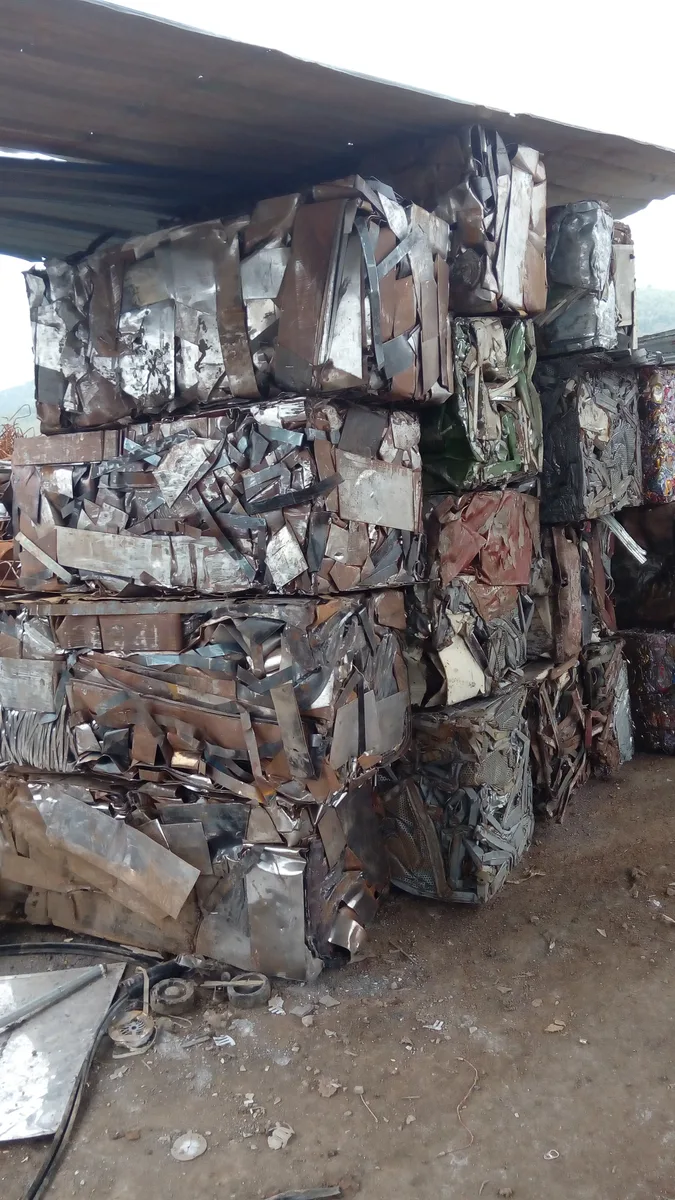
At the collection side, provide the receiving arrangement approved for the actual bale. A forward ejection description does not establish bale stability, lifting points or a pallet system. Define where the bale rests, when the collecting equipment may approach and where it goes next. Keep loose material and unsuitable objects away from this area.
For grade-sensitive operation, connect the two areas with an agreed batch identifier. The separate metal-batch guidance explains why physical flow and material identity must be reviewed together.
03 / STRUCTURE & FEATURES
Equipment features.
Features & Benefits
Operational advantages and configuration benefits for buyers.
Make access and command responsibility visible
Separating movements can reduce avoidable crossing and make responsibilities easier to understand when the layout is followed. It does not guarantee a particular cycle rate or eliminate every interaction between workers and vehicles. Map the routes used by loaded containers, an empty container, the operator and the collection vehicle, including abnormal situations such as a rejected bale.
Choose the permitted loading alternative with the supplier. Grabber and manual loading have different observation needs and occupied areas. Do not place a pedestrian waiting point within a grabber reach or assume the collection operator can see the loading side. The visibility review must use the actual machine, barriers and surrounding equipment.
Establish who initiates the approved machine sequence and how the collection person confirms the area is ready. The source does not identify particular interlocks or control architecture, so ask for the delivered control description. A site procedure cannot substitute for required engineered safeguards, and a generic product description cannot certify the arrangement.
For sites using forklifts, compare the forward-end pickup interface. Confirm the actual approach, clearance and approved bale handling method rather than inferring a fork pocket from the discharge direction.
04 / WORKING PRINCIPLE
Operation & Maintenance
Practical guidance for safe operation and routine maintenance.
Prove the handover before routine operation
Start acceptance with a marked plan and agreed roles. Follow a representative container through inspection, staging and approved loading. After compression and forward discharge, observe the receiving condition and the authorized collection step. Record any point where someone must cross another activity zone or improvise a signal. Resolve the layout before relying on the routine.
Keep an identified place for material or bales awaiting review. This prevents a blocked exit from encouraging an unsafe attempt to clear the machine during operation. Do not reach into a moving chamber or discharge zone. Follow the machine-specific stop and isolation procedure before clearing a jam or entering a restricted area.
Maintenance routes also matter. Leave space to inspect hoses and wear components without turning a daily storage area into an obstacle. Review the arrangement after a change of container, lifting attachment, staffing pattern or scrap geometry. The best separation is one the team can preserve during a normal busy shift, not only during the acceptance demonstration.
05 / TECHNICAL REFERENCE
Technical Parameters
Key selection data and model-dependent specification ranges.
Configuration references for the enquiry
The six attributes below come from the supplied HBQ series information. They describe reference values or configuration choices, not proof that every machine includes every option. Confirm the selected model, material approval, supply, loading and forward-discharge arrangement in the written order.
Keep full series ranges intact when comparing quotations. Do not combine their endpoints into a new machine size or infer production from a no-load cycle. Final acceptance should use the actual material and agreed operating conditions. Ask for the machine-specific manual, layout and configuration list before approving the installation.
Front-Out Baler Reference Video is the designated equipment/process reference. It is not proof that this exact material or configuration was tested, and does not establish a production rate.
| Attribute | Reference value |
|---|---|
| Series machine weight | 2,820–18,500 kg; model dependent |
| Machine layout | Horizontal type |
| Control alternatives | PLC automatic control or manual control; confirm selected package |
| Wear plate alternatives | NM450 or Hardox450; confirm specified alternative |
| Series oil tank volume | 800–3,000 L; confirm selected model |
| Listed cooling option | Industrial chiller; confirm system selection |
06 / SOLUTIONS & CUSTOMER CASES
Plan the complete process.
RELATED NEWS
News & buying guides
APPLICATIONS
Material preparation guides
These are related material guides. Follow each guide’s feedstock limits; a related material is not automatically approved for every machine configuration.
07 / QUESTIONS & SUPPORT
Product questions,
answered.
Delivery, Service & FAQ
Delivery scope, technical support and frequently asked questions.
Frequently asked questions
Does this product include an automatic traffic-control system?
No such system is established by the supplied data. Confirm required safeguards and controls separately with the machine supplier and responsible site personnel.
Can loading and collection happen at the same time?
Do not assume simultaneous operation is permitted. Follow the selected machine instructions and approved site arrangement, including movement and access restrictions.
How should a forklift approach the discharged bale?
Use the approved receiving and lifting method. Review the forklift interface with the actual layout and bale.
Will separate areas guarantee higher output?
No. They may improve organization when correctly designed, but output also depends on material preparation, loading, configuration and collection conditions.
How are different metal batches kept identifiable?
Carry the batch identity from intake to finished storage and define changeover checks. See the batch guidance.
What should the layout submission show?
Include machine movement envelopes, loading and collection positions, routes, service space and surrounding equipment. Identify proposed controls and any blind spots for review.
Equipment Recommendation
Tell Us About Your Material and Capacity
Share the key operating conditions below so our team can compare suitable equipment and prepare a practical configuration.