
Metal Balers
Front-Out HBQ Metal Baler for Forklift Pickup at the Discharge End
Review the receiving support and forklift route before choosing the baler
Review HBQ front-discharge bale pickup with your forklift. Confirm receiving support, fork access, bale mass, load center and the route to storage.
PRODUCT VIDEO
Front-Out HBQ Metal Baler for Forklift Pickup at the Discharge End video
01 / PRODUCT DESCRIPTION
Product Overview
Purpose, machine structure and its role in the recycling process.
Specify the handover between the baler and the truck
Front discharge defines where a bale exits; it does not fully define how a forklift receives it. An HBQ installation intended for forklift pickup needs an agreed receiving position, a suitable support arrangement and a verified approach for the actual truck. Those details should be resolved before the baler is placed on the site plan.
The Front-Out HBQ Metal Baler for Forklift Pickup at the Discharge End is a workflow selection for prepared metal scrap. Its central question is whether the completed bale can move from the discharge position to storage using the site's approved equipment and procedure. The HBQ overview establishes forward push-out discharge, while the collection interface requires configuration-specific confirmation.
Provide the truck and attachment details, proposed receiving arrangement and route to storage. A general description of forklift collection is not evidence that fork pockets, a pallet system, lifting attachment or discharge conveyor is included.
02 / MATERIALS & OUTPUT
Applications & Materials
Suitable scrap materials, industries and operating scenarios.
Evaluate the finished load as well as the incoming scrap
Describe the approved feed by grade, piece geometry, thickness and preparation. These conditions help explain the bale presented for collection. Different scrap mixtures can produce different exposed edges and handling behavior, so a pickup demonstration should use the material intended for everyday operation.
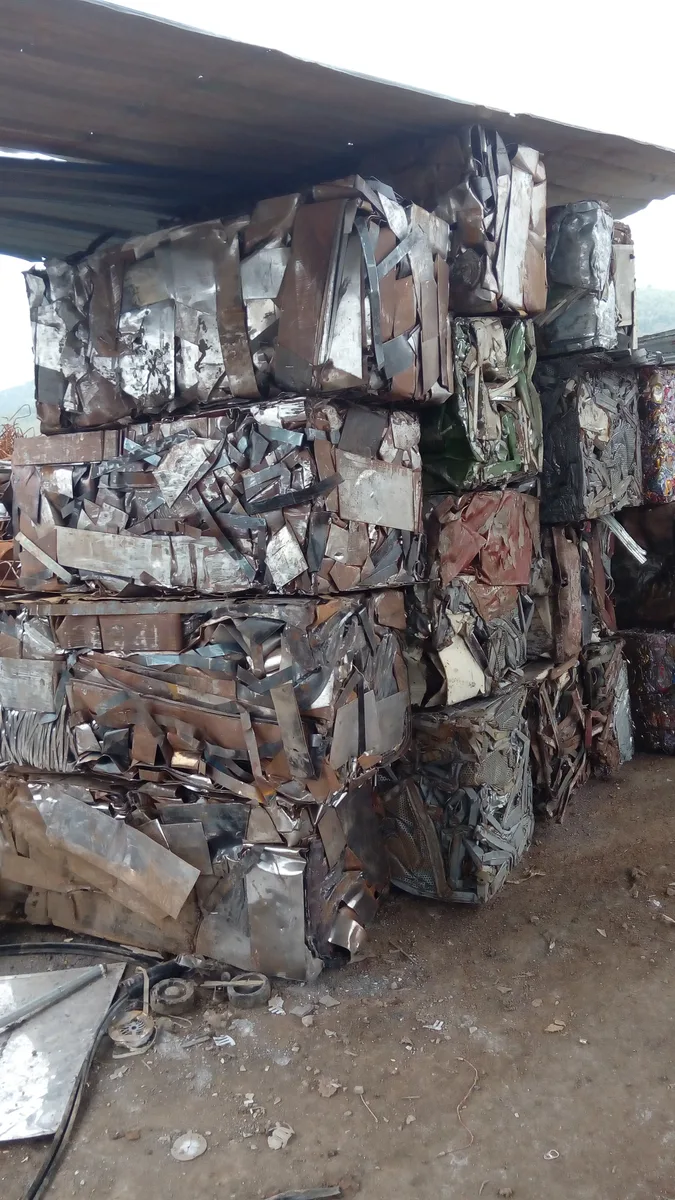
Obtain measured bale mass and complete external dimensions from representative results. Inspect the proposed load for projecting pieces and assess whether it remains suitably contained through the agreed handling sequence. A rectangular appearance alone does not demonstrate stability, permit loose pieces to be ignored or establish an acceptable lifting method.
Keep material identity and any receiving-buyer restrictions with the finished batch. Bale collection should not mix grades that were deliberately separated before compression. Establish a process for holding an irregular or damaged bale for assessment rather than automatically sending it along the normal route.
Reject batteries, sealed or pressurized containers and hazardous contamination before baling. The forklift pickup plan cannot compensate for unsuitable feed or establish that an unknown compressed package is acceptable to handle.
03 / STRUCTURE & FEATURES
Equipment features.
Features & Benefits
Operational advantages and configuration benefits for buyers.
Resolve support, fork access and vehicle capacity together
Ask for a drawing showing the finished discharge position, available approach and any receiving equipment included in the proposal. Determine how the bale will be supported when machine movement ends and how the selected lifting method gains access. Do not infer usable fork-entry clearance from a photograph of a bale resting near the outlet.
Confirm whether the plan uses a separately specified pallet, receiving stand or another approved arrangement. Its dimensions, load rating and relationship to the discharge movement must be reviewed. A support must not be improvised or positioned where it interferes with the machine.
The forklift supplier or competent site assessor should review actual load mass, load center, pickup height and attachment effects against the truck's rated capacity. A nominal truck capacity is not enough when the load projects farther forward or an attachment changes capacity. These are vehicle-selection checks, not capabilities supplied by the baler.
Review the travel route for turning space, overhead restrictions, surface condition and interaction with other work. Front-out discharge may fit a straight collection approach, but it does not guarantee the available aisle suits the selected truck.
04 / WORKING PRINCIPLE
Operation & Maintenance
Practical guidance for safe operation and routine maintenance.
Accept the complete pickup and set-down sequence
Agree the handover condition between machine operation and vehicle approach. The operator and truck driver need a defined procedure for recognizing when collection is permitted. Keep the receiving zone clear during discharge and follow the equipment-specific instructions; an automatic control option alone does not establish an integrated forklift interlock.
During a representative trial, observe discharge, permitted approach, engagement of the load, withdrawal, travel and set-down. Record the truck, attachment, bale mass, dimensions, receiving support and route used. Check several representative bales, including variation within the approved feed, rather than relying on one conveniently positioned sample.
Confirm access for clearing debris and maintaining the discharge area without entering a hazardous zone during movement. Apply the manufacturer's isolation and stored-energy procedure before permitted intervention. Report damaged supports, irregular bale presentation or unexpected machine behavior for assessment.
The Front-Out Baler Reference Video offers general process context. It does not certify forklift capacity, establish the receiving hardware supplied or validate your proposed pickup method.
05 / TECHNICAL REFERENCE
Technical Parameters
Key selection data and model-dependent specification ranges.
Keep machine references separate from lifting ratings
The six selected attributes below are HBQ series references, not one fixed machine specification. Machine weight is distinct from finished-bale weight and cannot be used to select the collection forklift. Confirm the complete model and services in the order, then obtain the discharge drawing and representative bale measurements needed for the separate handling assessment.
| Attribute | Reference value |
|---|---|
| Series oil tank volume range | 800–3,000 L; model dependent |
| Control alternatives | PLC automatic control or manual control, as selected |
| Series machine weight range | 2,820–18,500 kg; model dependent, not bale weight |
| Working pressure reference | 21.5 MPa as listed; confirm the selected hydraulic specification |
| Listed cooling option | Water cooling, where specified |
| Series steel plate thickness range | 12–30 mm; component and model dependent |
06 / SOLUTIONS & CUSTOMER CASES
Plan the complete process.
APPLICATIONS
Material preparation guides
These are related material guides. Follow each guide’s feedstock limits; a related material is not automatically approved for every machine configuration.
07 / QUESTIONS & SUPPORT
Product questions,
answered.
Delivery, Service & FAQ
Delivery scope, technical support and frequently asked questions.
Questions about forklift collection
Are fork pockets or a receiving stand included?
No such inclusion is established by this description. Request the actual discharge and receiving drawing with the HBQ technical proposal, and identify all separately supplied equipment.
Does the reference's forklift input entry prove the pickup arrangement?
No. An input-type entry does not establish outgoing bale collection hardware. Confirm the front-discharge interface independently, including support and access for the approved lifting method.
Can a published bale-size range establish forklift suitability?
No. Use measured mass, full dimensions, load center and the actual truck configuration. The rectangular-bale guidance explains why incomplete dimensions do not define a complete package.
Must every bale be placed on a pallet?
That depends on the approved handling arrangement. A pallet system is not assumed here. Review collection separately from the bale-staging plan and specify any required support.
Can the forklift share the loading equipment's approach?
Assess vehicle routes and permitted movements on the site plan. The grabber-loading workflow illustrates an additional equipment envelope; it does not authorize overlapping activity.
What should a pickup trial record?
Record the feed, bale measurements, receiving support, truck, attachment and complete route to set-down. A trial using light-steel offcuts should not automatically approve different scrap mixtures.
Equipment Recommendation
Tell Us About Your Material and Capacity
Share the key operating conditions below so our team can compare suitable equipment and prepare a practical configuration.