
Metal Balers
Front-Out HBQ Metal Baler with Replaceable Chamber Wear Plates
Make inspection access and wear-part planning part of the purchase specification
Compare replaceable wear plates for a Front-Out HBQ metal baler, with guidance on scrap contamination, inspection access, material options and spare-part planning.
PRODUCT VIDEO
Front-Out HBQ Metal Baler with Replaceable Chamber Wear Plates video
01 / PRODUCT DESCRIPTION
Product Overview
Purpose, machine structure and its role in the recycling process.
Plan for the surfaces that contact every load
The Front-Out HBQ Metal Baler with Replaceable Chamber Wear Plates puts service planning alongside material selection. Scrap passes across chamber contact areas during loading, compression and forward discharge. The supplied HBQ information lists interchangeable wear steel plate and alternative wear materials. These entries support a discussion of replaceable wear components, but they do not establish a universal plate life, replacement interval or construction drawing.
Ask which surfaces are covered, how the selected parts are identified and what access is required for inspection and replacement. Buyers comparing machines should request a parts drawing and maintenance instructions for the quoted model, rather than treating the presence of replaceable plates as proof that all wear areas are serviced in the same way.
02 / MATERIALS & OUTPUT
Applications & Materials
Suitable scrap materials, industries and operating scenarios.
Describe abrasive contamination as well as metal type
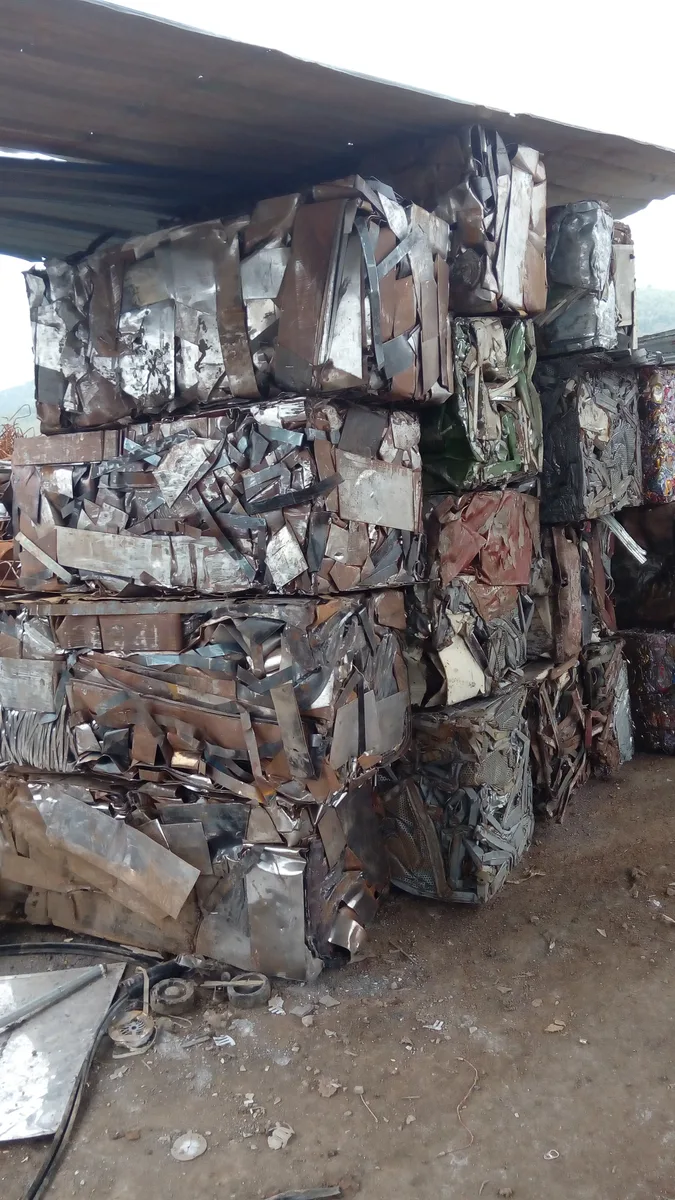
Suitable reviewed light-metal production offcuts can differ greatly in shape and cleanliness. Record the expected steel and nonferrous grades, typical dimensions, coatings and any hard attachments. Identify grit, dirt and other contamination that may accompany yard-stored material. Baling does not clean the feed, and a wear-plate option does not make an unrestricted contaminated stream acceptable.
Separate unapproved heavy sections and items that exceed the selected model's feed specification. Do not feed sealed containers, hazardous residues or hot scrap. Explain any sharp, curled or uneven pieces during the material assessment. A supplier can then review contact conditions and preparation requirements using representative scrap instead of relying on a generic metal category.
Compare the light steel offcut workflow for preparation questions. Where different alloys are processed, use a clear batch-change procedure; replaceable plates do not identify alloys or remove contamination left in the chamber.
03 / STRUCTURE & FEATURES
Equipment features.
Features & Benefits
Operational advantages and configuration benefits for buyers.
Serviceability depends on the delivered design
A replaceable wear component can allow a worn contact surface to be renewed according to the machine design without assuming that the entire surrounding structure must be replaced. The actual work still depends on the mounting arrangement, access, part weight and approved repair procedure. Ask whether specialist lifting equipment, tools or a qualified service team are required.
The source lists NM450 or Hardox450 as wear-plate material alternatives. Confirm which material applies to the ordered machine and which locations it covers. Do not assume both are fitted simultaneously, that every chamber component uses these grades or that a grade name establishes a service-life guarantee. The construction plate reference and wear-material option describe different questions and should not be confused.
Planning spare parts around a parts list can reduce uncertainty when an inspection identifies deterioration. Obtain the correct part numbers, revision and dimensions before ordering replacements. This is a planning benefit, not a promise of stock availability or a fixed repair time. Keep the replacement procedure and the machine's service record together so future maintenance is tied to the actual configuration.
04 / WORKING PRINCIPLE
Operation & Maintenance
Practical guidance for safe operation and routine maintenance.
Agree inspection criteria and safe access
During procurement, ask for the inspection points, permissible wear criteria and signs that require stopping the machine. The supplier should define the applicable limits; this page does not invent a minimum thickness or a service interval. Include access around the chamber and hydraulic components in the installation drawing, and keep the forward collection route clear of the maintenance workspace.
At acceptance, inspect the accessible areas with the supplier using the approved safe procedure. Confirm that the delivered plate arrangement matches the documentation, labels and parts list. Record baseline photographs where useful, without entering a hazardous area or removing protection outside the prescribed procedure.
In operation, monitor the indicators identified in the manual, such as visible damage or changes that warrant inspection, and record findings consistently. Stop and isolate the machine before jam clearing, inspection that requires access or any permitted replacement work. Follow the supplier's instructions for support of components, fasteners and return-to-service checks. Do not improvise welding, machining or substitutions that could change the original design.
05 / TECHNICAL REFERENCE
Technical Parameters
Key selection data and model-dependent specification ranges.
Confirm the selected configuration
The six attributes below come from the supplied HBQ series information. A series range or listed option is not proof that one machine covers every value or includes every alternative. Confirm the exact model, approved scrap, supply, loading method and discharge arrangement in the written specification. Mechanical attributes are fixed for this page after publication, but the order still needs a configuration review.
Front-Out Baler Reference Video is the user-designated equipment and process reference. It is not a test report for every material, configuration or performance figure discussed here.
| Attribute | Reference value |
|---|---|
| Listed pump configuration | JiangSu Hengyuan; confirm order specification |
| Wear plate arrangement | Interchangeable wear steel plate |
| Foundation reference | Level concrete ground; confirm installation drawing |
| Steel plate reference | Q235B, according to specified construction |
| Working pressure reference | 21.5 MPa; confirm selected model |
| Supply frequency alternatives | 50 Hz or 60 Hz; specify one applicable supply |
06 / SOLUTIONS & CUSTOMER CASES
Plan the complete process.
APPLICATIONS
Material preparation guides
These are related material guides. Follow each guide’s feedstock limits; a related material is not automatically approved for every machine configuration.
07 / QUESTIONS & SUPPORT
Product questions,
answered.
Delivery, Service & FAQ
Delivery scope, technical support and frequently asked questions.
Frequently asked questions
Are the wear plates guaranteed to last a fixed number of years?
No fixed life is established. Feed shape, contamination, use and the selected construction affect wear. Use supplier-defined inspection limits.
Are NM450 and Hardox450 both installed?
The source lists them as alternatives. Confirm the selected material and its locations in the order and parts drawing.
Does a wear-plate option permit abrasive or dirty scrap without review?
No. Identify contamination before selection and agree preparation. Compare the offcut preparation page.
Can the customer replace plates without specialist support?
That depends on the delivered design and procedure. Confirm required competence, lifting arrangements, tools and isolation before planning the work.
What should the spare-parts order include?
Use the machine identification, parts drawing revision and exact part numbers. Ask the supplier to confirm dimensions and material rather than ordering by appearance alone.
What other machine details should be compared?
Review the approved material, loading, forward collection and hydraulic configuration in the HBQ series overview.
Equipment Recommendation
Tell Us About Your Material and Capacity
Share the key operating conditions below so our team can compare suitable equipment and prepare a practical configuration.