
Metal Balers
Front-Out Y81Q Baler for Automotive Steel Stamping Remnants
Build a traceable baling enquiry around press-shop trim and stamping grades
Review automotive steel stamping remnants for front-out baling, including grade traceability, formed trim, process oils, die changes and representative trials.
PRODUCT VIDEO
Front-Out Y81Q Baler for Automotive Steel Stamping Remnants video
01 / PRODUCT DESCRIPTION
Product Overview
Purpose, machine structure and its role in the recycling process.
Keep the enquiry tied to the press-shop production stream
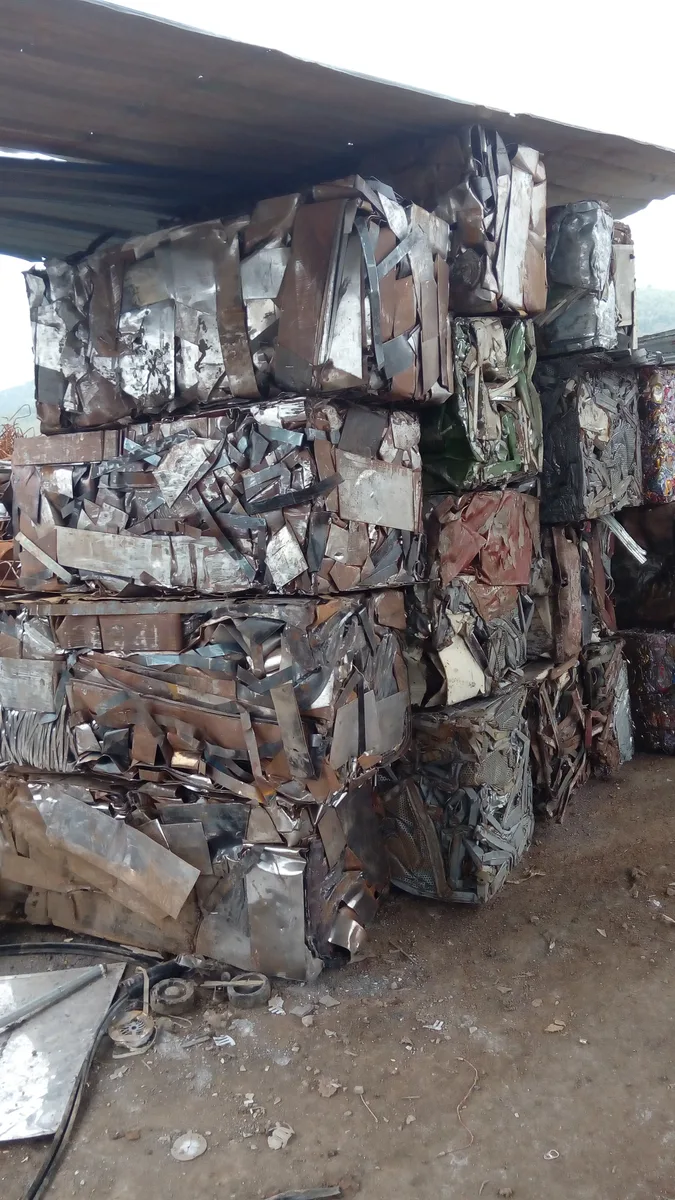
Automotive stamping remnants are production scrap generated while steel blanks are cut and formed. They may include blanking skeletons, edge trim and approved rejected stampings, each with a different geometry. The Front-Out Y81Q Baler for Automotive Steel Stamping Remnants is an application-led enquiry for this identified manufacturing stream. It does not confirm an exact Y81Q machine: the supplied HBQ workbook supports front-out series references for subsequent model and configuration review.
The useful starting point is the part family and operation that generate the scrap. A container labelled automotive steel may combine flat skeletons from blanking with curved trim from a later forming operation. That label is too broad to establish suitability. Describe each proposed input and keep unfamiliar material separate until the supplier and downstream buyer have reviewed it.
02 / MATERIALS & OUTPUT
Applications & Materials
Suitable scrap materials, industries and operating scenarios.
Link the remnants to grade, operation and condition
Record known steel grades, thicknesses, piece dimensions and generating processes. Distinguish conventional steel from identified higher-strength grades instead of treating equal thickness as equivalent material. A change in the production coil or part specification can matter even when an offcut looks unchanged. Ask for explicit approval of the actual grade and geometry rather than inferring capacity from a general compression-force description.
Include formed flanges, curled trim, narrow skeleton webs and joined clusters in the sample description where they occur. Long interconnected remnants can occupy a container differently from short separated pieces. Any necessary upstream separation or size reduction needs an approved process; the baler should not be presented as a substitute for a missing scrap-preparation operation.
Describe stamping lubricant, protective coatings, moisture and other normal surface conditions. Identify whether scrap is collected directly from a press, stored outdoors or transferred between containers, because the condition at the baler may differ from the condition at generation. Agree contamination limits with the supplier and buyer, and keep nonmetal attachments and unassessed assemblies out of the released feed.
This application does not cover whole vehicles, end-of-life vehicle bodies, batteries, airbags or other restraint devices, fuel-system components, pressurized parts or sealed objects. Even a production reject should be assessed for attachments and geometry rather than accepted solely because it was manufactured in the same plant. Keep the baling enquiry focused on identified, approved steel production remnants.
03 / STRUCTURE & FEATURES
Equipment features.
Features & Benefits
Operational advantages and configuration benefits for buyers.
Select around variable trim geometry and the site interface
The proposed hydraulic machine and forward-discharge arrangement provide a basis for discussing the station, not a promise that every press-shop stream is compatible. Request the machine-specific chamber drawing, loading method, operating sequence and approved material envelope. Explain how containers arrive from the presses and whether their contents remain segregated by grade or part family.
Do not infer a direct press-line connection, automatic scrap conveying or synchronized controls from this page. Those interfaces would need their own engineered specification. A separately operated baling station still needs clear staging, operator access and finished-bale collection. The forward-end pickup guidance helps frame the collection interface without implying a supplied traffic-control system.
Traceability should continue beyond the incoming container when the buyer requires grade-specific bales. Define how the grade or batch identity follows the material through loading and finished storage, and what happens to mixed or uncertain containers. The value is a clearer acceptance record; no guaranteed recovery price, output improvement or automotive certification is established by the source.
04 / WORKING PRINCIPLE
Operation & Maintenance
Practical guidance for safe operation and routine maintenance.
Validate normal production and planned die changes
Choose evaluation material from representative production rather than selecting only the smallest, cleanest offcuts. Include the usual range of shapes and the agreed most demanding approved grade. Record the generating operation, preparation and surface condition alongside the proposed machine configuration. Agree criteria for loading, discharge, handling and buyer acceptance before comparing results.
Consider how the stream changes when a die, coil grade or part family changes. A successful evaluation of one trim pattern should not automatically release a new long skeleton or a different formed flange. Give production and scrap-handling personnel a clear route to flag these changes before the material enters routine baling. Keep doubtful containers in an identified review area.
Measure any required production performance across the agreed preparation, loading and collection workflow. Do not translate a no-load cycle into press-shop throughput. Use the delivered operating and isolation instructions for abnormal conditions, and never have a person reposition caught trim inside an active movement zone. Retain the accepted material description as part of the operating handover.
05 / TECHNICAL REFERENCE
Technical Parameters
Key selection data and model-dependent specification ranges.
Configuration references for the enquiry
The six attributes below are drawn from the supplied front-out series information in the HBQ sheet. They are reference choices for discussion, not a verified Y81Q model specification. Confirm each selected attribute against the proposed Y81Q machine, its drawings and the order. The HBQ series name is not being renamed as a Y81Q model.
Keep full series ranges intact when comparing quotations. Do not combine their endpoints into a new machine size or infer production from a no-load cycle. Final acceptance should use the actual material and agreed operating conditions. Ask for the machine-specific manual, layout and configuration list before approving the installation.
Front-Out Baler Reference Video is the designated equipment/process reference. It is not proof that this exact material or configuration was tested, and does not establish a production rate.
| Attribute | Reference value |
|---|---|
| Series oil tank volume | 800–3,000 L; confirm selected model |
| Wear plate alternatives | NM450 or Hardox450; confirm specified alternative |
| Supply voltage alternatives | 220–660 V; select the ordered supply configuration |
| Listed PLC option | Siemens; confirm the ordered control configuration |
| Listed pump configuration | JiangSu Hengyuan; confirm order specification |
| Series steel plate thickness | 12–30 mm; location and model dependent |
06 / SOLUTIONS & CUSTOMER CASES
Plan the complete process.
RELATED NEWS
News & buying guides
APPLICATIONS
Material preparation guides
These are related material guides. Follow each guide’s feedstock limits; a related material is not automatically approved for every machine configuration.
07 / QUESTIONS & SUPPORT
Product questions,
answered.
Delivery, Service & FAQ
Delivery scope, technical support and frequently asked questions.
Frequently asked questions
Does this application include complete vehicles or vehicle bodies?
No. It concerns approved steel production remnants from stamping operations. End-of-life vehicles, assembled bodies and hazardous vehicle components require separate assessment and are outside this enquiry.
Can high-strength stamping steel be accepted?
Acceptance must identify the actual grade, thickness and remnant geometry. Do not assume that approval for conventional steel covers a different higher-strength production grade.
Does a die change require another review?
Review changes that alter grade, dimensions, interconnected skeletons or formed edges. A new scrap shape can fall outside an accepted material envelope despite a familiar part name.
Can the baler connect automatically to the press line?
No such integration is established here. Start with the front-discharge series reference and request a separate specification for any proposed line interface.
How should incoming containers and finished bales move?
Define staging, grade identification and an approved collection method. Review the forward-end collection guidance against the actual site layout.
What should accompany a stamping-scrap sample?
Provide grade and thickness information, generating operation, maximum geometry, normal lubricant or coating condition and expected process changes. Keep the sample identity linked to its evaluation result.
Equipment Recommendation
Tell Us About Your Material and Capacity
Share the key operating conditions below so our team can compare suitable equipment and prepare a practical configuration.