
Metal Balers
Front-Out Y81Q Baler for Prepared Laser-Cut Steel Remnants
Turn irregular cutting skeletons into a defined feed specification
Assess prepared laser-cut steel remnants for a Front-Out Y81Q baler, including cooling, skeleton size, loose-piece removal and receiving requirements.
PRODUCT VIDEO
Front-Out Y81Q Baler for Prepared Laser-Cut Steel Remnants video
01 / PRODUCT DESCRIPTION
Product Overview
Purpose, machine structure and its role in the recycling process.
Define what prepared laser-cut scrap means at your site
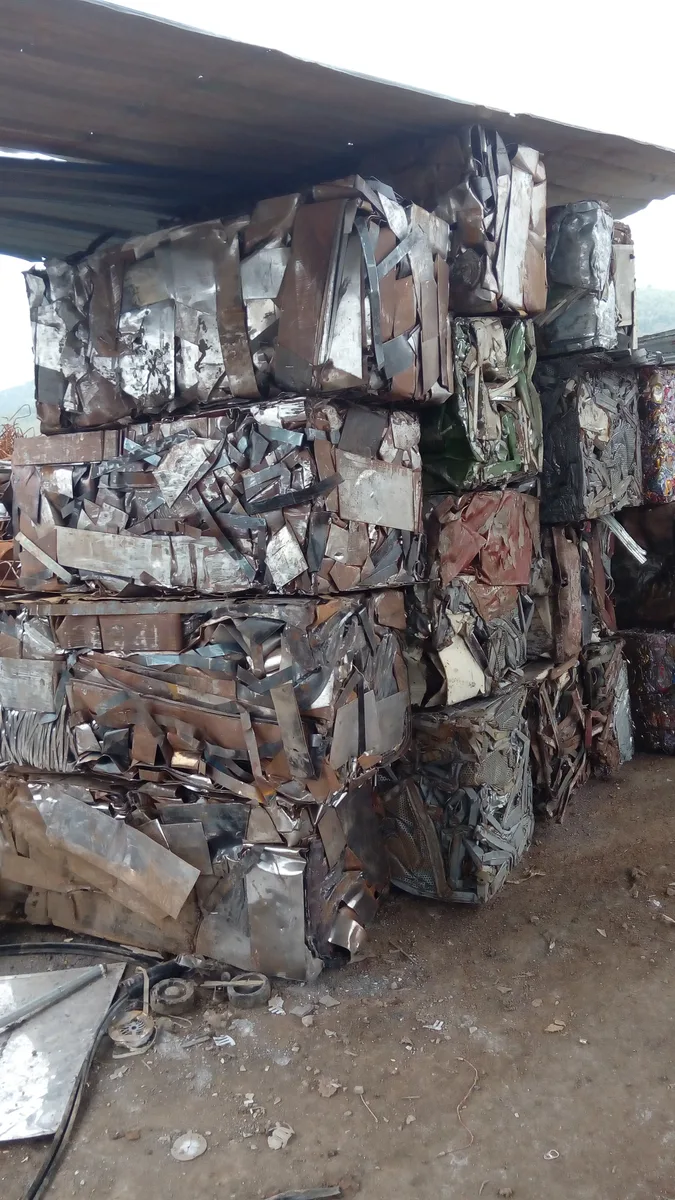
Laser cutting leaves a mixture of sheet skeletons, irregular cutouts and smaller detached pieces. The Front-Out Y81Q Baler for Prepared Laser-Cut Steel Remnants concerns approved steel scrap after the necessary cooling, sorting and size preparation. The word prepared is important: the baler should receive a defined feed, not an uncontrolled mixture swept from a cutting area.
Describe both the parent sheet and the remaining geometry. Thin connections between large openings can make a skeleton awkward to lift, while compact cutouts may create a different retention question. Neither the laser process nor the steel grade alone establishes suitability for a particular baler. A proposed configuration needs review against actual samples.
02 / MATERIALS & OUTPUT
Applications & Materials
Suitable scrap materials, industries and operating scenarios.
Separate cooling, sorting and resizing from baling
Confirm that scrap is cool and safe for the approved handling process before moving it to the baler. Do not load hot pieces. Remove unapproved residues, foreign material and attachments according to the site procedure. If a coating or cutting process leaves contamination relevant to the receiver, disclose it in the material specification.
Separate long frames and oversized webs for the agreed preparation route. The front-out baler is not represented here as a laser-skeleton cutting machine. Avoid assuming that a large flexible frame will fold into the chamber simply because it can be bent by hand. State the maximum prepared dimensions and the method used to achieve them.
Keep small cutouts or fines separate until retention and compaction suitability are confirmed. Do not add them to a larger skeleton load to conceal a feed problem. The light steel offcut selection guide supplies a general starting point, while this page focuses on the irregular geometry left by nesting and cutting.
03 / STRUCTURE & FEATURES
Equipment features.
Features & Benefits
Operational advantages and configuration benefits for buyers.
Buy for a repeatable prepared feed
An agreed preparation specification can make the baler enquiry more useful. It tells the supplier which piece sizes, thicknesses and contamination conditions must be assessed, and gives operators a reason to reject a load outside that envelope. This is more meaningful than quoting an unverified daily tonnage without describing the scrap.
Approved hydraulic compression consolidates the prepared remnants, followed by forward bale discharge. The front receiving area should accommodate the actual bale and handling method without obstructing incoming material. Compare the collection interface when planning the route, and confirm all Y81Q-specific details separately.
The practical advantages depend on reducing disorder before loading. Sorted, resized remnants can be easier to identify and stage than mixed full-size skeletons. No universal reduction ratio, density or production rate is claimed. Ask the receiver what dimensions, contamination and handling condition matter, then test the proposed process against those requirements.
Discuss wear and retained sharp fragments with the supplier. The source lists wear-plate alternatives and interchangeable wear plates as series references; this does not prove the exact lining supplied with every Y81Q configuration. Keep the selected construction in the quotation and maintenance documents rather than treating a general option as standard.
04 / WORKING PRINCIPLE
Operation & Maintenance
Practical guidance for safe operation and routine maintenance.
Use the cutting mix that the machine will actually see
Prepare an acceptance batch covering normal sheet thicknesses and nesting patterns within the agreed feed envelope. Document how long frames were resized, which small fractions were removed and the state of coatings or residues. Retain photos and the actual machine configuration so the result can be interpreted later.
Follow the approved loading and operating sequence while observing bridges, snags, loose-piece release and the finished receiving condition. Evaluate collection as part of the test. A bale that exits the chamber still needs to meet the agreed handling and receiver requirements. Do not infer continuous production from a no-load cycle or a short demonstration.
After stopping and isolating under the machine-specific procedure, inspect areas identified in the maintenance plan. Never reach into an active chamber to free a hooked skeleton. Review the preparation standard when nesting software, parent-sheet size or material thickness changes, because those changes can alter the scrap geometry even when the product title stays the same.
05 / TECHNICAL REFERENCE
Technical Parameters
Key selection data and model-dependent specification ranges.
Configuration references for the enquiry
The six attributes below are drawn from the supplied front-out series information in the HBQ sheet. They are reference choices for discussion, not a verified Y81Q model specification. Confirm each selected attribute against the proposed Y81Q machine, its drawings and the order. The HBQ series name is not being renamed as a Y81Q model.
Keep full series ranges intact when comparing quotations. Do not combine their endpoints into a new machine size or infer production from a no-load cycle. Final acceptance should use the actual material and agreed operating conditions. Ask for the machine-specific manual, layout and configuration list before approving the installation.
Front-Out Baler Reference Video is the designated equipment/process reference. It is not proof that this exact material or configuration was tested, and does not establish a production rate.
| Attribute | Reference value |
|---|---|
| Wear plate alternatives | NM450 or Hardox450; confirm specified alternative |
| Electrical supply | Three-phase; according to installation specification |
| Supply frequency alternatives | 50 Hz or 60 Hz; specify applicable supply |
| Listed electrical components | Schneider; confirm the ordered configuration |
| Control alternatives | PLC automatic control or manual control; confirm selected package |
| Series chamber length | 800–2,000 mm; confirm matched chamber dimensions |
06 / SOLUTIONS & CUSTOMER CASES
Plan the complete process.
RELATED NEWS
News & buying guides
APPLICATIONS
Material preparation guides
These are related material guides. Follow each guide’s feedstock limits; a related material is not automatically approved for every machine configuration.
07 / QUESTIONS & SUPPORT
Product questions,
answered.
Delivery, Service & FAQ
Delivery scope, technical support and frequently asked questions.
Frequently asked questions
Can hot remnants go directly from the laser table into the baler?
No. Establish cooling and safe handling before baling. The proposed feed must meet the machine supplier and site requirements.
Does the baler cut large laser skeletons to size?
No cutting capability is established here. Specify any required resizing as a separate preparation step and confirm the accepted feed envelope.
Can small laser cutouts be mixed with skeletons?
Only after a separate retention and suitability review. Their presence can change the load behavior and cannot be ignored because larger pieces are also present.
What should be included in a trial batch?
Use normal prepared thicknesses and nesting patterns, including difficult shapes within the specification. See the offcut intake guidance.
How is the finished bale collected?
Use the receiving and lifting method approved for the actual bale. Review the front-end collection interface with the layout.
Does changing a nesting pattern require another review?
It may. A different skeleton geometry can affect preparation and loading even with unchanged steel grade and thickness. Compare it with the approved feed envelope.
Equipment Recommendation
Tell Us About Your Material and Capacity
Share the key operating conditions below so our team can compare suitable equipment and prepare a practical configuration.