
Metal Balers
Front-Out Y81Q Baler for Thin Steel Punching Scrap
Separate sheet skeletons from small punchings before baler selection
Assess thin steel punching scrap for a Front-Out Y81Q baler, including skeleton geometry, small-piece separation, loading and bale acceptance.
PRODUCT VIDEO
Front-Out Y81Q Baler for Thin Steel Punching Scrap video
01 / PRODUCT DESCRIPTION
Product Overview
Purpose, machine structure and its role in the recycling process.
Identify which part of the punching waste stream you need to bale
A punching operation can produce thin sheet skeletons, webs, strips and discrete small pieces in the same shift. The Front-Out Y81Q Baler for Thin Steel Punching Scrap is a selection topic for suitable sheet-based remnants, not blanket approval for every item collected under the name punching scrap. Start by identifying the feed fraction that will actually enter the chamber.
For thin skeletons and prepared remnants, the decision depends on dimensions, stiffness, edge condition and how they are presented for loading. Small solid punchings and fines require a separate retention and suitability assessment. They should not be blended into the sheet stream merely to make the container appear uniform. The source information does not prove that a proposed model retains or compacts every small particle.
02 / MATERIALS & OUTPUT
Applications & Materials
Suitable scrap materials, industries and operating scenarios.
Record geometry as carefully as metal grade
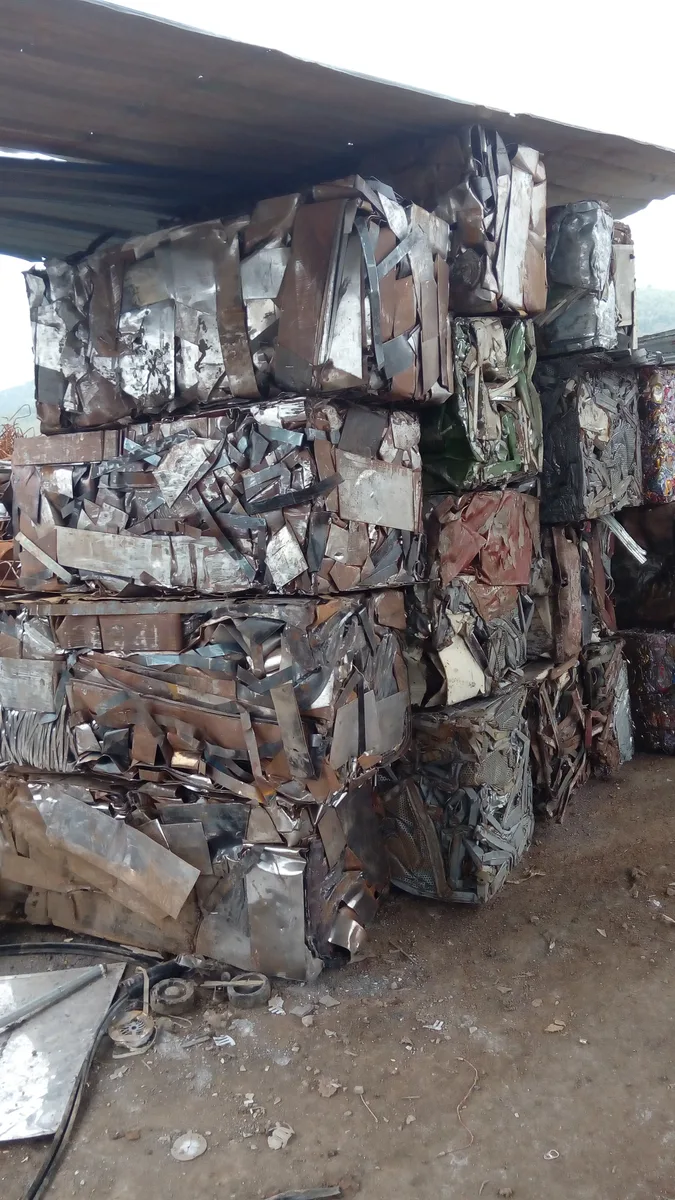
Photograph representative skeletons flat and as collected. State original sheet thickness, the largest remaining span and whether pieces are connected by narrow bridges. A loose volume measurement may hide a few oversized skeletons that dominate loading behavior. Include bent pieces and the normal batch variation, not only the easiest examples.
Keep carbon steel separate from stainless or nonferrous scrap when required by the receiver. Describe coatings, lubricants and attachments. Remove unapproved foreign objects through the agreed sorting process. Prepared sheet scrap does not include sealed vessels, hazardous residues or hot material. If resizing is required, agree it as a separate preparation operation rather than assuming the baler cuts the skeleton into acceptable pieces.
The light-steel offcut guide provides general intake considerations. This punching-specific assessment adds the effect of repeated apertures, narrow bridges and detached small pieces, which can change both loading and finished-bale integrity.
03 / STRUCTURE & FEATURES
Equipment features.
Features & Benefits
Operational advantages and configuration benefits for buyers.
Use the front-out arrangement with a controlled feed presentation
Hydraulic compression reduces the occupied volume of approved sheet remnants and moves the formed bale toward the front receiving area. The purchasing question is whether the selected chamber and operating sequence can handle the proposed skeletons without improvised manual repositioning. Chamber fit should be evaluated using the actual shape, not only a nominal maximum length.
A defined preparation route can make batches more consistent for operators and for the scrap buyer. The potential benefit comes from separating unsuitable fractions and presenting manageable pieces, not from a promised density or output rate. Ask the supplier to assess how long open frames may bridge or catch during loading. Do not push or pull material while the machine is active.
Discuss the receiving specification before choosing a bale format. Thin perforated remnants can behave differently from solid sheet offcuts when released from compression. A sample trial should examine the agreed handling condition, protruding edges and release of loose pieces. A visually compact bale is not sufficient evidence of suitability for transport or the receiver process.
Use the bale-interface checklist to discuss dimensions and lifting requirements. Its general front-out guidance is not a model-specific Y81Q test report.
04 / WORKING PRINCIPLE
Operation & Maintenance
Practical guidance for safe operation and routine maintenance.
Inspect the whole route from press bin to collection
Define the approved loading method and the area occupied by the selected handling equipment. Inspect each batch for oversized skeletons, entanglement and unexpected small-piece accumulation. The operator should have a documented method for rejecting a container that differs from the approved sample.
At acceptance, use representative punching scrap and record its thickness, geometry, contamination, preparation and the exact machine configuration. Observe loading, compression, forward discharge and collection under the supplier procedure. Note loose-piece escape and the receiving condition rather than estimating performance from an empty cycle.
Inspect accessible wear surfaces and collection areas according to the maintenance plan. Stop and isolate before clearing caught skeletons or cleaning inside the chamber. Record unusual wear or recurring snagging for technical review. When the punching tool or sheet format changes, reassess the feed instead of assuming yesterday's approval covers a new skeleton pattern.
05 / TECHNICAL REFERENCE
Technical Parameters
Key selection data and model-dependent specification ranges.
Configuration references for the enquiry
The six attributes below are drawn from the supplied front-out series information in the HBQ sheet. They are reference choices for discussion, not a verified Y81Q model specification. Confirm each selected attribute against the proposed Y81Q machine, its drawings and the order. The HBQ series name is not being renamed as a Y81Q model.
Keep full series ranges intact when comparing quotations. Do not combine their endpoints into a new machine size or infer production from a no-load cycle. Final acceptance should use the actual material and agreed operating conditions. Ask for the machine-specific manual, layout and configuration list before approving the installation.
Front-Out Baler Reference Video is the designated equipment/process reference. It is not proof that this exact material or configuration was tested, and does not establish a production rate.
| Attribute | Reference value |
|---|---|
| Series chamber height | 400–800 mm; confirm matched chamber dimensions |
| Supply frequency alternatives | 50 Hz or 60 Hz; specify applicable supply |
| Electrical supply | Three-phase; according to installation specification |
| Wear plate arrangement | Interchangeable wear steel plate |
| Listed cooling option | Water cooling; confirm installation requirements |
| Listed motor configuration | Taizhou Taida; confirm order specification |
06 / SOLUTIONS & CUSTOMER CASES
Plan the complete process.
RELATED NEWS
News & buying guides
APPLICATIONS
Material preparation guides
These are related material guides. Follow each guide’s feedstock limits; a related material is not automatically approved for every machine configuration.
07 / QUESTIONS & SUPPORT
Product questions,
answered.
Delivery, Service & FAQ
Delivery scope, technical support and frequently asked questions.
Frequently asked questions
Does this page cover small solid punching slugs?
Not automatically. Small solid pieces need a separate retention and material assessment. This page focuses on suitable thin sheet skeletons and prepared remnants.
Must a sheet skeleton be cut before loading?
That depends on actual geometry and the selected chamber. Agree any preparation separately; do not assume the baler is a resizing shear.
Can coated punching scrap be used?
Disclose the coating, lubricant and contamination for approval. Receiver requirements and the selected process determine acceptance, not the material name alone.
How should bale quality be checked?
Check the agreed dimensions, loose-piece retention and handling condition with representative scrap. Review the bale interface alongside the receiver specification.
What information helps select a machine?
Send thickness, largest skeleton geometry, collection photos and expected variation. Compare the general light-steel intake guidance.
Are the listed reference values verified Y81Q specifications?
No. They are selected from the supplied front-out series information. Confirm the exact Y81Q configuration and material approval before ordering.
Equipment Recommendation
Tell Us About Your Material and Capacity
Share the key operating conditions below so our team can compare suitable equipment and prepare a practical configuration.