
Dual main cylinders: an HBK hydraulic compression arrangement for metal scrap baling.
Metal Balers
Industrial Scrap Baling Press with Twin Main Cylinders
Coordinating grab-out bale collection | HBK series
Industrial Scrap Baling Press with Twin Main Cylinders for prepared scrap, with horizontal hydraulic compression and grab-out collection. Coordinating grab-out bale collection. Review HBK configuration options for your material and site.
HBK familyTwin main cylindersHydraulic compressionGrab-out bale handling
Suitable materials
PRODUCT VIDEO
Industrial Scrap Baling Press with Twin Main Cylinders video
01 / PRODUCT DESCRIPTION
Coordinating grab-out bale collection
Hydraulic compression and handling for your recycling project.
HBK Specifications, Applications & Configuration
Dual-main-cylinder hydraulic baling for prepared scrap. Select the configuration around your material, bale requirements and site layout.
The Industrial Scrap Baling Press with Twin Main Cylinders is an HBK-series horizontal hydraulic machine for compacting prepared metal scrap into square bales. Its dual main cylinder arrangement works with grab-out bale collection for subsequent storage and transport.
Grab-out removal makes collection equipment part of the complete baling process. Allow space for lifting the finished bale, transferring it away from the machine and stacking it without obstructing the next load. Coordinate collection and loading duties when one handling machine serves both.
Review the technical ranges and configuration options below with the actual feed material. For a project proposal, send scrap photographs, typical piece dimensions and the intended working schedule. The scrap baler RFQ checklist helps define the machine and installation requirements.
02 / MATERIALS & OUTPUT
Applicable Scrap & Bale Output
Prepare and assess the incoming material before selecting a machine.
Prepared sheet-steel offcuts, strip remnants and stamping scrap are candidate feed materials for the HBK series. Sort the incoming scrap and assess thickness, length, shape and contamination before loading. Oversized or entangled pieces may require cutting or other preparation to fit the selected chamber.
The finished product is a compact square bale for organized storage and subsequent handling. Bale mass and density vary with material and compression conditions. Agree the dimensions and acceptance requirements with the receiving recycler or mill.
See the stamping steel scrap application for related preparation considerations. The library photographs illustrate material types; suitability must be matched to the selected machine.
03 / STRUCTURE & FEATURES
Equipment features.
Structure & Features
Choose the components and options that match your application.
Horizontal chamber: choose the chamber dimensions to suit prepared feed and loading access.
Grab-out handling: coordinate loading and bale collection equipment with the working area.
Wear protection: interchangeable NM450 or Hardox450 wear plates are listed as configuration options.
Control choice: PLC automatic or manual control, with optional remote control.
Hydraulic cooling: water cooling or an industrial chiller can be specified for the installation.
Confirm selected components and accessories in the quotation. Equipment images show HBK-family examples and do not define the supply scope of every configuration.
04 / WORKING PRINCIPLE
Baling Process & Maintenance
Coordinate preparation, loading, compression and collection.
Sort the scrap, remove unsuitable items and prepare pieces to the agreed feed specification.
Load the chamber using the approved handling method and keep personnel outside the operating area.
Run the compression sequence specified for the selected control system.
Remove the completed bale with the approved grab and transfer it to a designated storage area.
Inspect hydraulic connections, wear surfaces and cooling equipment at the intervals in the machine instructions.
For planning, measure the complete loading, compression and collection cycle. The baler throughput guide explains how handling and downtime affect actual output.
05 / TECHNICAL REFERENCE
HBK Series Technical Parameters
Series ranges and options; confirm a model-specific specification.
| Parameter | HBK series reference / configuration option |
|---|---|
| Series | HBK |
| Layout / drive | Horizontal / hydraulic |
| Main compression arrangement | Dual main cylinders |
| Bale removal | Grab-out |
| Working pressure | 21.5 MPa |
| Chamber length range | 2,000–4,000 mm |
| Chamber width range | 1,500–3,000 mm |
| Chamber height range | 1,000–1,400 mm |
| Bale cross-section range | 500 × 500 to 800 × 800 mm |
| Cycle reference | 120–180 seconds per bale; no-load reference 120 seconds |
| Machine weight range | 45,000–150,000 kg |
| Oil tank volume range | 4,000–15,000 L |
| Electrical supply options | Three-phase, 220–660 V, 50/60 Hz; selected to suit the installation |
| Control options | PLC automatic or manual |
| Remote control | Optional |
| Construction steel | Q235B |
| Wear-plate options | NM450 or Hardox450; interchangeable plates |
| Cooling options | Water cooling or industrial chiller |
These are series ranges and options from the HBK specification sheet, not the fixed specification of one machine. Final dimensions, utilities and cycle performance depend on the selected configuration and material. Compression force, installed motor power, throughput and bale weight are confirmed in the model-specific proposal.
06 / SOLUTIONS & CUSTOMER CASES
Plan the complete process.
RELATED NEWS
News & buying guides
Scrap Metal Baler Throughput: How to Plan Real Production
Plan baler capacity around saleable output per working hour, including loading and discharge. A nominal press cycle is only one part of the production picture.
Read details ↗Buying a Scrap Metal Baler: What to Include in Your RFQ
A useful scrap metal baler quotation starts with representative scrap, the buyer’s bale specification and a complete handling plan. Use this checklist to compare proposals on the same basis.
Read details ↗APPLICATIONS
Material preparation guides
These are related material guides. Follow each guide’s feedstock limits; a related material is not automatically approved for every machine configuration.
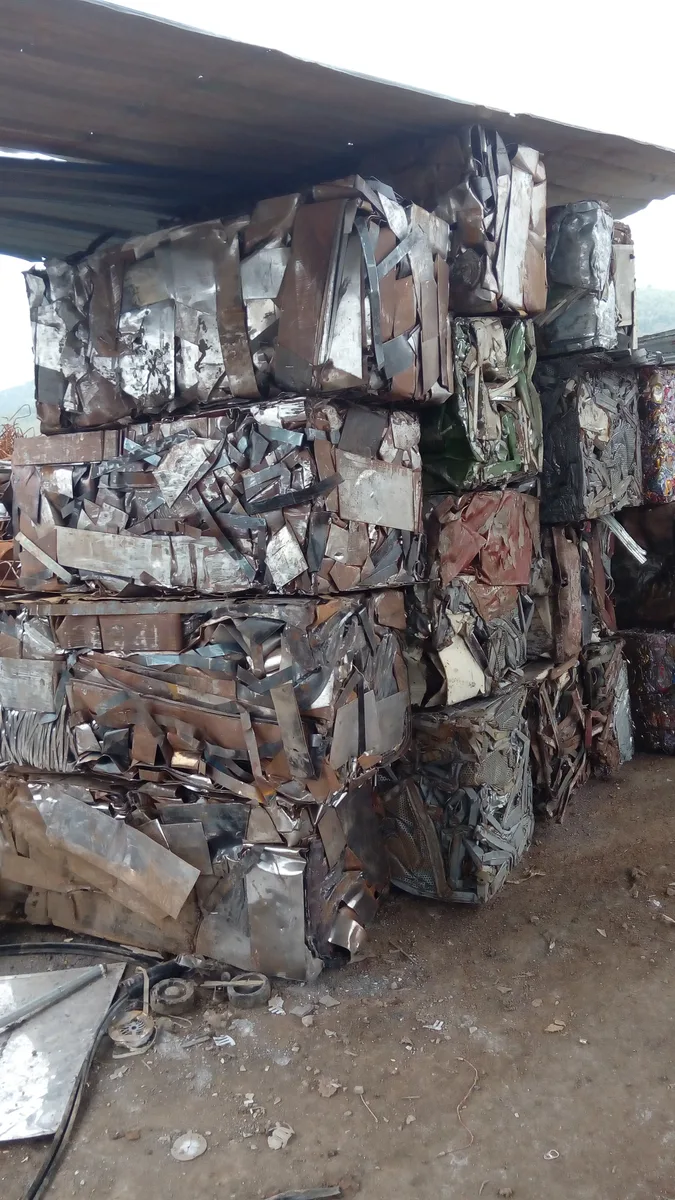
Light-Gauge Ferrous Scrap Baling
Practical sorting, preparation and equipment-selection guidance for light-gauge ferrous scrap, supported by representative material photos.
Read application guide ↗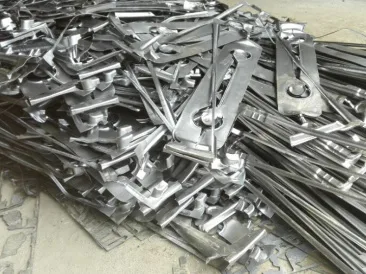
Stamping Steel Scrap Baling & Recycling
Practical sorting, preparation and equipment-selection guidance for stamping steel scrap, supported by representative material photos.
Read application guide ↗07 / QUESTIONS & SUPPORT
Product questions,
answered.
Frequently Asked Questions
Practical answers on materials, operation and configuration.
What materials can this HBK baler process?
Prepared steel-sheet offcuts, strip remnants and stamping scrap are candidate materials. Provide material dimensions, thickness and contamination details so the configuration can be assessed. A machine photograph does not establish the maximum permissible feed size.
How is the finished bale removed?
The HBK sheet specifies grab-out removal. The installation therefore needs a suitable handling arrangement and space for collecting and stacking bales. Confirm the grab, lifting capacity and equipment supply scope with the machine proposal.
Are all the listed parameter ranges available on one machine?
No. The table describes the HBK series and its configuration options. Chamber dimensions, utilities, controls and other ratings must be combined into one selected specification. Ask for a model-specific drawing and parameter schedule.
Is automatic control available?
The sheet lists PLC automatic and manual control alternatives, with remote control as an option. Choose the control arrangement according to the feeding process, staffing and site requirements; confirm the supplied functions before ordering.
How should production capacity be evaluated?
Use a representative material sample and include loading, compression, bale removal and ordinary interruptions in the measurement. Material shape, preparation and handling all affect output. Refer to the production planning guide when comparing proposals.
Can one grab handle loading and bale removal?
It depends on the site arrangement and selected equipment. Check reach, lifting requirements and the time needed for both tasks when planning the operating cycle.
Equipment Recommendation
Tell Us About Your Material and Capacity
Share the key operating conditions below so our team can compare suitable equipment and prepare a practical configuration.
✓ Material & Capacity Review✓ Configuration Recommendation✓ Pricing & Lead-Time Inquiry