
Metal Balers
Side-Push Scrap Metal Baler with Hydraulic Bale Ejection
Plan the Side-Ejection Receiving Interface
Plan the Side-Ejection Receiving Interface. Review the HBT configuration against the actual prepared scrap and site requirements.
PRODUCT VIDEO
Side-Push Scrap Metal Baler with Hydraulic Bale Ejection video
01 / PRODUCT DESCRIPTION
Plan the Side-Ejection Receiving Interface
A focused purchasing and operating decision for the existing HBT family.
Plan the Side-Ejection Receiving Interface
Plan the Side-Ejection Receiving Interface. Practical selection and acceptance guidance for the existing HBT side-push family.
A Side-Push Scrap Metal Baler with Hydraulic Bale Ejection compresses suitable prepared scrap in the HBT horizontal arrangement and transfers the finished bale through the side discharge. The selection issue addressed here is the receiving interface: where the bale goes, how it is collected and how people remain clear of its path. The phrase hydraulic ejection does not imply a complete downstream conveying or stacking system.
Review the machine and collection area as one layout decision. A press can fit inside a building while its discharge path conflicts with a traffic aisle, a storage bin or the lifting equipment needed to collect a bale. Those conflicts should be resolved using the actual offered layout before installation.
The HBT family overview explains the general machine type. This guide adds interface questions for purchasing and acceptance without claiming a new ejection device, a particular stroke length or an automatic bale-handling accessory.
02 / MATERIALS & OUTPUT
Confirm the Bale and Feed Conditions
Confirm the Bale and Feed Conditions.
The intended bale begins with an approved prepared feed stream. Sheet offcuts, suitable light metal scrap and accepted nonferrous forms require their own dimensions, attachment and contamination review. Hydraulic ejection does not make oversize or inappropriate material safe to load, nor does it remove loose attachments after compression.
Describe the resulting bale requirements separately from the incoming material. The proposal should identify the applicable bale form and the handling method for the selected configuration. Do not choose lifting equipment from a photograph or a general family weight range; confirm the actual load and relevant handling requirements.
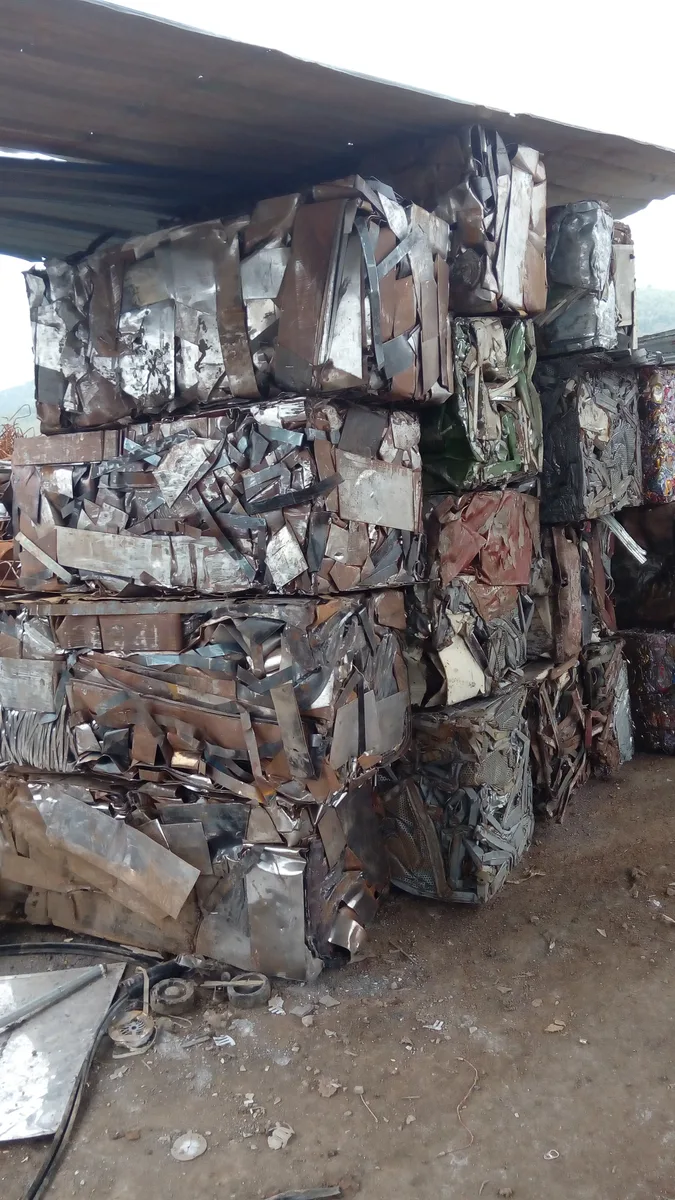
Where the feed changes, ask how the agreed receiving method will be reviewed. A different scrap form may produce a different external condition even when the same machine family is used. Material pictures on this page are reference streams, not evidence that every pictured form has passed an ejection or handling trial on the offered machine.
04 / WORKING PRINCIPLE
Define Boundaries Around the Discharge Area
Define Boundaries Around the Discharge Area.
Ask for the current general arrangement drawing and mark the loading side, discharge side, access points and required service space. Add the planned receiving location and the movement envelope of the collection equipment. The supplier and site team should resolve clearances for the actual installation rather than relying on an illustrative web image.
Identify who controls access to the receiving area and who authorizes bale collection. The approved procedure should prevent people and handling equipment entering an active discharge path. Full-automatic and semi-automatic options do not remove the need to coordinate the machine operator, collection activity and other site traffic.
If a receiver, conveyor, platform or collection bin is proposed, state whether it is supplied with the baler, supplied by another party or merely shown for planning. Define the design and acceptance responsibility for its interface. Do not treat a possible accessory as an installed standard feature or assume that the baler automatically communicates with it.
05 / TECHNICAL REFERENCE
Selected HBT Technical Attributes
Five supported reference attributes, with configuration-dependent options stated separately.
These attributes describe the HBT side-push equipment family. Options and site-specific arrangements must be confirmed in the selected technical configuration.
| Technical attribute | HBT reference |
|---|---|
| Bale discharge | Side push-out |
| Drive type | Hydraulic |
| Motor voltage | Configured for the installation electrical supply |
| Model series | HBT |
| Machine layout | Horizontal |
Force, chamber dimensions, bale weight and production rate are not inferred from a material title. Confirm those values against representative feedstock and the agreed machine configuration.
Operating options: full-automatic / semi-automatic, as confirmed by Dershan. The technical proposal defines the controlled actions and operator responsibilities. These option names do not establish automatic feeding, sorting, unattended operation or a guaranteed production rate.
Verify the Interface and Maintain Safe Access
Verify the Interface and Maintain Safe Access.
Agree an acceptance observation for the actual layout and prepared sample. Check that the documented receiving method can collect the agreed bale without requiring unauthorized access to the machine. Record the configuration and material used, and distinguish that observation from a guarantee for every future feed or site arrangement.
Define the supplier-approved response when a bale does not transfer as expected. Operators should not push, pull or reach into the discharge path while relying on a paused cycle. Refer a jam or abnormal movement to the prescribed shutdown and isolation process and the responsible qualified personnel.
Routine inspection should follow the manual for hydraulic leakage, hose damage, guarding and other protective devices. Maintenance clearance must remain available after storage areas are established. Do not allow a convenient pile of finished bales to block the access route that the installation and safe maintenance plan depend on.
06 / SOLUTIONS & CUSTOMER CASES
Plan the complete process.
RELATED NEWS
News & buying guides
Buying a Scrap Metal Baler: What to Include in Your RFQ
A useful scrap metal baler quotation starts with representative scrap, the buyer’s bale specification and a complete handling plan. Use this checklist to compare proposals on the same basis.
Read details ↗Scrap Metal Baler Throughput: How to Plan Real Production
Plan baler capacity around saleable output per working hour, including loading and discharge. A nominal press cycle is only one part of the production picture.
Read details ↗CUSTOMER CASES
Related project references
Each reference identifies its own equipment and project scope; it is not a test record for every material on this product page.

APPLICATIONS
Material preparation guides
These are related material guides. Follow each guide’s feedstock limits; a related material is not automatically approved for every machine configuration.
07 / QUESTIONS & SUPPORT
Product questions,
answered.
Side-Push Scrap Metal Baler with Hydraulic Bale Ejection FAQ
Answers specific to this selection decision.
Is an automatic conveyor included with hydraulic ejection?
Not by that wording alone. The quotation must identify any downstream equipment and its interface. Hydraulic side discharge describes the baler’s transfer arrangement, not an entire automatic collection line.
How much side clearance is required?
Use the offered machine drawing, agreed bale and collection equipment to determine it. This page does not provide a universal clearance dimension, because installation and handling arrangements vary.
Can the receiving area also serve as a pedestrian aisle?
The site plan must prevent conflicting access during operation. Have the responsible site and equipment specialists define the layout and control procedure rather than assuming that occasional pedestrian use is harmless.
What should be recorded in an ejection demonstration?
Identify the machine configuration, prepared feed, receiving arrangement and observed transfer and collection method. Keep any limitations or unresolved conditions in the record instead of extending the result to untested materials.
What if a bale remains in the discharge path?
Follow the supplied abnormal-operation and isolation instructions. Do not reach into the path or improvise a manual clearing action while the machine remains capable of movement. Use the designated qualified support route.
Does side ejection guarantee a stable finished bale?
No universal guarantee is established here. Handling condition depends on the approved feed, configuration and acceptance requirements. Verify the actual bale and collection method before relying on them in production.
Equipment Recommendation
Tell Us About Your Material and Capacity
Share the key operating conditions below so our team can compare suitable equipment and prepare a practical configuration.