
Metal Balers
Side Turn-Out Metal Baler with Custom Bale Sizes
Turn downstream dimensional requirements into a clear machine specification.
Specify a custom bale cross-section around the receiving process, transport plan, and available handling equipment. The confirmed HBF series cross-section range is 200 × 200 to 600 × 600 mm, with the final arrangement to be selected and agreed for the quoted machine. This range does not describe bale length or promise that one machine can change freely between every size. Side turn-out discharge adds a collection requirement that should be reviewed alongside the finished bale dimensions. Start with a clear dimensional drawing and representative scrap, then agree how trial bales will be measured and accepted.
PRODUCT VIDEO
Side Turn-Out Metal Baler with Custom Bale Sizes video
01 / PRODUCT DESCRIPTION
Custom Sizing Begins with the Receiving Requirement
Purpose, machine structure and its role in the recycling process.
Side Turn-Out Metal Baler with Custom Bale Sizes
A custom-size inquiry should begin with the destination of the bale. A receiving furnace, storage arrangement, container plan, or handling attachment may impose different dimensional limits. Write those limits as requirements for review rather than assuming that any nominally compact bale will fit the next operation.
The HBF side turn-out scrap metal baler family has a confirmed series cross-section range of 200 × 200 to 600 × 600 mm. These dimensions describe the cross-section, not bale length. The range applies across the series and selected configurations. It does not establish continuous adjustment or conversion between all listed sizes on a single machine.
02 / MATERIALS & OUTPUT
Account for Material Behavior in the Trial
Suitable scrap materials, industries and operating scenarios.
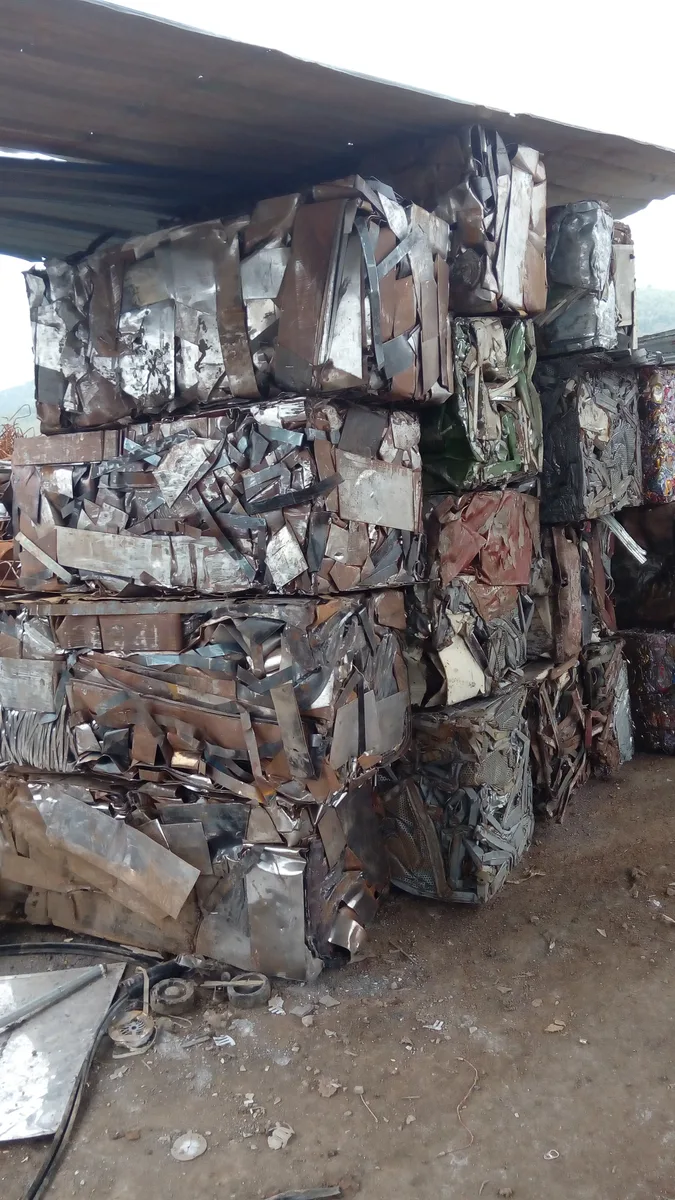
Bale dimensions and handling behavior depend on the approved scrap as well as the chosen machine arrangement. Thin offcuts, springy pieces, and irregular shapes can respond differently during compression and after discharge. Describe the feed in enough detail for the supplier to assess the requested outcome.
Prepare separate trial lots when the intended material streams differ substantially. Record what each lot contains so the resulting bale measurements have a useful context. Keep contamination and prohibited objects out of the trial. A dimensional test should reflect safe, representative production rather than an unusually easy sample chosen only to produce a neat shape.
03 / STRUCTURE & FEATURES
Equipment features.
Design the Handling Arrangement around the Bale
Operational advantages and configuration benefits for buyers.
Side turn-out discharge makes the bale collection arrangement part of dimensional selection. Review the proposed bale form with the supplier and the provider of your lifting equipment. Check how a finished bale will be approached, secured, removed, and set down without requiring people to enter a restricted machine zone.
The horizontal machine orientation also affects the space needed for loading and collection. Use the final machine drawing to plan the installation. Optional remote control may be discussed as a separate specification item, but it does not change the need for controlled access, clear sight lines, and an approved retrieval procedure.
05 / TECHNICAL REFERENCE
Five Details beyond the Requested Dimensions
Key selection data and model-dependent specification ranges.
The selected details identify interchangeable wear plates, three-phase supply, side turn-out discharge, horizontal orientation, and optional remote control. These provide context for installation and maintenance while the requested cross-section is reviewed separately. The range stated above is a family-level reference rather than a substitute for a signed dimensional specification.
Ask the quotation to distinguish the nominal bale cross-section, the expected dimensional acceptance method, and any separately specified bale length. Confirm the exact installed arrangement before ordering. Do not use a general product range as evidence that a delivered machine can produce an unapproved alternative size.
Specify, Measure, and Accept the Final Configuration
Practical guidance for safe operation and routine maintenance.
Prepare a simple requirement drawing that identifies the cross-sectional directions and the separate length direction. State the downstream limits and any clearance that the receiving process requires. Include the proposed lifting attachment and transport arrangement. Have the supplier confirm which configuration can be offered and identify any requirement that cannot be supported before the order is finalized.
Agree the acceptance method before a demonstration. Define when measurements will be taken, which surfaces or reference points will be used, and how representative samples will be selected. If the receiver needs dimensional tolerances or a particular inspection method, obtain those requirements from the receiver instead of inventing a universal tolerance. Review finished bales after safe discharge and under the agreed handling conditions.
Assess collection and transport as part of the same trial. Confirm that the lifting equipment is suitable for the actual trial bale and that placement does not damage its form or create an unstable stack. Do not infer a bale mass or lifting requirement from cross-section alone. Any stacking arrangement should follow the site's approved material-handling procedure.
During service, monitor the condition of the contact and wear surfaces using the maintenance instructions. Interchangeable plates permit planned replacement where specified, but fitting a wear part does not authorize changing the bale geometry. Any later size change requires the supplier to assess the machine, tooling, control implications, and documentation before modifications are made.
The related turn-out case is a layout and workflow reference, not proof of a trial with your feedstock or this proposed configuration.
06 / SOLUTIONS & CUSTOMER CASES
Plan the complete process.
RELATED NEWS
News & buying guides
CUSTOMER CASES
Related project references
Each reference identifies its own equipment and project scope; it is not a test record for every material on this product page.

APPLICATIONS
Material preparation guides
These are related material guides. Follow each guide’s feedstock limits; a related material is not automatically approved for every machine configuration.
07 / QUESTIONS & SUPPORT
Product questions,
answered.
Custom Bale Size Questions
Delivery scope, technical support and frequently asked questions.
What does the 200 × 200 to 600 × 600 mm range mean?
It is the confirmed bale cross-section range across the HBF series and selected configurations. It is not a bale-length range and does not show that every machine can be adjusted to every size within it.
Can one machine switch freely between different cross-sections?
That capability is not established by the series range. Ask the supplier to confirm the exact installed geometry and any specifically engineered alternatives. Do not promise routine size changes without a confirmed machine-specific arrangement.
How is bale length specified?
Treat length as a separate requirement in the inquiry and quotation. Use a labeled drawing so the supplier and receiver agree on the measurement directions. The confirmed cross-section range provides no independent length specification.
Can a requested size be guaranteed from a photograph?
A photograph helps describe the material, but it does not establish the dimensional result. Provide representative scrap and agree a trial and acceptance method. Final requirements should be recorded in the machine-specific specification.
Does cross-section determine bale mass?
No. Material composition, condition, and the actual finished bale all matter. Do not select lifting equipment or transport limits from cross-section alone. Use verified information for the intended machine and approved feed.
Can wear plates be changed to create a different bale size?
Do not assume so. Interchangeable wear plates are a maintenance attribute. A geometry change needs supplier engineering review and an approved modification plan rather than an improvised substitution during routine service.
Equipment Recommendation
Tell Us About Your Material and Capacity
Share the key operating conditions below so our team can compare suitable equipment and prepare a practical configuration.