
Metal Balers
Side Turn-Out Metal Stamping Scrap Baler
Manage Connected Stamping Skeletons and Job Changes
A Side Turn-Out Metal Stamping Scrap Baler is an HBF application for suitable prepared stamping offcuts, skeletons and related production scrap. Horizontal hydraulic compression forms the charge into a bale and turns it toward a side receiving zone. The central selection issue is the actual connected shape of the scrap and how that shape changes between production jobs.
PRODUCT VIDEO
Side Turn-Out Metal Stamping Scrap Baler video
01 / PRODUCT DESCRIPTION
Manage Connected Stamping Skeletons and Job Changes
Material preparation and side turn-out selection for the HBF family.
Manage Connected Stamping Skeletons and Job Changes
Plan HBF stamping scrap baling with skeleton preparation, job-based lot control, side turn-out inspection and realistic handling acceptance.
A Side Turn-Out Metal Stamping Scrap Baler is an HBF application for suitable prepared stamping offcuts, skeletons and related production scrap. Horizontal hydraulic compression forms the charge into a bale and turns it toward a side receiving zone. The central selection issue is the actual connected shape of the scrap and how that shape changes between production jobs.
Stamping scrap may have reliable source information while still being difficult to present as a repeatable charge. Large skeletons, narrow strips and small punchings from one material can require different preparation and collection practices. A useful application review preserves that distinction instead of assigning one loading assumption to everything leaving a stamping line.
This guide uses the HBF side turn-out concept for a job-based preparation and acceptance workflow. It does not claim automatic integration with a stamping press, uninterrupted line operation or a guaranteed output for every die and part.
02 / MATERIALS & OUTPUT
Record Skeleton Shape and Production Changes
Define the accepted feed and its preparation.
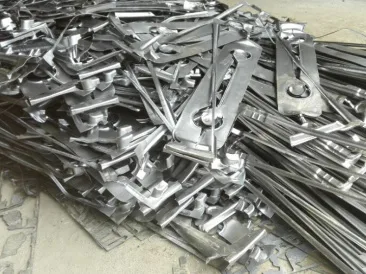
Identify the parent material, thickness and production source of the stamping scrap. A connected skeleton may span a large area even when the remaining metal is narrow. Loose punchings, strips and interlocked skeletons should be described separately because their loading behavior is not determined by sheet thickness alone.
Show the longest connected pieces and the forms produced during different jobs. Curled strip, sharp cut edges and attached remnants can affect preparation and charging. Oversize or tangled material needs an approved upstream route before loading. Do not assume that a baler closes safely on a skeleton that extends beyond its permitted charging envelope.
Keep production grades traceable when jobs change. Declare lubricants, coatings and other contamination for the receiving review, and separate nonmetal packaging or unrelated shop waste. The preparation instruction should make it clear which job streams may share a lot and which require a changeover before collection and baling.
The gallery uses steel, aluminum and stainless examples as separate production-scrap references. It does not prescribe mixing those grades or establish that the pictured material was tested on this HBF configuration. Keep the actual job records and trial evidence distinct from illustrative images.
04 / WORKING PRINCIPLE
Verify Release of the Actual Stamping Mix
Review the complete turn-out and collection arrangement.
The HBF compresses the prepared charge horizontally and turns the formed bale toward a side receiving area. Confirm the turn-out movement and collection arrangement from the selected drawing. Connected pieces can behave differently when released, so the package must be evaluated through the normal removal stage rather than only while restrained.
Use representative skeletons and punchings during an agreed trial. Observe package integrity, exposed edges and any separated pieces after turn-out and collection. A result with short clean punchings should not be used as evidence for long interlocked skeletons without reviewing that form as well.
Coordinate scrap delivery from production with the availability of the side receiving zone. A full collection area or job change can interrupt the complete workflow. Keep loading vehicles, output collection and pedestrians in a planned arrangement, and never ask workers to pull connected scrap free during machine movement.
05 / TECHNICAL REFERENCE
Selected HBF Mechanical Attributes
Five sourced attributes; series references and options require configuration confirmation.
These five attributes are selected from the supplied HBF side turn-out series information. They describe family features or configuration choices, not a complete specification for one machine.
| Technical attribute | HBF reference |
|---|---|
| Electrical supply phase | Three-phase |
| Bale discharge | Side turn-out |
| Compression layout | Three rams |
| Feeding method | Grabber or manual, subject to the approved loading arrangement |
| Structural steel plate | Q235B |
The selected configuration must be confirmed for the actual prepared scrap. A listed cross-section range does not include bale length or mean that every machine adjusts across the whole range. Force, output, power and bale weight are not inferred from the product title or photograph.
Control choices in the supplied information include PLC automatic or manual control; Dershan also confirms a semi-automatic option. Confirm the included actions and operator responsibilities in the proposal. These labels do not establish automatic loading, sorting or unattended operation.
Link Machine Selection to the Production Schedule
Agree selection evidence, acceptance and maintenance responsibilities.
Provide examples from the jobs that generate the most difficult or variable scrap, not only the most frequent clean part. Include material grade, thickness, maximum dimensions, preparation and loading method. Explain how scrap is collected between stamping operations and how different lots are identified at the baler.
Agree the buyer's acceptance requirements and a trial record that identifies the actual job mix. If output is assessed, include preparation, loading, compression, turn-out and collection. The press production rate does not automatically become the baler's accepted output, and a change in stamping geometry can require a new handling review.
Use the supplied manual for inspection of wear components, guards, hydraulic connections and protective devices. Address leaks or abnormal movement through qualified maintenance. Cleaning and obstruction removal require approved isolation and stored-energy control, particularly where connected scrap remains trapped. The sheet-metal guide provides complementary dimensional checks, while Dershan's contact page accepts a project-specific scrap brief.
06 / SOLUTIONS & CUSTOMER CASES
Plan the complete process.
RELATED NEWS
News & buying guides
Buying a Scrap Metal Baler: What to Include in Your RFQ
A useful scrap metal baler quotation starts with representative scrap, the buyer’s bale specification and a complete handling plan. Use this checklist to compare proposals on the same basis.
Read details ↗Scrap Metal Baler Throughput: How to Plan Real Production
Plan baler capacity around saleable output per working hour, including loading and discharge. A nominal press cycle is only one part of the production picture.
Read details ↗CUSTOMER CASES
Related project references
Each reference identifies its own equipment and project scope; it is not a test record for every material on this product page.

APPLICATIONS
Material preparation guides
These are related material guides. Follow each guide’s feedstock limits; a related material is not automatically approved for every machine configuration.
07 / QUESTIONS & SUPPORT
Product questions,
answered.
Side Turn-Out Metal Stamping Scrap Baler FAQ
Practical answers for this material and discharge arrangement.
Can a large skeleton be loaded because its strips are thin?
Thin sections alone do not establish suitability. The connected dimensions, curl and loading envelope matter. Show the complete skeleton and define preparation before it reaches the baler.
Can different stamping jobs share one bale?
Only where their material grades and receiving requirements are compatible. Maintain lot identification and a changeover process when jobs differ in alloy, coating, contamination or required traceability.
Does the baler connect automatically to the stamping line?
No such integration is established by this page. Loading, interfaces, storage and control responsibilities must be specified separately in the technical proposal for the actual production arrangement.
Why include skeletons in the acceptance trial?
Punchings alone may not represent connected and interlocked scrap. Use the actual proposed forms, then inspect the package after normal turn-out and collection to understand the handling result.
Can the stamping press output define baler capacity?
Not directly. Preparation, loading and bale collection affect the complete process. Evaluate the baler against the real scrap flow and operating schedule, with assumptions recorded in the offered configuration.
What should trigger another application review?
A meaningful change in grade, thickness, connected dimensions, contamination or preparation can change the accepted conditions. Update the feed description before treating a new job as equivalent to a previously assessed one.
Equipment Recommendation
Tell Us About Your Material and Capacity
Share the key operating conditions below so our team can compare suitable equipment and prepare a practical configuration.