
Metal Balers
Side Turn-Out Scrap Metal Baler for Dense Metal Bales
Turn the density requirement into a clear, testable bale acceptance plan.
Define what a dense metal bale needs to do before selecting an HBF side turn-out scrap metal baler. This page focuses on representative material trials, bale cohesion, receiving requirements, and repeatable inspection rather than an unsupported density figure. Hydraulic drive, configurable control, and optional remote operation are among the selected attributes to discuss with the supplier. Supply a clear scrap description and agree on how finished bales will be evaluated after discharge and handling. Final suitability depends on the proposed configuration and evidence from the material being processed.
PRODUCT VIDEO
Side Turn-Out Scrap Metal Baler for Dense Metal Bales video
01 / PRODUCT DESCRIPTION
Define the Required Bale Result
Purpose, machine structure and its role in the recycling process.
Side Turn-Out Scrap Metal Baler for Dense Metal Bales
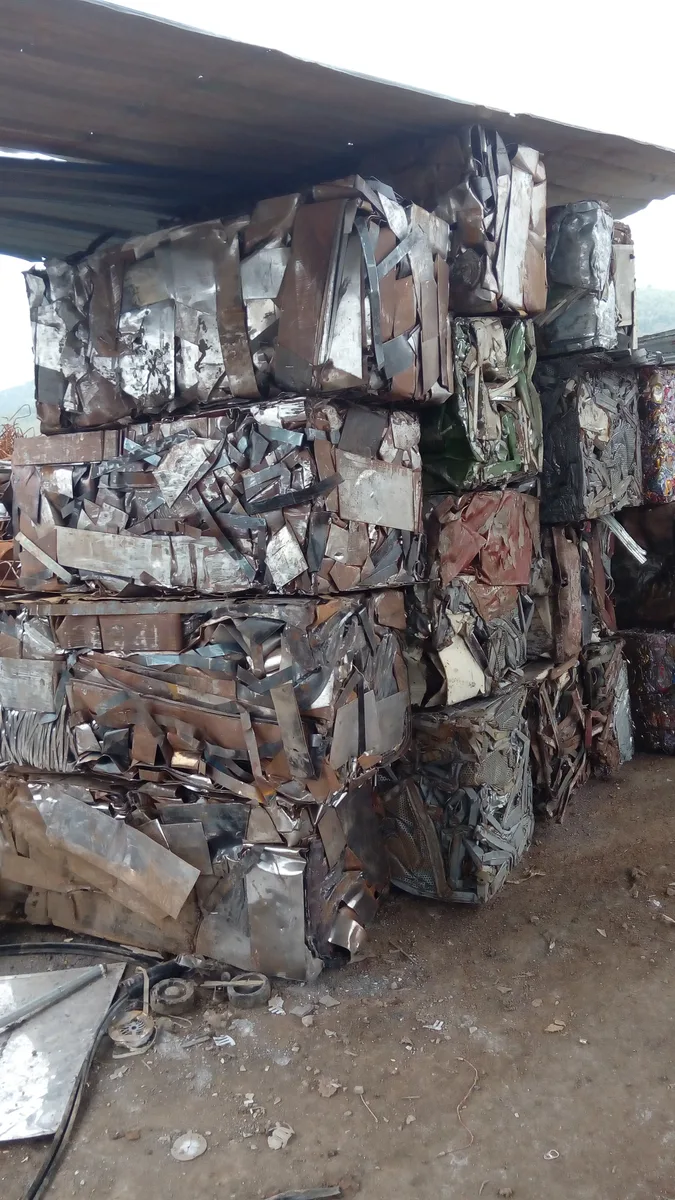
Dense metal bales should be specified through the receiving process rather than a marketing adjective alone. The Side Turn-Out Scrap Metal Baler for Dense Metal Bales is an HBF application for buyers who want to evaluate compactness, cohesion, and handling behavior using their own scrap. These properties are related, but they should not be treated as interchangeable proof of quality.
Ask the receiving facility which result matters: a stated measurement method, a stable package for handling, limits on protruding material, or another written requirement. Review the HBF side turn-out scrap metal baler as the product-family reference, then agree on a representative trial. No guaranteed bale density or compression ratio is offered on this page.
02 / MATERIALS & OUTPUT
Material Factors to Evaluate
Suitable scrap materials, industries and operating scenarios.
Describe the incoming scrap by metal grade, piece shape, thickness category, and contamination condition. A trial made entirely from clean offcuts may not represent a future stream containing curled strips or mixed pieces. Include the difficult portions of the proposed material instead of selecting only the easiest samples.
Keep material traceable through the trial. If grades are mixed, identify their proportions or explain that the mix varies. This helps the supplier interpret changes in the finished bale without assuming that all variation comes from the machine. Exclude batteries, sealed vessels, pressurized items, and other prohibited material through an approved sorting process. Obtain material acceptance before placing unfamiliar scrap in the chamber.
03 / STRUCTURE & FEATURES
Equipment features.
Features and Configuration Choices
Operational advantages and configuration benefits for buyers.
The listed hydraulic drive identifies the drive type, while Q235B identifies the stated steel plate grade. Neither attribute alone establishes the density of the finished scrap package. The material mix and the supplier-approved operating sequence remain important parts of the evaluation.
Control can be configured as PLC or manual control. Select the arrangement around how trained staff will supervise loading, the approved compression sequence, and discharge. Optional remote control should be considered only with an agreed operator position and safe visibility of the work area. It is not a substitute for guarding or a reason to approach the machine during movement. Confirm the electrical frequency for the destination site before the configuration is finalized.
05 / TECHNICAL REFERENCE
Selected Technical Attributes
Key selection data and model-dependent specification ranges.
These attributes are suitable for a preliminary specification comparison. They identify construction and configuration choices without implying a particular finished-bale result.
Steel plate grade: Q235B.
Drive system: Hydraulic drive.
Control configuration: PLC or manual control, configured to order.
Remote control: Optional; confirm inclusion in the quotation.
Supply frequency: 50 Hz or 60 Hz; specify the site supply when ordering.
The quotation should separate supplied equipment from options and identify the approved control procedure. If a buyer requires a measured result, put the test material, measurement method, and acceptance conditions in the technical discussion. Do not infer an agreed result from the drive type, steel grade, or presence of a PLC.
Trial Acceptance and Machine Care
Practical guidance for safe operation and routine maintenance.
Start with a written acceptance sheet. Describe the sample material, the selected configuration, the handling method, and the checks to be performed after discharge. If density measurement is required, agree on how mass and external volume will be measured and how irregular surfaces will be treated. Record uncertainty rather than presenting an approximate measurement as a precise guarantee.
Evaluate cohesion separately. Under an approved handling plan, observe whether a finished bale remains together through the expected lifting and set-down process. Check for projecting pieces, loose material, and changes in shape. Keep personnel outside the test area and use handling equipment suited to the actual load. A visually compact bale should never be assumed safe to lift without assessment.
For normal operation, maintain the approved scrap preparation and loading sequence. Keep a record when a bale behaves differently, including material changes and any interruptions. Do not attempt to improve the result by increasing pressure, bypassing safeguards, or altering settings without the supplier’s authorization.
Follow the manufacturer’s maintenance intervals and isolation procedure. Inspect accessible hydraulic components for signs of leakage or damage without touching suspected high-pressure leaks. Arrange qualified investigation of abnormal noise, movement, or control behavior. When performance changes, compare the current feed with the accepted sample and inspect the equipment safely before concluding that a different setting is needed.
The related turn-out case is a layout and workflow reference, not proof of a trial with your feedstock or this proposed configuration.
06 / SOLUTIONS & CUSTOMER CASES
Plan the complete process.
RELATED NEWS
News & buying guides
CUSTOMER CASES
Related project references
Each reference identifies its own equipment and project scope; it is not a test record for every material on this product page.

APPLICATIONS
Material preparation guides
These are related material guides. Follow each guide’s feedstock limits; a related material is not automatically approved for every machine configuration.
07 / QUESTIONS & SUPPORT
Product questions,
answered.
Dense Bale Questions
Delivery scope, technical support and frequently asked questions.
Is a particular bale density guaranteed?
No numerical density guarantee is stated. If your receiving process has a density requirement, provide it before quotation and agree with the supplier on the sample material, measurement method, and acceptance conditions.
Does a compact appearance prove bale quality?
No. Appearance does not establish cohesion, composition, or handling safety. Inspect the finished package against the receiving specification and assess it through the planned handling method in a controlled trial.
Can different scrap grades be compared directly?
Only with care. Piece geometry, composition, and contamination can change the result. Record these factors and compare like-for-like samples when judging machine behavior or deciding whether a trial is representative.
Will PLC control make every bale identical?
No such claim is made. Configurable control supports the agreed operating process, but variations in incoming material and preparation still need to be managed and included in quality checks.
Should settings be increased if a bale feels loose?
Operators should not improvise changes. Record the material and operating conditions, follow safe isolation where inspection is needed, and ask authorized service staff to investigate against the approved procedure.
What evidence should be requested before ordering?
Request a representative material trial, the proposed configuration, and a written record of the agreed checks. If the buyer has a formal acceptance specification, make that document part of the technical review.
Equipment Recommendation
Tell Us About Your Material and Capacity
Share the key operating conditions below so our team can compare suitable equipment and prepare a practical configuration.