
Metal Balers
Side Turn-Out Semi-Automatic Metal Baler
Make every handoff between operator and machine explicit.
Plan a semi-automatic scrap baling station around the tasks shared between the operator and the supplied control sequence. This HBF side turn-out configuration is available in a semi-automatic arrangement, with its exact cycle boundaries and operator actions to be confirmed in the quotation. The practical selection work covers batch preparation, loading, supervised compression, discharge clearance, and collection. Evaluate the whole station with your expected scrap rather than comparing control labels alone. Clear handoffs, an approved recovery procedure, and suitable material handling help operators maintain an orderly process without implying automatic feeding or unattended production.
PRODUCT VIDEO
Side Turn-Out Semi-Automatic Metal Baler video
01 / PRODUCT DESCRIPTION
A Semi-Automatic Station with Clear Responsibilities
Purpose, machine structure and its role in the recycling process.
Side Turn-Out Semi-Automatic Metal Baler
Semi-automatic is a useful purchasing term only when both parties agree on its meaning. The machine may perform an agreed portion of a cycle after an authorized command, while people remain responsible for other actions. Identify those boundaries in writing rather than assuming that the same label describes every supplier's operating sequence.
This configuration belongs to the HBF side turn-out scrap metal baler family, which is available in a semi-automatic arrangement. The final quotation and instructions should define how loading, compression, discharge, and return to a ready condition are coordinated. The planned staffing and handling arrangement must remain compatible with that approved sequence.
02 / MATERIALS & OUTPUT
Prepare Batches the Station Can Handle
Suitable scrap materials, industries and operating scenarios.
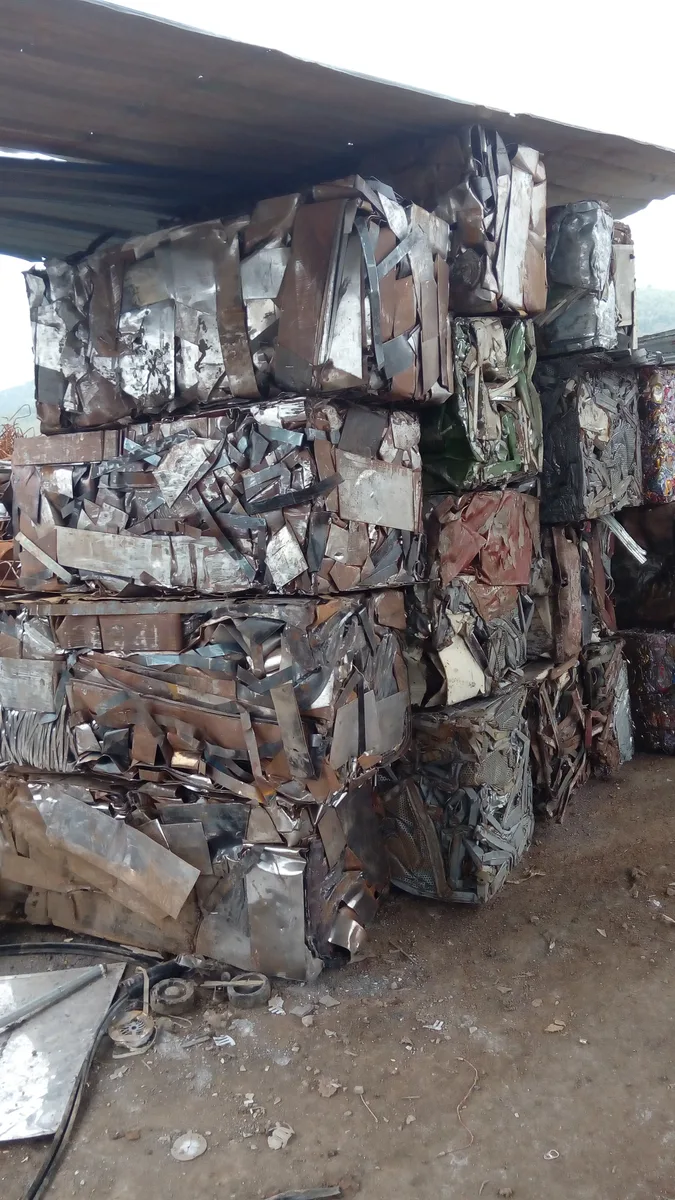
Prepare batches using approved light metal scrap with known dimensions and condition. Bulky irregular items can require different preparation from uniform production offcuts, even when both are described as the same metal. Ask the supplier to assess difficult pieces that are likely to appear in normal production.
Set a clear intake rule for contaminants and prohibited objects. Do not allow batteries, sealed vessels, or hazardous residues to enter a batch. Consider where rejected material will be held so an operator does not feel obliged to feed it merely because it has reached the loading station.
03 / STRUCTURE & FEATURES
Equipment features.
Arrange the Work around the Discharge Side
Operational advantages and configuration benefits for buyers.
The horizontal machine layout and side turn-out discharge should guide the position of the loading equipment, control location, and collection route. Prepare a marked layout showing where people stand and where vehicles travel. Leave the discharge area available for its intended purpose rather than treating it as overflow storage.
Hydraulic drive supports the baling process, while interchangeable wear steel plates are a listed maintenance feature. Their presence does not remove the need to identify wear limits and safe replacement procedures. Ask the supplier to show the access needed for inspection and planned replacement before fixing surrounding barriers or storage positions.
05 / TECHNICAL REFERENCE
Configuration Details for Site Planning
Key selection data and model-dependent specification ranges.
The selected configuration details identify three-phase supply, interchangeable wear plates, horizontal orientation, supply frequency options, and hydraulic drive. Specify the site's available electrical service and have the supplier confirm the required connection for the quoted machine. Frequency options describe alternatives for specification, not an operator setting to change during use.
Keep the semi-automatic functional description alongside the layout drawing. Together they show the relationship between physical access and control responsibilities. Resolve any point where the planned work sequence requires an operator to approach an area that should remain restricted during machine movement.
Balance Loading, Cycling, and Collection
Practical guidance for safe operation and routine maintenance.
During selection, observe the complete station in a representative demonstration. Note the time spent preparing material, presenting the load, checking clearances, operating the controls, and removing the bale. This is a workflow assessment, not a promised production rate. A short machine movement does not establish how quickly the entire station can process your incoming scrap.
Assign one clear method for authorizing each machine action and for communicating when the loading or collection area is occupied. The final arrangement must come from the supplied instructions and site risk assessment. Do not arrange informal simultaneous work inside a restricted zone to reduce waiting. If vehicles share the area, design their approach and exit paths before routine production begins.
For an interruption, follow the documented stop and recovery procedure and check the condition of the material before restarting. If inspection or removal requires access to hazardous areas, isolate energy and address stored hydraulic energy as instructed. Keep a simple operational record of feed problems, repeated pauses, and collection delays. Use that record to improve sorting and handling without bypassing controls.
Plan maintenance around safe access to the wear plates, hydraulic components, and cleaning points. Verify what must be removed or supported before service, and follow the specified inspection intervals. Review recurring damage against the actual feed mix; replacing a worn part alone may not correct an unsuitable loading practice.
The related turn-out case is a layout and workflow reference, not proof of a trial with your feedstock or this proposed configuration.
06 / SOLUTIONS & CUSTOMER CASES
Plan the complete process.
RELATED NEWS
News & buying guides
CUSTOMER CASES
Related project references
Each reference identifies its own equipment and project scope; it is not a test record for every material on this product page.

APPLICATIONS
Material preparation guides
These are related material guides. Follow each guide’s feedstock limits; a related material is not automatically approved for every machine configuration.
07 / QUESTIONS & SUPPORT
Product questions,
answered.
Semi-Automatic Baling Questions
Delivery scope, technical support and frequently asked questions.
Which steps are semi-automatic?
The quotation must define them for the supplied configuration. Ask for a step-by-step description showing every operator command and machine action. Do not infer the sequence solely from the product title.
How many operators does the station need?
Determine staffing from the approved sequence, material preparation, collection method, visibility, and site risk assessment. The semi-automatic label alone does not establish a safe staffing level or authorize one person to cover incompatible tasks.
Can feeding continue while another stage is moving?
Only if the manufacturer explicitly permits that arrangement for the supplied machine and the site assessment supports it. Do not assume concurrent loading is safe because a sequence is partly automatic.
Why assess the collection step during a trial?
A station can be delayed by bale removal even when compression behaves as expected. Verify that the handling equipment can approach, retrieve, and leave without conflicting with the loading position or restricted areas.
What should happen after an interrupted cycle?
Use the machine-specific recovery instructions. Establish why the interruption occurred and whether material or equipment needs inspection. Access for clearing or maintenance requires the prescribed isolation and stored-energy precautions.
What makes a useful semi-automatic inquiry?
Send feed details, the intended loading and collection equipment, a site drawing, and your preferred division of operator tasks. Request confirmation of the cycle boundaries and a demonstration that matches the proposed workflow.
Equipment Recommendation
Tell Us About Your Material and Capacity
Share the key operating conditions below so our team can compare suitable equipment and prepare a practical configuration.