
Metal Balers
Front-Out HBQ Baler for Aluminum Blanking Scrap
Plan Blanking Skeleton Preparation and Bale Collection
Assess prepared aluminum blanking skeletons and approved small-piece fractions with an HBQ front-out baling arrangement. Separate useful blanks, define the feed envelope and review containment before choosing the loading configuration. A representative demonstration should verify the complete route from released scrap containers to finished-bale collection.
PRODUCT VIDEO
Front-Out HBQ Baler for Aluminum Blanking Scrap video
01 / PRODUCT DESCRIPTION
Product Overview
Purpose, machine structure and its role in the recycling process.
Separate useful blanks from the remaining skeleton
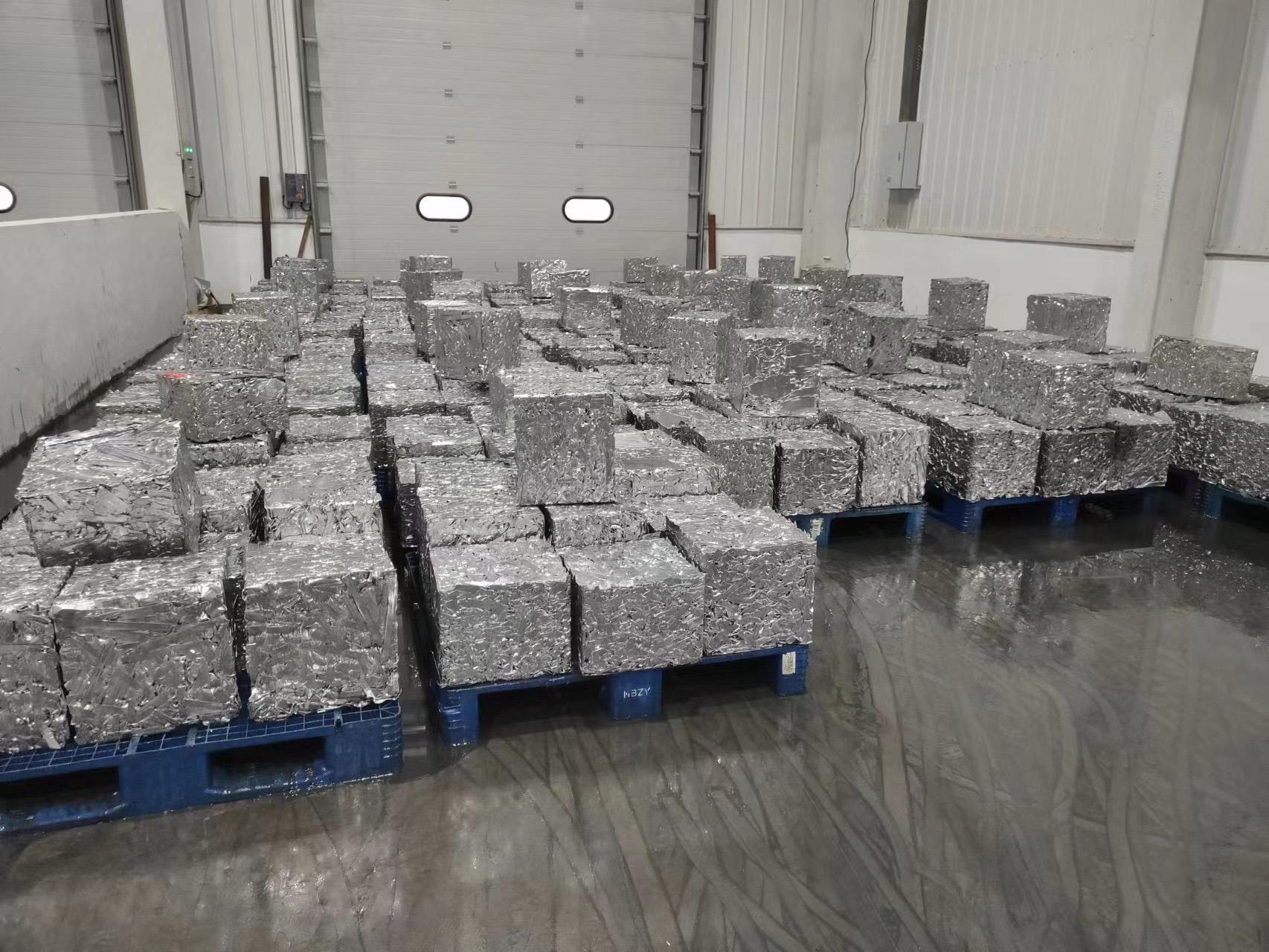
A blanking operation creates a planned part and a remaining skeleton, along with smaller pieces around the cut pattern. The scrap-handling problem begins before compression: useful blanks, rejected components and the residual skeleton need clear destinations. This Front-Out HBQ Baler for Aluminum Blanking Scrap addresses the prepared residual aluminum stream after that separation, not an unrestricted load of everything beside the press.
A perforated skeleton can occupy considerable space while containing relatively little metal. Its open pattern, connected webs and projecting corners also affect how it sits in a container. Selection should therefore consider the shape and preparation of the skeleton, not only its alloy name or an average scrap weight.
The HBQ front-out arrangement compresses suitable prepared feed and discharges the formed bale toward a collection position ahead of the machine. Review the HBQ front-discharge overview alongside a drawing of the blanking-line collection route. No direct press-to-baler connection or built-in skeleton cutting system is implied.
02 / MATERIALS & OUTPUT
Applications & Materials
Suitable scrap materials, industries and operating scenarios.
Define the approved skeleton and small-piece fraction
Document the sheet alloy, thickness, skeleton dimensions, web pattern and surface condition. Separate oil-bearing, coated or adhesive-backed scrap when its treatment or recycling destination differs. Remove reusable parts, tooling fragments, steel attachments and unrelated floor sweepings before the load reaches the baler.
Large interconnected skeletons may require a separately reviewed reduction step. Discuss the longest dimension and the behavior of nested pieces with the equipment supplier. Do not assume that an open skeleton will fit or compress acceptably merely because the individual webs are thin. The approved loading envelope must refer to prepared material, not a nominal sheet size.
Small pieces falling from the blanking process need their own containment plan. Determine whether they can escape through gaps in bins or handling equipment and whether their inclusion changes the approved feed. Do not claim that the baler captures every small slug or includes sealed collection features without configuration evidence.
Use separate identified containers when the press changes alloy or coating. Mixing scrap can erase the value of the upstream segregation, and baling cannot undo that mixture. The receiving buyer's specification should inform the preparation routine.
03 / STRUCTURE & FEATURES
Equipment features.
Features & Benefits
Operational advantages and configuration benefits for buyers.
Make skeleton handling part of the purchasing specification
A defined front collection point can help a plant separate finished-bale removal from the release of scrap containers at the press. This is a layout opportunity, not an automatic productivity improvement. Check whether actual bins, lifting devices and bale pickup equipment can operate without obstructing adjacent production.
Preparing skeletons to an agreed condition can reduce uncertainty during loading trials. The useful benefit is a repeatable input description that both the buyer and supplier can inspect. It avoids selecting a machine from a favorable sample while normal production produces wider, more connected or more heavily nested scrap.
Batch identification can connect a bale with the press job, alloy and preparation method. Establish that record as a site process unless a specific tracking feature has been quoted. Labels and release checks may be sufficient for the operational requirement; do not assume automatic alloy recognition or weighing.
Configuration choices should follow the real handling problem. Review controls, loading alternatives, service access and wear surfaces in the supplied series information. Any listed motor, pump, PLC or cooling choice must be confirmed for the selected order rather than treated as a universal standard.
04 / WORKING PRINCIPLE
Operation & Maintenance
Practical guidance for safe operation and routine maintenance.
Accept the complete blanking-scrap route
Prepare a sample set that includes ordinary skeletons, the most connected pattern and the small-piece fraction proposed for inclusion. Photograph the material before and after any size preparation. Share container dimensions and the planned frequency of batch changes so the supplier can assess the interface with the baler.
During a demonstration, observe how the approved load enters the chamber, whether the planned container can be emptied as intended and how the bale is removed. Keep production parts outside the scrap route throughout the trial. Record the actual configuration and preparation rather than relying on an unqualified claim about capacity.
Follow the machine-specific manual for loading, operation and isolation. Employees must not pull interconnected skeletons out of an operating chamber or enter the discharge zone to free a bale. Inspect relevant wear surfaces and hydraulic components using the prescribed maintenance procedure, and manage sharp scrap through the site's handling assessment.
The Front-Out Baler Reference Video provides general equipment/process context. It is not proof of testing with your blanking pattern, small-piece fraction or order configuration.
Related project references illustrate equipment layout and collection, not a trial of this specific material or guaranteed configuration performance.
05 / TECHNICAL REFERENCE
Technical Parameters
Key selection data and model-dependent specification ranges.
Configuration reference
The six attributes below are selected from the supplied HBQ series information. Listed brands, cooling arrangements and controls are configuration choices rather than a promise that every machine includes them. Numeric ranges refer to the series, not to one adjustable machine. Confirm the exact model, electrical supply, loading arrangement and agreed acceptance conditions in the order specification.
| Attribute | Series reference / option |
|---|---|
| Series machine weight range | 2,820–18,500 kg; model dependent |
| Control options | PLC automatic control or manual control, as selected |
| Wear steel plates | Interchangeable |
| Remote control | Optional |
| Drive | Hydraulic drive |
| Series working pressure reference | 21.5 MPa; confirm selected model |
06 / SOLUTIONS & CUSTOMER CASES
Plan the complete process.
RELATED NEWS
News & buying guides
CUSTOMER CASES
Related project references
Each reference identifies its own equipment and project scope; it is not a test record for every material on this product page.

APPLICATIONS
Material preparation guides
These are related material guides. Follow each guide’s feedstock limits; a related material is not automatically approved for every machine configuration.
07 / QUESTIONS & SUPPORT
Product questions,
answered.
Delivery, Service & FAQ
Delivery scope, technical support and frequently asked questions.
Frequently asked questions
Can a full sheet skeleton go into the baler?
Only when its dimensions and condition are within the reviewed feed specification. A connected skeleton may need separate preparation even when its webs are thin.
Should good blanks and rejects be mixed with the skeleton?
Keep useful parts out of the scrap stream. Rejected components require an agreed route and may have different attachments or geometry from skeleton scrap.
Can very small blanking pieces be included?
Assess their containment and the actual machine configuration. Do not assume sealed bins, complete capture or suitability for every small-piece fraction.
How is this different from general sheet trimming?
Blanking leaves connected patterns and requires part-versus-scrap separation. Compare the aluminum sheet page for the broader offcut workflow.
Does the video demonstrate my blanking material?
No. It is a user-specified front-out reference. Arrange evidence using your prepared skeleton and agreed configuration if it is an acceptance requirement.
Which specifications should be confirmed?
Confirm prepared feed dimensions, alloy, surface condition, loading method and collection route. The HBQ overview gives series context; the order must state the actual configuration.
Equipment Recommendation
Tell Us About Your Material and Capacity
Share the key operating conditions below so our team can compare suitable equipment and prepare a practical configuration.