
Metal Balers
Front-Out HBQ Baler for Aluminum Can Bale Staging
Plan aluminum can bale staging around an HBQ front-out baler, with receiving space, collection workflow and practical configuration checks.
PRODUCT VIDEO
Front-Out HBQ Baler for Aluminum Can Bale Staging video
01 / PRODUCT DESCRIPTION
Product Overview
Purpose, machine structure and its role in the recycling process.
Plan the receiving area before specifying the press
A Front-Out HBQ Baler for Aluminum Can Bale Staging addresses the work that takes place immediately after compression. The purpose of the planning exercise is to move a discharged bale into an identified receiving and holding process without obstructing the machine or encouraging staff to enter its operating area. Selecting a baler and designing that surrounding work should be treated as connected decisions.
Start by describing where finished material goes. It may wait for a scheduled collection, be transferred to another storage area or be recorded before dispatch. Each arrangement creates different demands on space and handling. This page does not assume that a particular handling attachment, weighing system or storage structure is supplied with the HBQ machine.
Forward discharge provides a known collection direction, but the useful space cannot be specified from that fact alone. Obtain the selected machine layout, the configured bale details and the handling equipment requirements. Use those documents to plan the receiving position and subsequent route.
02 / MATERIALS & OUTPUT
Applications & Materials
Suitable scrap materials, industries and operating scenarios.
Keep feed and finished material identifiable
The feed should be suitable emptied aluminum beverage cans prepared to the agreed acceptance standard. Remove contaminants and exclude unknown sealed containers, aerosols and hazardous packaging. Staging does not solve a feed-quality problem: a contaminated batch remains a material-management issue after compression.
Separate the incoming can holding area from finished-material identification wherever the layout allows. Define how staff recognize a completed batch and how they prevent unaccepted material from being placed with it. Use a labeling or record method that can be completed without entering a moving-machine zone.
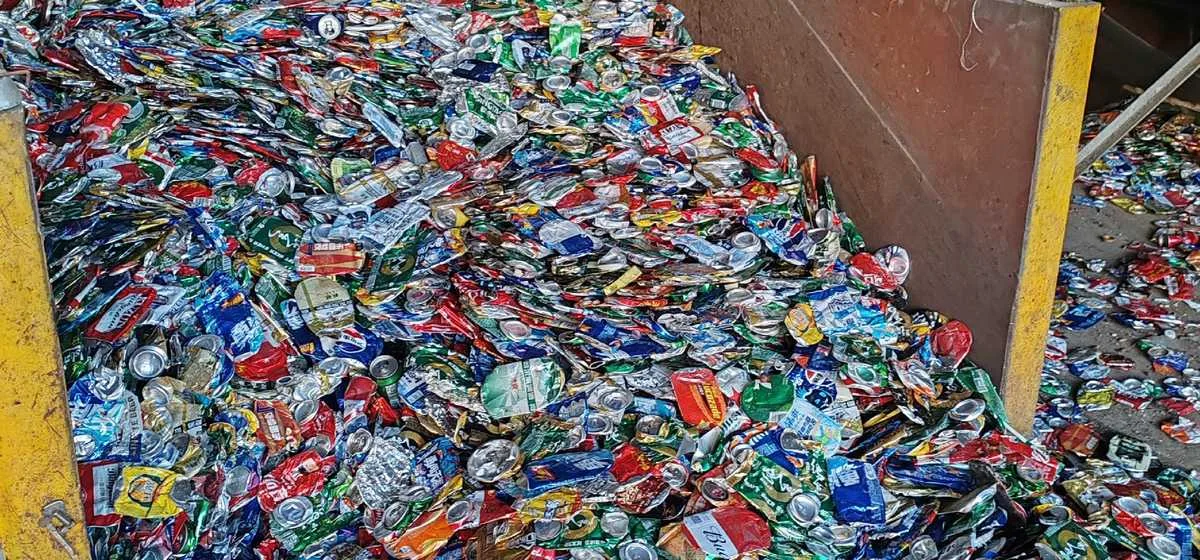
The material images show loose cans, flattened cans and bale forms. They should not be used to infer a particular bale's weight, structural stability or stacking limit. Those conditions require actual output and handling information. Do not prescribe stacking heights or lifting practices from a website photograph.
03 / STRUCTURE & FEATURES
Equipment features.
Features & Benefits
Operational advantages and configuration benefits for buyers.
Use the discharge direction to organize the surrounding work
A front collection position can make it easier to designate where material leaves the machine and where handling begins. The benefit depends on keeping that position available; it disappears if temporary storage blocks the discharge path or collection vehicles must wait in the loading route.
A planned receiving sequence can reduce avoidable confusion between a newly discharged batch and material already released for collection. This is a workflow advantage, not a claim about automatic bale tracking. Identify who checks, labels and moves material, and where each action is permitted.
The selected HBQ configuration must suit the proposed handling arrangement. Discuss the interface using actual drawings and equipment information. Do not infer a conveyor, lift table, automatic collector or weighing unit from the phrase front-out baler. Any such equipment requires its own confirmation and integration assessment.
Maintenance access remains essential even in a compact installation. Avoid using service space as overflow storage. Keep housekeeping, hydraulic inspection and wear-part access within the machine supplier's instructions and the site's operating procedures.
04 / WORKING PRINCIPLE
Operation & Maintenance
Practical guidance for safe operation and routine maintenance.
Test the complete collection cycle
During a demonstration, observe not just the bale leaving the chamber but also the next steps: confirming the machine state, collecting the material and restoring the receiving area for the following cycle. Use the planned handling method and representative feed wherever practicable. Record the configuration and conditions instead of treating an edited video as evidence of the whole workflow.
Agree responsibility for collection equipment, operating instructions and site preparation before purchase. The press operator and collection personnel need a coordinated procedure based on the actual equipment. Do not reach into the discharge area, stand in the receiving path or attempt to move material while prohibited machine movement can occur.
Review the arrangement after the first real batches. If material accumulates, check the collection schedule and storage route rather than assuming a higher compression rate will solve the restriction. A useful staging plan keeps the next step available while preserving safe access and batch identity.
Front-Out Baler Reference Video is the user-specified process reference, not proof of this exact feed or configuration. Consult the HBQ front-discharge series overview for related selection context.
The linked Australian 200-ton front-discharge aluminum project is a layout reference, not proof of this HBQ can feed or configuration.
05 / TECHNICAL REFERENCE
Technical Parameters
Key selection data and model-dependent specification ranges.
Six HBQ series reference attributes
These separately sourced attributes describe supplied series information, not a guaranteed complete configuration for every HBQ model. Confirm the applicable machine, options and electrical supply in the quotation. No production rate, bale weight or dimensional result is inferred from this sample.
| Core components | Pump and motor |
|---|---|
| Supply | Three-phase, configured for the installation |
| Remote control | Optional |
| Baler arrangement | Three rams |
| Feeding methods | Grabber or manual, according to configuration |
| Drive | Hydraulic drive |
Configuration-dependent values and optional equipment require confirmation for the actual installation. Keep the model-specific specification with the acceptance record.
06 / SOLUTIONS & CUSTOMER CASES
Plan the complete process.
RELATED NEWS
News & buying guides
Aluminum Can Baler Selection: Bale Size, Throughput and Feeding
Start with the cans you collect and the bales your buyer accepts. Connect daily volume, feeding, collection and transport before selecting a machine.
Read details ↗Front-Out vs. Side-Push Metal Balers: Which Fits Your Scrap Yard?
The direction a bale leaves the machine can shape your entire handling route. Compare front and side discharge before committing valuable yard space.
Read details ↗CUSTOMER CASES
Related project references
Each reference identifies its own equipment and project scope; it is not a test record for every material on this product page.

APPLICATIONS
Material preparation guides
These are related material guides. Follow each guide’s feedstock limits; a related material is not automatically approved for every machine configuration.
07 / QUESTIONS & SUPPORT
Product questions,
answered.
Delivery, Service & FAQ
Delivery scope, technical support and frequently asked questions.
Frequently asked questions
Is bale staging equipment included?
Not necessarily. This page concerns planning the receiving workflow. Confirm any collection equipment, weighing arrangement or storage system separately.
Can I choose a stacking height from the photos?
No. Photographs do not establish bale stability or safe storage limits. Use actual material, handling and site assessments.
Does front discharge mean automatic collection?
No. It describes where the bale exits. Collection method and operator responsibilities still need to be specified.
What should the supplier receive?
Provide a site drawing, the proposed collection equipment, storage route, feed description and buyer requirements. Request the selected machine layout in return.
Can finished bales wait directly in the discharge area?
Do not allow storage to obstruct the required receiving space. Follow the supplied operating procedure and establish a suitable separate holding arrangement.
How is the arrangement accepted?
Observe discharge and collection together using the proposed configuration. Confirm access, responsibilities and the ability to restore the receiving position safely.
Equipment Recommendation
Tell Us About Your Material and Capacity
Share the key operating conditions below so our team can compare suitable equipment and prepare a practical configuration.