
Metal Balers
Front-Out HBQ Baler for Aluminum Stamping Remnants
Review Formed Remnants, Lubricants and Press-Shop Handling
Review an HBQ front-out baler for suitable prepared aluminum stamping remnants. Consider formed geometry, nested pieces, lubricant conditions and attachments before selecting the machine. Plan job changes, batch separation and front collection clearance around the actual press-shop workflow, with configuration-specific acceptance rather than assumed performance.
PRODUCT VIDEO
Front-Out HBQ Baler for Aluminum Stamping Remnants video
01 / PRODUCT DESCRIPTION
Product Overview
Purpose, machine structure and its role in the recycling process.
Plan for the changing shape of press-shop remnants
Aluminum stamping scrap can include bent trim, drawn edges, formed rejects and pieces that have passed through lubricated tooling. These shapes do not behave like a uniform pile of flat sheet. A Front-Out HBQ Baler for Aluminum Stamping Remnants should therefore be assessed around the actual press operations, the preparation permitted on site and the separation required by the scrap buyer.
This page focuses on reviewed formed and trimmed remnants after useful components have been removed. It does not imply suitability for complete assemblies, unknown closed parts or every forming thickness. If the material is predominantly flat connected blanking skeletons, describe that separately rather than treating all press-shop scrap as one stream.
Forward push-out discharge gives the bale a defined direction of travel to the collection area. The value of that arrangement depends on the press-shop layout, the incoming containers and the method used to remove bales. Start with the HBQ machine-family overview, then assess the material-specific conditions below.
02 / MATERIALS & OUTPUT
Applications & Materials
Suitable scrap materials, industries and operating scenarios.
Inspect formed shapes, lubricants and attached components
List the alloys and surface treatments generated by each press job. Record thickness, the longest dimension, nesting behavior and the presence of folded edges or enclosed cavities. A part that looks like thin scrap may contain a reinforcement, insert or connection that changes the loading assessment.
Separate steel fasteners, plastic pieces, rubber, tooling fragments and other attachments according to the approved recycling specification. Reject material of unknown contents and do not include sealed or pressurized items. The intention is prepared production scrap, not dismantling complete products inside a baler.
Lubricant and residual liquid conditions require explicit review. Agree how contaminated batches are collected and managed under the site's procedures and the receiving buyer's requirements. Compression does not clean the scrap, and this page does not establish oil recovery, filtration or spill containment features on the proposed machine.
Nested formed pieces may be difficult to present consistently to the loading equipment. Show the supplier their normal container condition, not only individual pieces laid out neatly. Any separation or size preparation must follow an approved method without improvised hand intervention in the operating machine.
03 / STRUCTURE & FEATURES
Equipment features.
Features & Benefits
Operational advantages and configuration benefits for buyers.
Match the advantages to the press-shop workflow
A specified incoming condition helps the supplier evaluate a representative load instead of relying on the word stamping. It also gives production and scrap-handling staff a shared release criterion when tooling, alloy or lubrication changes. That is a process benefit, not a guarantee of a particular cycle time or bale density.
Front discharge can support a dedicated receiving and identification area for finished bales. Review how this area interacts with press traffic and container movement. The objective is a workable route for the actual site, not a claim that a discharge direction alone eliminates handling or prevents congestion.
Keeping remnants separated by approved job or alloy can preserve useful traceability for the buyer. Identify a batch before compression and connect the output with its source container. A manual record can support this procedure; automatic weighing or tracking should only be described if separately verified for the chosen configuration.
The supplied HBQ series lists control and component alternatives. Select them with regard to loading arrangements, service support and the operating environment. Maintenance access matters where sharp formed scrap and oily residues can accumulate, but cleaning and inspection must always follow the machine-specific isolation instructions.
04 / WORKING PRINCIPLE
Operation & Maintenance
Practical guidance for safe operation and routine maintenance.
Test normal containers and planned changeovers
For an inquiry, provide photographs of the actual remnants in their collection bins, a list of alloys and surface treatments, and examples of the most awkward nested shapes. Explain how often the press job changes and what preparation is performed before scrap is released for baling.
Agree an acceptance demonstration that follows a normal approved container through loading, compression, discharge and collection. Check that the loading equipment can present the material as planned and that the bale can be removed within the available space. Record the condition of the feed and the exact machine configuration used during the demonstration.
Review changeover and housekeeping with the operating team. Residues from a previous alloy or job should be managed under the documented procedure rather than ignored because the next load is also aluminum. Never reach into an operating chamber, pull out a nested piece or enter the receiving zone to resolve a blockage. Stop and isolate using the required procedure before permitted intervention.
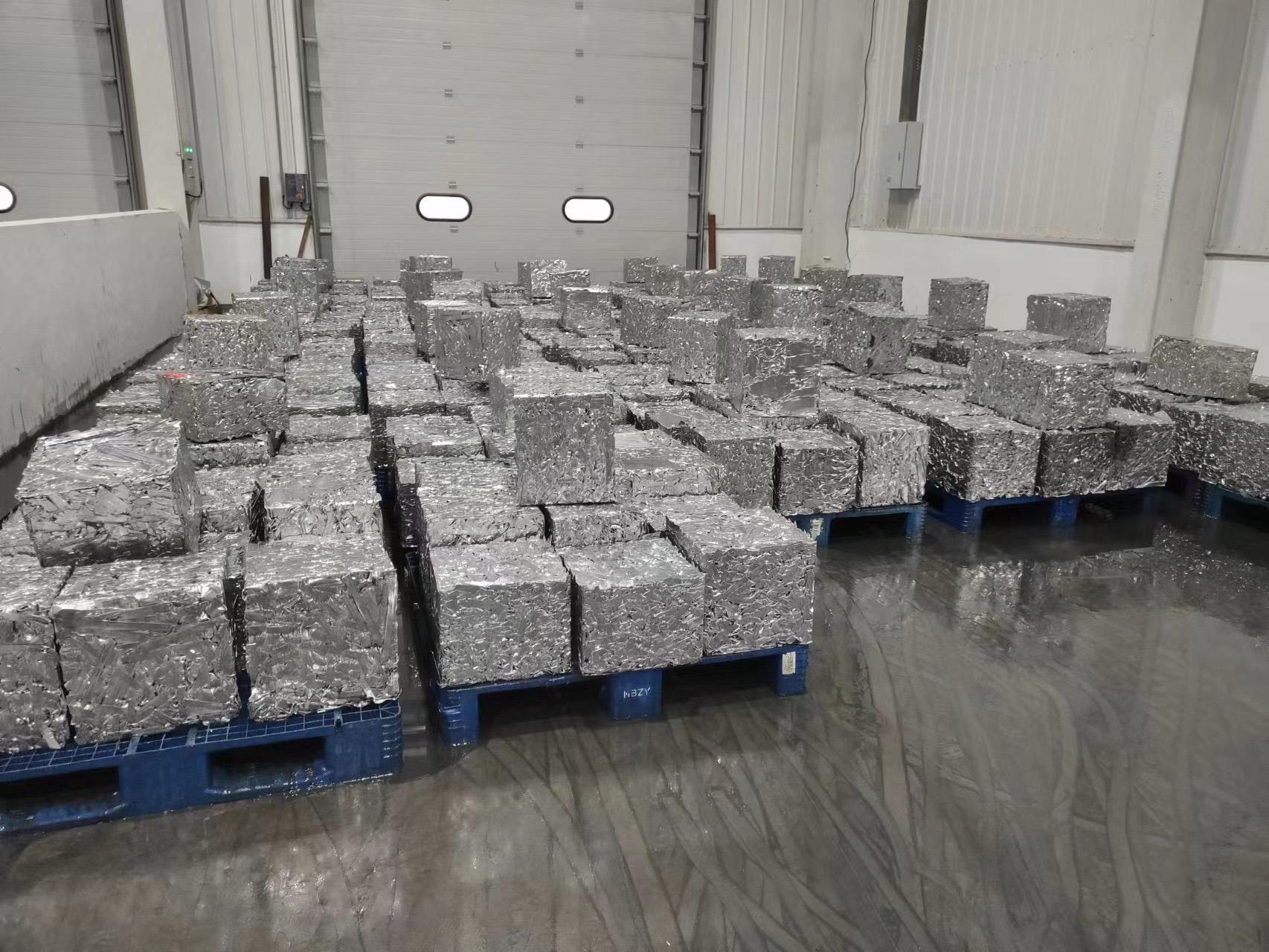
The Front-Out Baler Reference Video is a general equipment/process reference, not evidence of a trial using these stamping remnants. Request material-specific evidence where it forms part of the purchasing decision.
Related project references illustrate equipment layout and collection, not a trial of this specific material or guaranteed configuration performance.
05 / TECHNICAL REFERENCE
Technical Parameters
Key selection data and model-dependent specification ranges.
Configuration reference
The six attributes below are selected from the supplied HBQ series information. Listed brands, cooling arrangements and controls are configuration choices rather than a promise that every machine includes them. Numeric ranges refer to the series, not to one adjustable machine. Confirm the exact model, electrical supply, loading arrangement and agreed acceptance conditions in the order specification.
| Attribute | Series reference / option |
|---|---|
| Electrical supply | Three-phase, according to installation specification |
| Baler arrangement | Three rams |
| Listed PLC configuration | Siemens, subject to selected configuration |
| Remote control | Optional |
| Core components | Pump and motor |
| Listed electrical configuration | Schneider, subject to selected configuration |
06 / SOLUTIONS & CUSTOMER CASES
Plan the complete process.
RELATED NEWS
News & buying guides
CUSTOMER CASES
Related project references
Each reference identifies its own equipment and project scope; it is not a test record for every material on this product page.

APPLICATIONS
Material preparation guides
These are related material guides. Follow each guide’s feedstock limits; a related material is not automatically approved for every machine configuration.
07 / QUESTIONS & SUPPORT
Product questions,
answered.
Delivery, Service & FAQ
Delivery scope, technical support and frequently asked questions.
Frequently asked questions
Does stamping scrap mean every rejected component is suitable?
No. Review geometry, thickness, reinforcements, attachments and cavities. Complete assemblies and unknown closed items are outside the stated feed.
Can oily aluminum scrap be loaded without preparation?
Do not assume so. Agree contamination handling and recycling requirements first; baling does not remove oil or establish a liquid-recovery function.
Why inspect pieces in their normal bins?
Nesting and interlocking can change how material is presented to loading equipment. An individual clean sample may not represent the normal container.
Can several aluminum alloys be processed together?
Only when the agreed recycling specification permits the mixture. For separately sorted streams, see the fabrication batch workflow.
Is automatic operation the same as automatic feeding?
No. A listed control option does not establish automatic loading, unattended operation or any unverified cycle sequence.
How should I compare configurations?
Use representative feed, the planned collection route and an agreed acceptance checklist. Review the HBQ overview and confirm the selected options in the order.
Equipment Recommendation
Tell Us About Your Material and Capacity
Share the key operating conditions below so our team can compare suitable equipment and prepare a practical configuration.