
Metal Balers
Front-Out HBQ Baler for Grabber-Fed Aluminum Can Scrap
Assess an HBQ front-out baler for grabber-fed aluminum cans, including loader fit, chamber loading, collection clearance and installation acceptance.
PRODUCT VIDEO
Front-Out HBQ Baler for Grabber-Fed Aluminum Can Scrap video
01 / PRODUCT DESCRIPTION
Product Overview
Purpose, machine structure and its role in the recycling process.
Coordinate the grabber, chamber and front collection route
This Front-Out HBQ application is intended for buyers assessing grabber loading of prepared aluminum can scrap. Its central issue is the interface between two pieces of equipment: the grabber must deliver a suitable amount of material to the chamber without creating an uncontrolled spill, obstruction or conflict with the bale collection area.
The supplied HBQ reference lists grabber and manual feeding as alternatives. That is a basis for discussing a grabber-fed installation, not evidence that a particular excavator, attachment or automatic feed system is included. Submit the loading equipment details and the proposed working layout so compatibility can be assessed before a machine is selected.
Front discharge creates a second movement zone that must remain clear when a bale is released. A well-planned installation considers grabber reach, the operator's view, chamber access and collection vehicle movement together. The following guidance helps define those purchasing requirements without assuming a throughput or control feature not confirmed for the ordered machine.
02 / MATERIALS & OUTPUT
Applications & Materials
Suitable scrap materials, industries and operating scenarios.
Use sorted cans and representative grabber loads
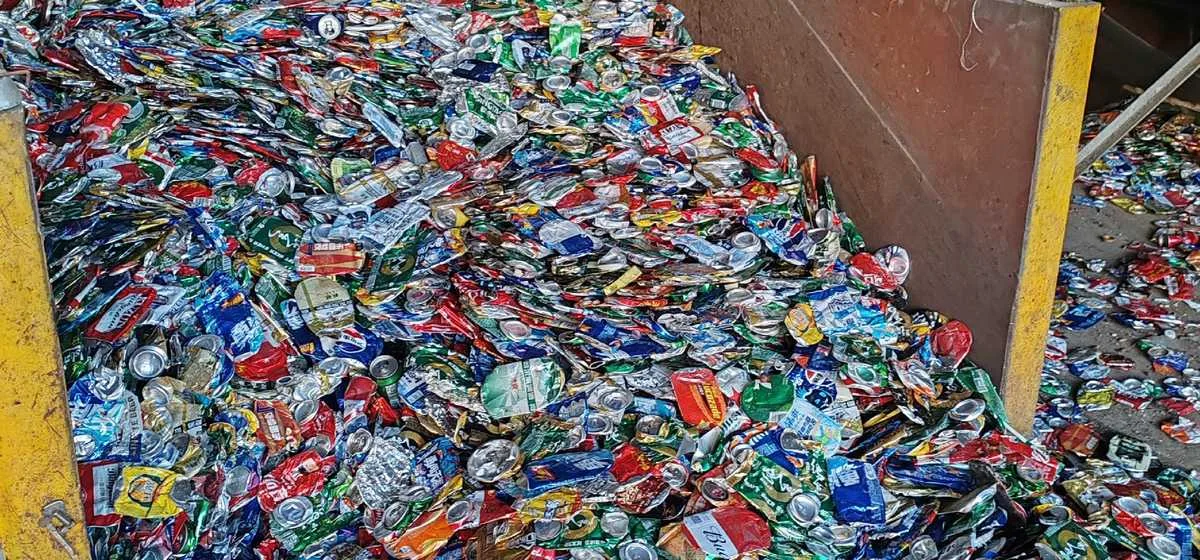
The intended feed is prepared aluminum beverage can scrap with unwanted materials removed. Separate steel contamination, glass, batteries, pressurized containers and hazardous material before loading. If collection batches contain liquid or extensive residue, establish preparation requirements with the receiving recycler and the machine supplier.
Loose cans and flattened cans can behave differently in a grab. A small trial sample that looks clean by hand may not represent a full working load containing dirt, mixed packaging or dense compacted sections. Provide photographs and samples from normal incoming deliveries, including the expected variation in preparation.
Confirm the permissible feed size and loading quantity for the proposed chamber. A grabber's lifting capacity does not define the baler's acceptable load. Do not force material across the chamber edge, use the attachment to compact material against the machine, or assume large pre-compressed blocks are acceptable without explicit equipment-specific approval.
03 / STRUCTURE & FEATURES
Equipment features.
Features & Benefits
Operational advantages and configuration benefits for buyers.
Selection advantages depend on the handling interface
Mechanized transfer: grabber feeding may reduce the need to transfer every can by hand when the site already uses suitable loading equipment. The practical benefit depends on reach, material presentation and the permitted loading sequence; it is not a guaranteed labor or cycle-time saving.
Horizontal chamber arrangement: the series reference describes a horizontal machine. Review its loading opening and working height against the grabber attachment rather than selecting only by headline hydraulic force.
Forward push-out: the discharge direction can support a defined collection lane when the front remains accessible. Confirm how the collection equipment approaches and retreats without entering the grabber's working envelope.
Control alternatives: PLC automatic and manual controls are listed options. Establish who has authority to start a machine movement and how the loading and compression tasks are coordinated. A remote-control option, where selected and confirmed, is not a substitute for a site-approved operating procedure.
Wear considerations: review the supplied wear plate specification and inspection access. Preventing impact from loading equipment is essential; a wear-resistant plate option does not authorize contact with the chamber or machine structure.
04 / WORKING PRINCIPLE
Operation & Maintenance
Practical guidance for safe operation and routine maintenance.
Verify the complete loading and collection cycle
Start the layout review with the proposed grabber model, attachment dimensions, operating radius and normal material staging position. Add the baler drawing and planned bale collection route. Identify locations where a person, vehicle or attachment could enter another activity's space, and establish separation through the site's safety assessment.
Prepare the feed: inspect the stockpile and remove unacceptable items before a load is lifted.
Position and load: follow the approved method for the actual equipment. Control the load size and avoid striking the machine. Keep personnel clear of suspended material and the loading area.
Clear the loading equipment: complete the documented handover between loading and machine operation before starting the permitted compression sequence.
Discharge and collect: maintain a clear front zone, then use the agreed collection method after discharge is complete and the equipment condition permits approach.
During acceptance, observe several representative batches rather than a single ideal load. Record spill cleanup, visibility, access, control handover and collection delays. Ask the supplier to demonstrate the supplied controls and maintenance isolation procedure. Any promised production result should be tied to this agreed setup and material, not inferred from a generic series capacity range.
The linked Australian 200-ton front-discharge aluminum project is a layout reference, not proof of this HBQ can feed or configuration.
Front-Out Baler Reference Video: user-selected equipment/process reference, not evidence of this exact feed, configuration or output.
05 / TECHNICAL REFERENCE
Technical Parameters
Key selection data and model-dependent specification ranges.
Six selected mechanical reference attributes
The following entries are drawn from the supplied HBQ series worksheet. They describe listed attributes or available specifications, not a single verified machine assembled from random options. Confirm the complete model, supply and order configuration before purchase.
Core components: Pump and motor.
Supply frequency: 50 Hz or 60 Hz, selected to match the site supply.
Working pressure: 21.5 MPa, as listed in the supplied series reference; confirm the selected model.
Oil tank volume: 800–3000 L series reference range; selected model to be confirmed.
Cooling option: Fan cooling, subject to configuration confirmation.
Power supply: Three phase.
Where a range or alternative is shown, it belongs to the series reference. It does not mean that one machine covers every value or includes every option.
06 / SOLUTIONS & CUSTOMER CASES
Plan the complete process.
RELATED NEWS
News & buying guides
Aluminum Can Baler Selection: Bale Size, Throughput and Feeding
Start with the cans you collect and the bales your buyer accepts. Connect daily volume, feeding, collection and transport before selecting a machine.
Read details ↗Front-Out vs. Side-Push Metal Balers: Which Fits Your Scrap Yard?
The direction a bale leaves the machine can shape your entire handling route. Compare front and side discharge before committing valuable yard space.
Read details ↗CUSTOMER CASES
Related project references
Each reference identifies its own equipment and project scope; it is not a test record for every material on this product page.

APPLICATIONS
Material preparation guides
These are related material guides. Follow each guide’s feedstock limits; a related material is not automatically approved for every machine configuration.
07 / QUESTIONS & SUPPORT
Product questions,
answered.
Delivery, Service & FAQ
Delivery scope, technical support and frequently asked questions.
Frequently asked questions
Is a grabber supplied with the baler?
The reference lists grabber feeding as an option, not an included loading machine. Confirm the supply boundary, attachment requirements and any interface work explicitly in the quotation.
Can our existing excavator grab load the chamber?
Compatibility requires review of reach, attachment size, load control and the baler drawing. Provide those details before ordering; an attachment that can lift the cans may still be unsuitable for safe chamber loading.
Can the grabber press material down inside the chamber?
Do not assume this is allowed. Loading equipment must not be used to force or strike the baler unless the equipment supplier provides an explicit approved procedure for that configuration.
Does PLC control synchronize the grabber automatically?
Not by itself. The supplied reference does not establish an integrated automatic grabber system. Any coordination, interface or additional control function must be separately specified and confirmed.
What should be checked in an acceptance trial?
Use normal can scrap and the intended loader. Check loading fit, spills, visibility, the agreed operating sequence, front collection clearance and maintenance access alongside any configuration-specific performance criteria.
Can the video be used as a performance guarantee?
No. The linked video is a front-out equipment reference designated by the user. It does not establish this loader combination, a can-specific trial or a guaranteed output for the proposed installation.
Equipment Recommendation
Tell Us About Your Material and Capacity
Share the key operating conditions below so our team can compare suitable equipment and prepare a practical configuration.