
Metal Balers
Front-Out HBQ Baler for Sorted Cans from Recycling Centers
Plan HBQ front-out baling for sorted cans: fraction checks, sorting handover, loading options and representative acceptance tests.
PRODUCT VIDEO
Front-Out HBQ Baler for Sorted Cans from Recycling Centers video
01 / PRODUCT DESCRIPTION
Product Overview
Purpose, machine structure and its role in the recycling process.
Receive the output of sorting, not the whole mixed stream
A recycling center needs its baling stage to preserve the quality achieved during sorting. A Front-Out HBQ Baler for Sorted Cans from Recycling Centers is considered for the separated aluminum beverage-can fraction, rather than as a machine for unsorted household recycling. The purchasing discussion should follow the material from the sorting discharge point through temporary storage, inspection, loading and finished-bale collection.
The key distinction is the handover between the sorting operation and the baler operator. Define who releases a batch for baling, how rejected material is removed and how the released fraction is identified. Otherwise, a clean stream can be contaminated again when bins, floor sweepings or material from another line are combined.
Describe peak arrivals and interruptions as well as an average workload. A baler selection based only on an average quantity can overlook temporary storage, staffing and the time needed to remove completed bales. This page supports that workflow discussion; it does not promise a particular processing rate or bale density.
02 / MATERIALS & OUTPUT
Applications & Materials
Suitable scrap materials, industries and operating scenarios.
Protect the quality of a sorted aluminum fraction
Inspect the sorted fraction for steel cans, plastic containers, glass and other carryover. Sorting equipment does not remove the need for a practical acceptance check. Establish a route for rejected batches that does not send their contamination back into the accepted stream. Empty beverage cans remain the intended material; aerosols and containers of unknown contents must be excluded and assessed separately.
Agree buyer requirements for contamination and moisture before establishing internal release criteria. If the center handles multiple grades, use clearly identified containers and a changeover routine. Do not assume that pressing two grades together makes the result acceptable to a buyer who requested a separated stream.
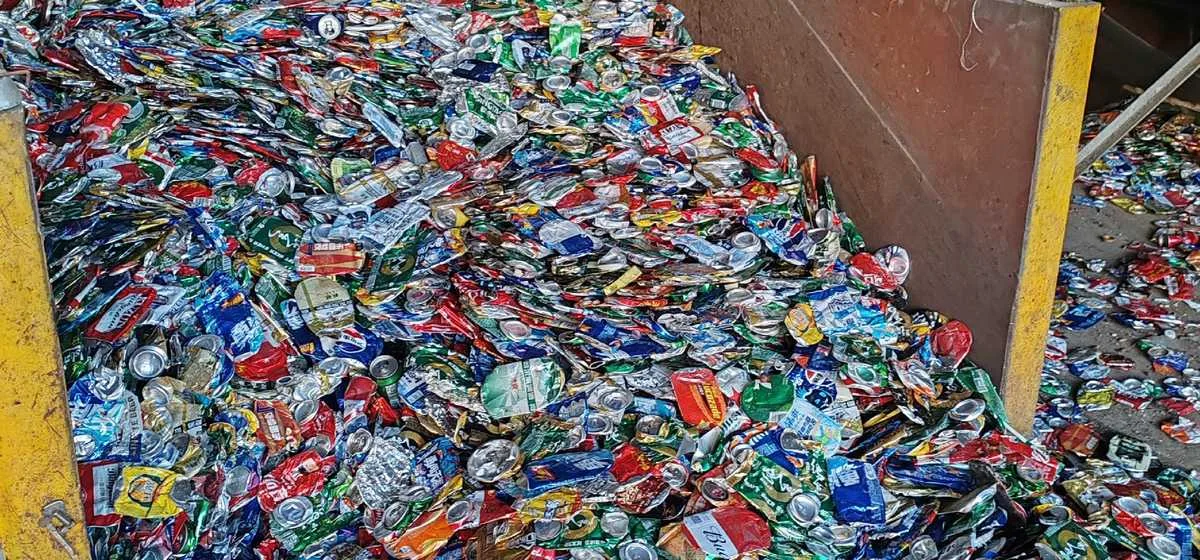
Keep representative incoming and released-material photographs. Material photos on this page illustrate feed or bale form only, not a guaranteed result from the proposed machine. A supplier demonstration should use the actual fraction after the center's normal sorting and preparation steps.
03 / STRUCTURE & FEATURES
Equipment features.
Features & Benefits
Operational advantages and configuration benefits for buyers.
Build the baler into a controllable center workflow
A defined front discharge position can support a designated receiving area separate from the point where the sorted fraction is delivered. That advantage depends on the actual layout. Check whether operators, mobile bins and bale collection equipment would cross each other's routes during busy periods.
A documented loading arrangement helps maintain an identifiable handover from sorting to compression. The HBQ information lists feeding and control alternatives, but those options must be selected rather than assumed. Explain whether the proposed feed arrives in small containers or through larger material handling equipment, and ask the supplier to assess the interface.
Batch records provide another practical benefit when they connect the received fraction with the finished output. They do not need to depend on an unverified automatic tracking feature. A center can define its own labeling and recording procedure around the machine, while keeping employees clear of operating equipment.
Service access also matters in a sorting facility. Reserve inspection space and describe the dust, housekeeping and shift conditions to the supplier. Follow the machine-specific maintenance and isolation instructions rather than treating general layout advice as an operating manual.
04 / WORKING PRINCIPLE
Operation & Maintenance
Practical guidance for safe operation and routine maintenance.
Verify the sorting-to-baling handover
During acceptance, follow a representative released batch through loading, compression, discharge and collection. Confirm that rejected material can be held separately and that the receiving area remains usable while the next batch is being prepared. Record the actual machine configuration, preparation steps and any interruptions.
Ask for the specified operating instructions, maintenance schedule and selected electrical requirements. Staff should be trained for the configured machine and the site's handover procedure. Never reach into a chamber or discharge area to clear material; stop and isolate using the prescribed method before permitted service work.
After installation, review repeated contamination findings with the sorting team. Improve the upstream handover rather than expecting the baler to correct the fraction. The objective is a usable, documented material flow whose conditions can be checked by both the center and the receiving buyer.
Front-Out Baler Reference Video is the user-specified process reference, not proof of this exact feed or configuration. Consult the HBQ front-discharge series overview for related selection context.
The linked Australian 200-ton front-discharge aluminum project is a layout reference, not proof of this HBQ can feed or configuration.
05 / TECHNICAL REFERENCE
Technical Parameters
Key selection data and model-dependent specification ranges.
Six HBQ series reference attributes
These separately sourced attributes describe supplied series information, not a guaranteed complete configuration for every HBQ model. Confirm the applicable machine, options and electrical supply in the quotation. No production rate, bale weight or dimensional result is inferred from this sample.
| Core components | Pump and motor |
|---|---|
| Wear plate options | NM450 or Hardox450, according to configuration |
| Feeding methods | Grabber or manual, according to configuration |
| Baler arrangement | Three rams |
| Discharge | Forward push-out |
| Steel plate | Q235B |
Configuration-dependent values and optional equipment require confirmation for the actual installation. Keep the model-specific specification with the acceptance record.
06 / SOLUTIONS & CUSTOMER CASES
Plan the complete process.
RELATED NEWS
News & buying guides
Aluminum Can Baler Selection: Bale Size, Throughput and Feeding
Start with the cans you collect and the bales your buyer accepts. Connect daily volume, feeding, collection and transport before selecting a machine.
Read details ↗Front-Out vs. Side-Push Metal Balers: Which Fits Your Scrap Yard?
The direction a bale leaves the machine can shape your entire handling route. Compare front and side discharge before committing valuable yard space.
Read details ↗CUSTOMER CASES
Related project references
Each reference identifies its own equipment and project scope; it is not a test record for every material on this product page.

APPLICATIONS
Material preparation guides
These are related material guides. Follow each guide’s feedstock limits; a related material is not automatically approved for every machine configuration.
07 / QUESTIONS & SUPPORT
Product questions,
answered.
Delivery, Service & FAQ
Delivery scope, technical support and frequently asked questions.
Frequently asked questions
Is this for mixed municipal recycling?
No. It concerns a suitable sorted aluminum beverage-can fraction. Mixed waste requires sorting and separate assessment before it can become acceptable feed.
Why inspect material after sorting?
Carryover, contamination during storage and incorrectly mixed batches can still occur. Define a release check before the material enters the baler.
Can the baler identify different grades?
Do not assume an automatic identification function. Establish the center's own labeling and batch control procedure unless a specific supplied system is confirmed.
How should capacity be selected?
Discuss the actual fraction, peak arrivals, available storage and collection interruptions. Request configuration-specific evidence instead of selecting from a generic series range.
Is the illustrated bale a guaranteed output?
No. The photographs illustrate material forms. Confirm acceptable output with representative prepared feed and the selected machine configuration.
What makes the layout suitable?
A practical sorting handover, safe loading access, an unobstructed front collection area and service access must work together within the actual site.
Equipment Recommendation
Tell Us About Your Material and Capacity
Share the key operating conditions below so our team can compare suitable equipment and prepare a practical configuration.