
Metal Balers
Side-Push Aluminum Scrap Baler
HBT side-push equipment selection for aluminum scrap
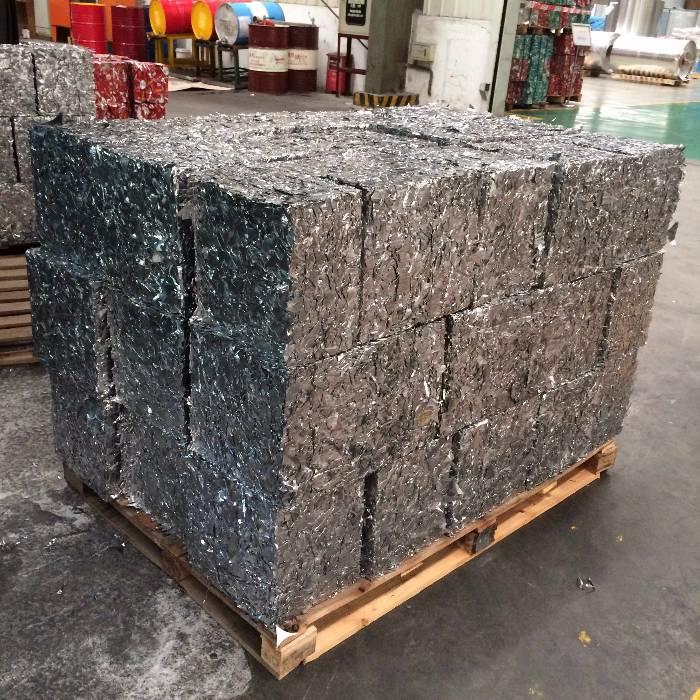
An HBT side-push aluminum scrap baler forms suitable sorted aluminum profiles, sheet and production offcuts into rectangular handling bales. The material mix, maximum dimensions, contamination and receiving buyer requirements determine the preparation and machine configuration.
PRODUCT VIDEO
Side-Push Aluminum Scrap Baler video
01 / PRODUCT DESCRIPTION
Aluminum Scrap Baling Overview
A guide to separated aluminum production and recycling scrap.
Side-Push Aluminum Scrap Baler: Material Preparation and HBT Selection
Material-specific preparation, handling and configuration guidance for the HBT side-push machine family.
A Side-Push Aluminum Scrap Baler reduces the handling volume of suitable aluminum production scrap by forming it into rectangular bales and pushing the finished bale sideways out of the chamber. HBT equipment should be selected for the actual feedstock, whether the main stream is prepared profile offcuts, sheet trim or a controlled mixture of compatible aluminum scrap.
Aluminum recycling is not simply a matter of making the smallest possible package. Alloy identity, attachments, coatings and moisture can influence what the receiving buyer accepts. Baling helps organize material for storage and movement, but it does not remove contamination or make mixed alloys equivalent to a segregated grade. A useful machine recommendation therefore starts with the material specification as well as the loading conditions.
This page addresses aluminum profiles, sheet and suitable offcuts. A dedicated aluminum can baler guide discusses the different collection and contamination concerns of used beverage cans. Both may use a side-push baling concept, but they should not inherit the same performance assumptions simply because they contain aluminum.
02 / MATERIALS & OUTPUT
Sort and Prepare Aluminum Feed
Protect material identity and keep unsuitable items out.
Separate aluminum grades and sources where the buyer requires them. Profile offcuts with steel fasteners or plastic inserts need a different preparation review from clean sheet trim. Cast pieces can be dense and irregular; they must not automatically be included in a loading plan developed for thin aluminum sheet. Send representative samples or clear photographs when the material is unfamiliar.
- Identify the main alloy or collection category and keep traceable batches.
- Measure maximum profile length, section size and sheet dimensions.
- Remove inappropriate attachments and contamination under the site's approved process.
- Keep free liquids, sealed containers, batteries and hazardous items outside the feed.
- Prepare oversized or interlocked pieces so they can be loaded within the approved chamber envelope.
Thin, long pieces can spring apart, bridge or form an uneven load. A consistent preparation and feeding practice is more useful than assuming every aluminum piece compresses the same way. Do not force material into the chamber or use the closing mechanism to compensate for an unsuitable feed size.
04 / WORKING PRINCIPLE
Baling Sequence and Discharge Layout
Connect preparation, loading, compression and bale collection.
Approved scrap is loaded into the horizontal chamber using the feeding arrangement specified for the project. Hydraulic compression forms the bale, and the side-push system moves it toward a receiving position. The loading sequence, amount per charge and discharge handling should be established around the actual scrap mix rather than a universal recipe.
Plan the lateral discharge path before installation. A bale may retain sharp edges or recover some shape after compression, so the collection equipment and handling procedure must suit its actual condition. Keep pedestrians and vehicle movements away from the ejection area. A neat-looking sample bale does not prove that every future batch will have the same weight, dimensions or handling stability.
Routine attention to guards, emergency stops, hydraulic connections and the cleanliness of the working area supports consistent operation. Isolate the equipment before approved maintenance, cleaning or obstruction removal. Do not reach into the chamber, climb onto loose scrap or attempt to guide an emerging bale by hand during operation.
05 / TECHNICAL REFERENCE
Selected HBT Technical Attributes
Five supported attributes selected from the supplied HBT table.
These attributes describe the HBT side-push equipment family. Options and site-specific arrangements must be confirmed in the selected technical configuration.
| Technical attribute | HBT reference |
|---|---|
| Machine layout | Horizontal |
| Remote control | Optional; confirm in the selected configuration |
| Bale discharge | Side push-out |
| Motor voltage | Configured for the installation electrical supply |
| Feeding arrangement | Manual or grabber, subject to the approved workflow |
Force, chamber dimensions, bale weight and production rate are not inferred from a material title. Confirm those values against representative feedstock and the agreed machine configuration.
Select for the Actual Aluminum Stream
Define feedstock and buyer requirements before choosing equipment.
Specify the balance between profiles, sheet and other proposed pieces, along with the largest dimensions and typical contamination. If the mix changes frequently, provide separate descriptions for the different streams. Expected output should include the time needed for sorting, loading and collection; a compression-cycle figure alone does not describe the whole installation.
The receiving buyer may set limits for alloy mixing, foreign material and package size. Confirm these before selecting a bale arrangement. The five technical attributes above are supported HBT reference features, with options explicitly identified. Final chamber size, installed power, performance and equipment interfaces require a matched configuration, so conflicting series ranges are not presented as fixed specifications here.
Use the HBT machine overview to understand the side-push arrangement and contact Dershan with your material photographs, electrical supply and layout. Where copper or ferrous scrap is also collected, maintain separate storage and consider its preparation requirements independently instead of treating all nonferrous or metal scrap as one feed.
06 / SOLUTIONS & CUSTOMER CASES
Plan the complete process.
RELATED NEWS
News & buying guides
Buying a Scrap Metal Baler: What to Include in Your RFQ
A useful scrap metal baler quotation starts with representative scrap, the buyer’s bale specification and a complete handling plan. Use this checklist to compare proposals on the same basis.
Read details ↗Scrap Metal Baler Throughput: How to Plan Real Production
Plan baler capacity around saleable output per working hour, including loading and discharge. A nominal press cycle is only one part of the production picture.
Read details ↗CUSTOMER CASES
Related project references
Each reference identifies its own equipment and project scope; it is not a test record for every material on this product page.

APPLICATIONS
Material preparation guides
These are related material guides. Follow each guide’s feedstock limits; a related material is not automatically approved for every machine configuration.
07 / QUESTIONS & SUPPORT
Product questions,
answered.
Aluminum Scrap Baler FAQ
Answers for profiles, sheet and mixed aluminum offcuts.
Can aluminum profiles and sheet be baled together?
Only when their grade, dimensions and contamination are compatible with the machine plan and the receiving buyer's requirements. Separate streams may be preferable for traceability and recovery value.
Can coated profiles be loaded without preparation?
The coating and attachments must be reviewed. Baling does not remove plastics, steel fittings or surface contamination, and it does not guarantee acceptance by a recycler or remelter.
Are aluminum castings equivalent to sheet offcuts?
No. Castings can have different strength, thickness and geometry. Do not use a thin-sheet loading specification for dense cast pieces without an application assessment.
Will the baler produce a guaranteed density?
Not from the title alone. Bale characteristics depend on feedstock, configuration and operating practice. Any guaranteed target needs a defined material specification and agreed verification method.
Is this the same arrangement as a side turn-out baler?
No. This page describes side push-out discharge. The finished bale follows a lateral ejection route that needs suitable clearance and collection equipment.
Should beverage cans use the same setup as profiles?
Do not assume so. Cans are a separate lightweight packaging stream with different preparation concerns. Review the used aluminum can application before specifying the feed and collection process.
Equipment Recommendation
Tell Us About Your Material and Capacity
Share the key operating conditions below so our team can compare suitable equipment and prepare a practical configuration.