
Metal Balers
Side-Push Copper Wire Scrap Baler
Bare Copper Wire: Grade Identity, Tangling and Feed Preparation
An HBT side-push baler can be assessed for suitable prepared bare copper wire scrap. Define wire form, length, tangling, purity and loading conditions before selecting the configuration; insulated cable is outside this page’s stated scope.
PRODUCT VIDEO
Side-Push Copper Wire Scrap Baler video
01 / PRODUCT DESCRIPTION
Bare Copper Wire Baling Overview
Application-specific selection within the existing HBT family.
Bare Copper Wire: Grade Identity, Tangling and Feed Preparation
An HBT side-push baler can be assessed for suitable prepared bare copper wire scrap. Define wire form, length, tangling, purity and loading conditions before selecting the configuration; insulated cable is outside this page’s stated scope.
A Side-Push Copper Wire Scrap Baler applies the HBT horizontal hydraulic arrangement to suitable prepared bare copper wire scrap. The accepted charge is compressed into a handling bale and moved sideways into a receiving area. This page concerns bare copper wire; it does not claim that the same application covers insulated electrical cables, mixed harnesses or any unidentified copper-colored material.
For this feed, composition and physical form need equal attention. Clean cut wire, loose loops and a tangled mass can present different loading conditions even when the metal is similar. Length, diameter, bundling and springiness affect the preparation discussion. Copper content and attachments affect how the buyer evaluates the resulting lot.
The general copper scrap guide also discusses tube and sheet. Here the focus is the wire-specific enquiry: how to maintain grade identity and present the material without uncontrolled loops, trailing lengths or assumptions about bale stability.
02 / MATERIALS & OUTPUT
Identify the Copper Wire Feed
Identify the feed and preserve separate material streams.
Identify the source and condition of each wire stream. Describe whether it is clean production offcut, stripped material or another prepared bare-wire grade. Record the longest pieces, diameter range and the presence of solder, plating, steel, connectors or residual insulation. Do not infer purity from color or substitute a photograph for the buyer's grade specification.
- Keep accepted copper grades and sources separate when traceability is required.
- Review residual insulation, attachments and mixed-metal pieces before accepting the feed.
- Distinguish short loose lengths from loops, coils and interlocked bundles.
- Exclude batteries, hazardous components, free liquids and unrelated waste.
- Prepare oversize or tangled material to the agreed loading requirements.
Baling does not strip insulation, separate metals or certify the copper content. Insulated cable and mixed automotive wiring are therefore not included in this page's stated application. Where another copper stream is proposed, submit it separately rather than relying on the acceptance of bare wire.
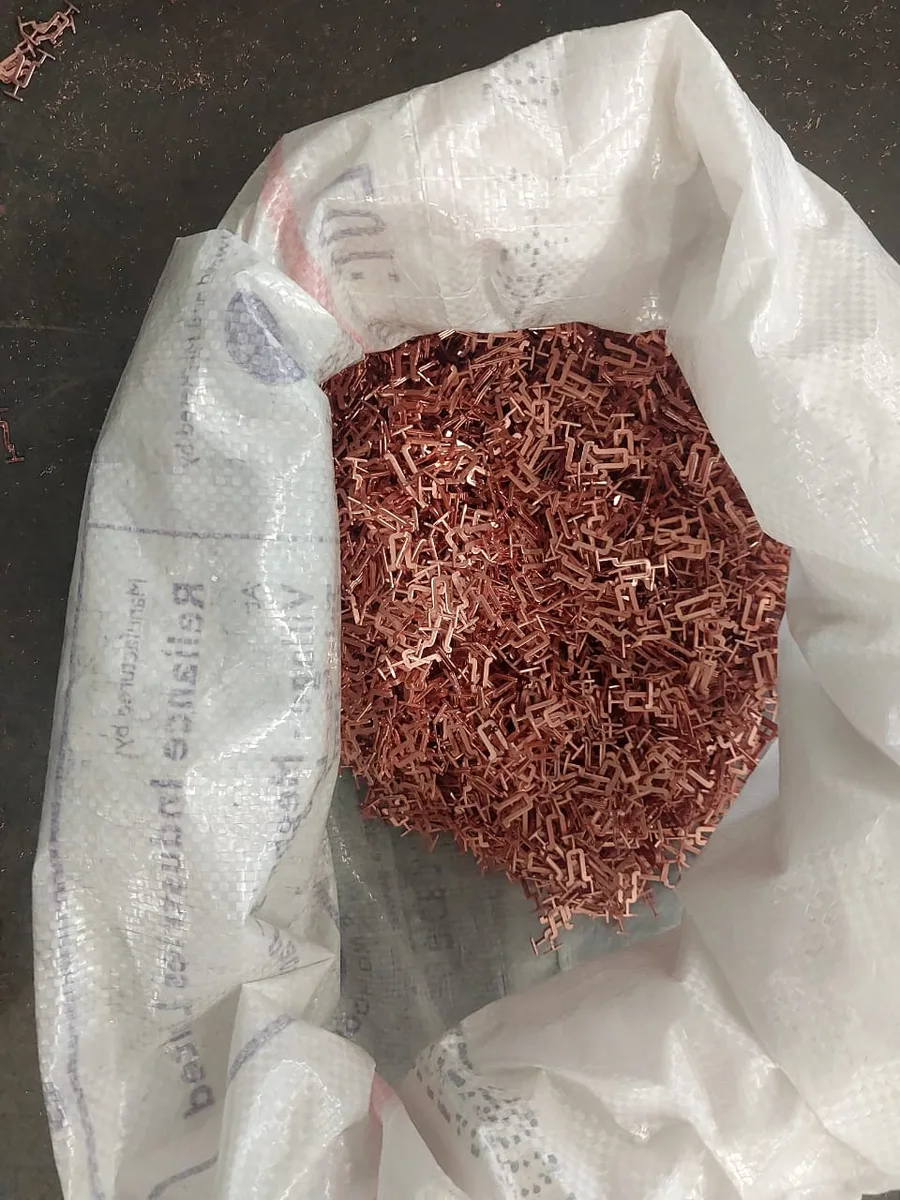
The first material image shows tangled bare copper wire as a material reference, not a verified trial result from this HBT machine. The other three illustrate aluminum profile offcuts, light ferrous scrap and light stainless scrap as separate HBT application references; they are not additional copper-wire photographs. They do not belong in the bare-copper-wire charge. Keep the copper lot separate and review any other proposed material independently.
04 / WORKING PRINCIPLE
Control Tangling and Handling
Plan preparation, loading and lateral bale collection.
Plan storage and transfer so that wire does not trail into pedestrian routes or become caught around handling equipment. Use containers and handling tools appropriate to the real feed condition and the site's approved procedures. Do not pull a tangled length from an operating machine or use a person to hold back loops near the charging area.
The accepted preparation should allow each charge to remain within the designated envelope and clear of closing surfaces. Long loops or tightly interlocked bundles may need a different preparation review from short wire offcuts. There is no universal cut length or charge weight stated here; those details belong to the selected configuration and operating instructions.
After compression, side-push discharge needs a clear receiving position and a suitable method for moving the bale. Inspect the actual handling condition before agreeing collection arrangements, including loose ends and any recovery in shape. Do not assume that a compressed wire bale can always be lifted or stacked in the same way as a sheet-scrap bale.
Keep people outside the operating loading and discharge zones. Isolate the machine before cleaning or obstruction removal, and follow the supplied maintenance requirements for guards, stops, hydraulic components and the receiving area.
05 / TECHNICAL REFERENCE
Selected HBT Technical Attributes
Five supported attributes from the supplied HBT reference.
These attributes describe the HBT side-push equipment family. Options and site-specific arrangements must be confirmed in the selected technical configuration.
| Technical attribute | HBT reference |
|---|---|
| Drive type | Hydraulic |
| Machine layout | Horizontal |
| Model series | HBT |
| Feeding arrangement | Manual or grabber, subject to the approved workflow |
| Motor voltage | Configured for the installation electrical supply |
Force, chamber dimensions, bale weight and production rate are not inferred from a material title. Confirm those values against representative feedstock and the agreed machine configuration.
Operating options: full-automatic or semi-automatic, as confirmed by Dershan. The selected technical proposal defines the controlled actions and operator responsibilities. Neither option name alone establishes automatic feeding, unattended operation or a guaranteed production rate.
Agree Copper Bale Acceptance
Define the application before agreeing a configuration.
Agree the grade and acceptance questions before discussing a production target. The receiving buyer may require a defined source, limits on foreign material, separate lots or supporting inspection records. The baler changes the package form; it does not create evidence of chemical purity or guarantee a particular selling price.
For an application review, provide representative photographs of the actual wire condition as delivered to the loading area. Include difficult regular batches, the longest lengths, diameter range, how much tangling occurs and the existing preparation equipment. Explain whether wire comes from one process or several sources, and how an uncertain lot is held for inspection.
Full-automatic and semi-automatic options are available as confirmed by Dershan. The quotation should identify the included control actions and the separately specified feeding and collection arrangements. Neither option implies automatic detangling, insulation removal or an unattended wire-processing line.
Use the HBT overview for the discharge arrangement and contact Dershan with the material information, daily quantity, site voltage, available space and buyer requirements. Force, chamber dimensions, power and output must be confirmed for that defined feed. A wire title alone cannot supply those values.
06 / SOLUTIONS & CUSTOMER CASES
Plan the complete process.
RELATED NEWS
News & buying guides
Buying a Scrap Metal Baler: What to Include in Your RFQ
A useful scrap metal baler quotation starts with representative scrap, the buyer’s bale specification and a complete handling plan. Use this checklist to compare proposals on the same basis.
Read details ↗Scrap Metal Baler Throughput: How to Plan Real Production
Plan baler capacity around saleable output per working hour, including loading and discharge. A nominal press cycle is only one part of the production picture.
Read details ↗CUSTOMER CASES
Related project references
Each reference identifies its own equipment and project scope; it is not a test record for every material on this product page.

APPLICATIONS
Material preparation guides
These are related material guides. Follow each guide’s feedstock limits; a related material is not automatically approved for every machine configuration.
07 / QUESTIONS & SUPPORT
Product questions,
answered.
Copper Wire Scrap Baler FAQ
Answers for this material and its handling requirements.
Does this page cover insulated copper cable?
No. Its stated scope is suitable prepared bare copper wire. Insulated cable, mixed harnesses and uncertain residues need a separate process and suitability review.
Can a copper-colored wire be treated as pure copper?
No. Color is not sufficient evidence of composition. Identify the source, plating, attachments and relevant buyer requirements, and use appropriate inspection where needed.
Must all bare wire be cut to the same length?
No universal length is given here. The agreed preparation must fit the selected charging envelope and control tangling or protruding loops. Send the real lengths and feed condition for review.
Will baling remove residual insulation or steel connectors?
No. Baling is not a separation or stripping process. Unacceptable contamination and mixed-metal parts must be addressed before the feed is accepted.
Is a wire bale guaranteed to remain the same shape after discharge?
No such guarantee is made from the material name alone. Assess the actual bale, loose ends and handling behavior when agreeing collection and acceptance requirements.
What should I provide for a bare-copper-wire quotation?
Send source and grade information, longest lengths and diameter range, photos of tangling or bundles, contamination details, preparation and loading methods, daily quantity, electrical supply and buyer requirements.
Equipment Recommendation
Tell Us About Your Material and Capacity
Share the key operating conditions below so our team can compare suitable equipment and prepare a practical configuration.