
Metal Balers
Side-Push Metal Baler for Automotive Scrap
Separate Automotive Production Offcuts From End-of-Life Assemblies
Separate Automotive Production Offcuts From End-of-Life Assemblies. Review prepared feed, downstream requirements and the HBT side-push configuration before ordering.
PRODUCT VIDEO
Side-Push Metal Baler for Automotive Scrap video
01 / PRODUCT DESCRIPTION
Separate Automotive Production Offcuts From End-of-Life Assemblies
Application selection for the existing HBT side-push family.
Separate Automotive Production Offcuts From End-of-Life Assemblies
Separate Automotive Production Offcuts From End-of-Life Assemblies. Review prepared feed, downstream requirements and the HBT side-push configuration before ordering.
A Side-Push Metal Baler for Automotive Scrap is considered here for suitable prepared automotive manufacturing sheet offcuts, not complete vehicles or dismantled mechanical assemblies. The existing HBT family uses horizontal hydraulic compression and side discharge. A vehicle-related source does not broaden its approved feed envelope or transfer the capabilities of a scrap shear to this baler.
Begin with identifiable production streams: a documented sheet grade, a known cutting or forming operation and a clear description of coatings and attachments. Clean, suitable thin offcuts can then be reviewed against the offered HBT configuration. Prepared body-panel sheet requires explicit acceptance of its actual condition; a panel removed from a vehicle is not automatically equivalent to clean production trim.
The stamping scrap guide discusses stamping-specific forms. This page concentrates on automotive work-order identity and the boundary between an approved production offcut and a potentially hazardous or unsuitable assembly.
02 / MATERIALS & OUTPUT
Separate and Describe the Material Streams
Identify the actual feed and preparation needed before compaction.
Keep steel and aluminum production streams separately identified, and preserve the known sheet grade or supplier reference. Automotive production may involve different grades, coatings and joining methods within one work area. Do not label a mixed bin as one verified grade simply because all pieces came from the same vehicle program.
Check thin sheet pieces for adhesive, sealant, backing, fasteners and attached parts before acceptance. Document the actual condition and any agreed preparation. A clean-looking surface or a material photograph is not evidence that hidden attachments have been removed. The four material pictures identify separate candidate streams, not complete car components or a required blend.
Whole vehicles, engine blocks, wheel assemblies, heavy castings, fuel tanks, airbags, batteries and electric-vehicle battery packs are outside this page’s claimed scope. Do not load unidentified assemblies. Depollution or dismantling instructions are not supplied here; those are separate specialist processes and do not by themselves establish HBT suitability.
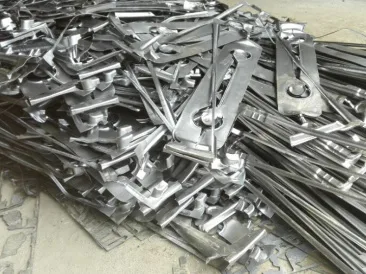
The four photographs are general material-form references: sheet or formed offcuts, aluminum sheet or formed pieces, aluminum profile offcuts and discarded stainless sheet casings or panels. They are not photographs of an automotive customer’s approved feed. Profiles and casings are not automatically included in the thin production-sheet scope. Attachments, dimensions and preparation must be reviewed separately; do not present these reference objects as proof of automotive assembly-processing capability.
04 / WORKING PRINCIPLE
Plan the Application Workflow
Connect material identification with loading, discharge and collection.
Link the collection container to the production operation and work order. Record the sheet reference where known, the source process and whether the pieces are generated before or after joining, coating or assembly. This allows the team to distinguish ordinary trim from a changed process that introduces adhesives, attached components or another material.
Provide a clearly marked route for uncertain or out-of-scope pieces. Keep tooling fragments, fasteners and rejected assemblies out of an accepted thin-offcut stream. When the work order changes, review the container identity and material condition rather than allowing the next job’s offcuts to inherit the previous approval automatically.
For the accepted prepared stream, plan chamber loading and side-discharge collection with the supplier. Describe normal maximum piece dimensions and troublesome shapes before a configuration is selected. Operators should use the approved guarding and isolation procedures; they must not clear a bridging charge by entering the machine or discharge area during operation.
05 / TECHNICAL REFERENCE
Selected HBT Technical Attributes
Five supported reference attributes, not a fabricated model rating.
These attributes describe the HBT side-push equipment family. Options and site-specific arrangements must be confirmed in the selected technical configuration.
| Technical attribute | HBT reference |
|---|---|
| Bale discharge | Side push-out |
| Drive type | Hydraulic |
| Motor voltage | Configured for the installation electrical supply |
| Machine layout | Horizontal |
| Feeding arrangement | Manual or grabber, subject to the approved workflow |
Force, chamber dimensions, bale weight and production rate are not inferred from a material title. Confirm those values against representative feedstock and the agreed machine configuration.
Operating options: full-automatic / semi-automatic, as confirmed by Dershan. The technical proposal defines the controlled actions and operator responsibilities. These option names do not establish automatic feeding, sorting, unattended operation or a guaranteed production rate.
Configuration and Acceptance Review
Agree the feed, configuration and acceptance conditions in advance.
An inquiry should show representative production scrap and its source record, not only a photograph of a vehicle. Include the normal and exceptional shapes, known sheet grades, coatings, joining residues and buyer requirements. Separately list any proposed body-panel material so its condition can be reviewed rather than being silently included with clean factory trim.
Agree which prepared samples and conditions the technical proposal covers. A suitable acceptance check links the input lot to the produced bale and examines the agreed external form and collection method. It does not prove chemistry, complete decontamination or compatibility with every downstream process.
Keep the distinction visible in sales and operating documents: this is an automotive-production application of HBT, not an end-of-life vehicle processing line. For general suitable sheet selection, consult the sheet metal guide. Do not use photographs of cars, engines or batteries to imply capabilities absent from the proposal.
Follow the supplied equipment manual for inspections of hydraulic leakage, hose condition and protective devices, and take defective equipment out of service pending qualified assessment. Maintenance must be performed by authorized personnel after shutdown and isolation in accordance with the manufacturer’s procedure; this guide does not authorize work on pressurized hydraulic equipment.
06 / SOLUTIONS & CUSTOMER CASES
Plan the complete process.
RELATED NEWS
News & buying guides
Buying a Scrap Metal Baler: What to Include in Your RFQ
A useful scrap metal baler quotation starts with representative scrap, the buyer’s bale specification and a complete handling plan. Use this checklist to compare proposals on the same basis.
Read details ↗Scrap Metal Baler Throughput: How to Plan Real Production
Plan baler capacity around saleable output per working hour, including loading and discharge. A nominal press cycle is only one part of the production picture.
Read details ↗CUSTOMER CASES
Related project references
Each reference identifies its own equipment and project scope; it is not a test record for every material on this product page.

APPLICATIONS
Material preparation guides
These are related material guides. Follow each guide’s feedstock limits; a related material is not automatically approved for every machine configuration.
07 / QUESTIONS & SUPPORT
Product questions,
answered.
Side-Push Metal Baler for Automotive Scrap FAQ
Practical answers for this application.
Does this machine process complete scrap cars?
No complete-car capability is claimed. This page is limited to suitable prepared automotive production sheet offcuts and separately accepted prepared thin sheet. Vehicle assemblies and their hazardous or heavy components require different evaluation and cannot be included by the title alone.
Are engines, wheels or batteries suitable materials here?
No. Engine blocks, wheel assemblies, heavy castings and batteries are outside the scope described here. In particular, vehicle batteries and electric-vehicle battery packs must not be represented as ordinary baler feed or illustrated as an approved material stream.
Can dismantled body panels be treated like factory trim?
Not automatically. Their condition, attachments, coatings and preparation may differ substantially. Submit the actual prepared material for explicit acceptance. The fact that a panel is thin sheet does not eliminate the need to check its source and remaining components.
Why retain the work-order or sheet reference?
It helps distinguish changes in grade, coating and production stage. This supports source separation and buyer documentation without pretending that the baler identifies alloys. Unknown material should retain an uncertain status until it has been evaluated appropriately.
What does the automatic option establish?
Dershan confirms full-automatic and semi-automatic operating options only. Obtain a proposal specifying the actual controlled steps and operator duties. No automatic dismantling, sorting, loading, depollution or unattended vehicle-processing capability follows from that option.
What should be sent for an application review?
Send photographs and dimensions of actual prepared offcuts, known sheet references, the source operation and attachment or coating information. Separate exceptional pieces from the normal sample. Include the intended buyer’s requirements and the proposed discharge handling arrangement.
Equipment Recommendation
Tell Us About Your Material and Capacity
Share the key operating conditions below so our team can compare suitable equipment and prepare a practical configuration.