
Metal Balers
Side-Push Metal Stamping Scrap Baler
Stamping Scrap: Skeleton Geometry, Batch Traceability and Collection
An HBT side-push baler can be evaluated for suitable prepared stamping skeletons, trim and metal offcuts. Match it to the actual production scrap stream, including piece geometry, grade changes and the proposed collection interface.
PRODUCT VIDEO
Side-Push Metal Stamping Scrap Baler video
01 / PRODUCT DESCRIPTION
Stamping Scrap Baling Overview
Application-specific selection within the existing HBT family.
Stamping Scrap: Skeleton Geometry, Batch Traceability and Collection
An HBT side-push baler can be evaluated for suitable prepared stamping skeletons, trim and metal offcuts. Match it to the actual production scrap stream, including piece geometry, grade changes and the proposed collection interface.
A Side-Push Metal Stamping Scrap Baler is an application of the HBT horizontal hydraulic family for suitable prepared stamping offcuts. Approved scrap is compacted into a bale and discharged sideways for collection. The useful starting point is the scrap produced by a particular press-shop operation, not a generic promise to process every part rejected by a stamping line.
A stamping stream can include open skeletons, edge trim, narrow strips and small offcuts. The mix changes with the tool, blank layout and source material. A repeatable production process may make it easier to describe that stream, but its name alone does not establish the baler's capacity, feed limits or connection to a press.
This page concentrates on collection, batch identity and changes between production jobs. The steel scrap guide covers general ferrous preparation, while the HBT overview describes the machine family and lateral discharge arrangement.
02 / MATERIALS & OUTPUT
Map the Press-Shop Scrap Stream
Identify the feed and preserve separate material streams.
Build the feed description from the regular production jobs. Record material grade, thickness, maximum skeleton dimensions and the condition of strips or curled trim. Describe how offcuts accumulate after leaving the press area. A flat sample laid on a table may not represent the interlocked pile that arrives at the baler.
- Keep production grades or customer-controlled batches traceable where required.
- Identify open skeletons that can hook together and long strips that can bridge.
- Separate accepted scrap from tools, fasteners, tooling fragments and unrelated rejects.
- Describe coatings, residual process fluids and foreign material for review.
- Exclude batteries, sealed articles and hazardous contamination from the feed.
Scrap may need preparation to fit the approved charging envelope. Do not treat the baler as a replacement for every upstream cutting or sorting operation. Neither a stable press rate nor a clean-looking sample proves that an unprepared continuous strip can be loaded safely.
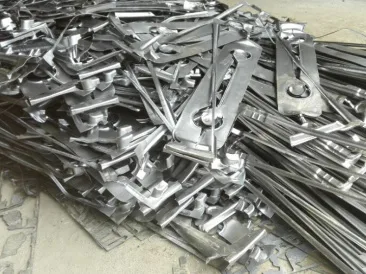
The material illustrations show sheet and formed offcuts, mixed light ferrous scrap, aluminum pieces, and stainless strips or offcuts. These are reference scrap forms, not evidence that every pictured piece came from a stamping press or was tested on this machine. Each actual production stream needs its own grade and preparation review; do not blend the four examples into one batch.
04 / WORKING PRINCIPLE
Separate Collection from Baler Loading
Plan preparation, loading and lateral bale collection.
Separate the press-shop collection function from the baler loading function when describing the project. Identify the proposed containers, transfer equipment and temporary storage space. Explain whether scrap is delivered in batches or arrives irregularly, and what happens when the baler or collection equipment stops. These are design questions, not features assumed to be included.
Do not describe an existing baler as an automatically integrated press line unless the relevant interfaces are actually specified. Full-automatic and semi-automatic operating options are available, but the included actions, signals and operator responsibilities belong in the selected proposal. Scrap sorting and automatic feeding are not established by the control label.
Load only approved prepared material using the agreed procedure. Keep people clear of moving equipment, loading closures and the lateral discharge route. Provide a defined receiving position for bales and a safe collection method that does not require someone to reach toward the emerging load.
Follow approved isolation procedures before cleaning or removing hooked material. Inspection should cover guards, stops, hoses, leakage and the condition of the loading and collection areas. Maintenance intervals and permitted interventions come from the supplied equipment instructions.
05 / TECHNICAL REFERENCE
Selected HBT Technical Attributes
Five supported attributes from the supplied HBT reference.
These attributes describe the HBT side-push equipment family. Options and site-specific arrangements must be confirmed in the selected technical configuration.
| Technical attribute | HBT reference |
|---|---|
| Machine layout | Horizontal |
| Bale discharge | Side push-out |
| Feeding arrangement | Manual or grabber, subject to the approved workflow |
| Drive type | Hydraulic |
| Motor voltage | Configured for the installation electrical supply |
Force, chamber dimensions, bale weight and production rate are not inferred from a material title. Confirm those values against representative feedstock and the agreed machine configuration.
Operating options: full-automatic or semi-automatic, as confirmed by Dershan. The selected technical proposal defines the controlled actions and operator responsibilities. Neither option name alone establishes automatic feeding, unattended operation or a guaranteed production rate.
Plan Changes and Acceptance Checks
Define the application before agreeing a configuration.
Plan for a changeover as well as the easiest production batch. An application enquiry should show the largest regular skeleton, the most difficult strip form and the normal variation in thickness or grade. Explain how each job will be identified and how a new or unusual job will be checked against the accepted feed limits.
For a proposed verification, identify the actual material and preparation method, the loading and collection arrangement, and the buyer's requirements for the finished bale. Evaluate the complete workflow rather than equating a press output rate with baler throughput. Do not promise a production rate from the number of press strokes or from the appearance of one sample bale.
Record exceptions such as excessive interlocking, unsuitable dimensions, contamination or uncertain grade identity. A written exception process helps the operator know when to hold a batch for review instead of forcing it into a previously approved routine. It does not replace the manufacturer's operating instructions.
Send the job list, representative photographs, maximum dimensions, daily quantities, electrical supply and layout through Dershan's contact page. Request a configuration that identifies both accepted feed and excluded conditions. This is more useful than choosing a machine solely from a general stamping-scrap title.
06 / SOLUTIONS & CUSTOMER CASES
Plan the complete process.
RELATED NEWS
News & buying guides
Buying a Scrap Metal Baler: What to Include in Your RFQ
A useful scrap metal baler quotation starts with representative scrap, the buyer’s bale specification and a complete handling plan. Use this checklist to compare proposals on the same basis.
Read details ↗Scrap Metal Baler Throughput: How to Plan Real Production
Plan baler capacity around saleable output per working hour, including loading and discharge. A nominal press cycle is only one part of the production picture.
Read details ↗CUSTOMER CASES
Related project references
Each reference identifies its own equipment and project scope; it is not a test record for every material on this product page.

APPLICATIONS
Material preparation guides
These are related material guides. Follow each guide’s feedstock limits; a related material is not automatically approved for every machine configuration.
07 / QUESTIONS & SUPPORT
Product questions,
answered.
Stamping Scrap Baler FAQ
Answers for this material and its handling requirements.
Can the baler process every reject from a stamping line?
No. This application concerns suitable prepared skeletons, trim and offcuts. Tools, dense components, foreign objects or unusual rejects require separate review and must not enter an approved feed by assumption.
Why provide information for several production jobs?
Different tools and blank layouts produce different skeletons and strips. The largest or most interlocked regular feed may be more important to selection than the easiest sample.
Can long strips feed continuously from the press?
That is not promised here. The transfer and preparation system, feed limits and control interfaces must be specified. A full-automatic option does not itself confirm a continuous press connection.
Should different grades share one stamping-scrap bale?
Keep grades and traceable batches separate when required by the receiving buyer or production controls. Baling does not restore the identity of material after an unsuitable mix.
How should a new stamping job be introduced?
Compare its material, dimensions, thickness, attachments and loading condition with the agreed limits. Hold unusual feed for review rather than assuming the previous job proves suitability.
What information helps specify the collection interface?
Describe containers or transfer equipment, batch arrival patterns, temporary storage, stop conditions, site space and bale removal. The proposal should clearly state which interfaces and operating actions are included. See the Mexico stamping-scrap case for a side-aisle layout example.
Equipment Recommendation
Tell Us About Your Material and Capacity
Share the key operating conditions below so our team can compare suitable equipment and prepare a practical configuration.