
Metal Balers
Side Turn-Out Scrap Baler for Nonferrous Metal Recycling
Keep alloy streams separate from intake to bale collection.
Prepare sorted nonferrous scrap for more orderly storage and dispatch with a side turn-out baler selected around your actual material stream. This HBF configuration uses hydraulic compression and side discharge, with loading arranged to suit the approved feed and handling method. The purchasing process should establish alloy separation, contamination limits, receiving requirements, and a safe collection area before machine selection. Discuss aluminum, copper, or brass scrap individually with the supplier, since material form and condition determine suitability. A representative trial provides a more useful basis for acceptance than an assumed result for mixed scrap.
PRODUCT VIDEO
Side Turn-Out Scrap Baler for Nonferrous Metal Recycling video
01 / PRODUCT DESCRIPTION
A Baling Workflow for Sorted Nonferrous Scrap
Purpose, machine structure and its role in the recycling process.
Side Turn-Out Scrap Baler for Nonferrous Metal Recycling
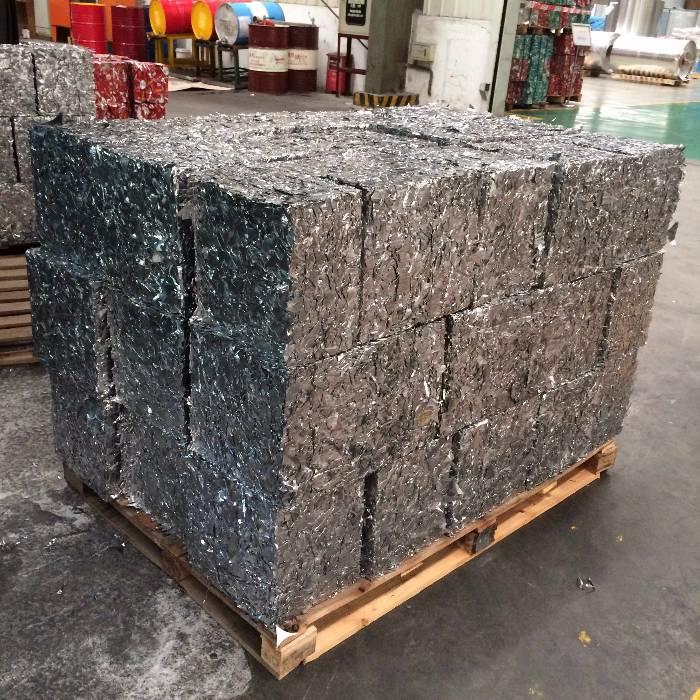
The commercial value of nonferrous scrap depends on more than compactness. A buyer may reject a bale that contains an unwanted alloy, trapped liquid, or unrelated material even when its external shape appears acceptable. This side turn-out scrap baler is therefore best considered as one stage in a controlled sorting and handling process. It compresses approved scrap; it does not identify alloys or remove contamination.
Start with the material categories your downstream receiver already accepts. Then match the loading arrangement, compression configuration, and collection plan to those categories. The HBF side turn-out scrap metal baler provides the underlying product family for this application. Confirm the precise machine specification against representative samples before placing an order.
02 / MATERIALS & OUTPUT
Evaluate Alloy, Form, and Contamination
Suitable scrap materials, industries and operating scenarios.
Submit separate descriptions for aluminum sheet offcuts, copper scrap, and brass production remnants when these are part of your intended feed. Their inclusion in an inquiry is not blanket approval: thickness, stiffness, dimensions, coatings, and attached components need assessment. An alloy name alone is insufficient for machine selection.
Segregate material at intake, remove unrelated packaging, and follow an agreed procedure for residual oils or moisture. Keep batteries, sealed pressure vessels, hazardous residues, and unidentified containers out of the baler. Fine chips, tangled wire, and unusually springy material need specific evaluation rather than assumptions based on sheet scrap behavior.
03 / STRUCTURE & FEATURES
Equipment features.
Features That Support Material Segregation
Operational advantages and configuration benefits for buyers.
Hydraulic drive provides the operating basis for compression. The specified pump and motor belong in the equipment review alongside the receiving electrical supply and available service access. Q235B steel plate is a listed construction attribute, while actual suitability still requires the supplier to assess the proposed feed and configuration.
Side turn-out discharge gives the layout a defined bale collection side. Reserve that area for retrieval rather than using it as temporary storage for unsorted scrap. Grabber or manual loading can be considered according to material shape and the approved handling procedure. Manual loading never implies permission to reach into a hazardous chamber or bypass protection.
05 / TECHNICAL REFERENCE
Five Configuration Details to Confirm
Key selection data and model-dependent specification ranges.
The five listed details identify the supply phase, drive, core components, loading options, and steel plate specification. They are configuration facts, not a guarantee that every nonferrous feed behaves identically. Ask the quotation to state the selected loading method and the electrical requirements for the actual installation.
Include drawings of the intended receiving area and a description of the collection equipment in the technical review. Keeping the loading route separate from the discharge route helps the supplier assess a workable arrangement without assuming how your yard operates.
Selection, Daily Operation, and Care
Practical guidance for safe operation and routine maintenance.
Build a purchasing sample set that represents normal scrap and difficult but expected pieces. Ask for a demonstration using those samples, with the proposed loading approach and a visible discharge sequence. Assess whether the resulting bales remain manageable during your intended lifting and transport steps. Obtain the receiving buyer's agreement on acceptable composition and form before turning a trial into an acceptance standard.
At the start of a production run, verify the material identity and check that the collection zone is clear. Follow the supplied operating instructions for loading, closing, compression, and discharge. Preserve identification between the incoming batch and the finished bales with an external labeling or inventory method appropriate to your site. Do not claim a mixed bale is a single alloy solely because its outer layers look consistent.
During a change between alloy streams, isolate the equipment using the approved procedure before cleaning accessible retained scrap. Inspect contact surfaces and collection areas for carryover. Follow the maintenance manual for hydraulic checks, lubrication, and wear inspection. Record recurring contamination findings so the intake process can be corrected instead of repeatedly cleaning the same problem from finished bales.
The related turn-out case is a layout and workflow reference, not proof of a trial with your feedstock or this proposed configuration.
06 / SOLUTIONS & CUSTOMER CASES
Plan the complete process.
RELATED NEWS
News & buying guides
CUSTOMER CASES
Related project references
Each reference identifies its own equipment and project scope; it is not a test record for every material on this product page.

APPLICATIONS
Material preparation guides
These are related material guides. Follow each guide’s feedstock limits; a related material is not automatically approved for every machine configuration.
07 / QUESTIONS & SUPPORT
Product questions,
answered.
Nonferrous Scrap Baling Questions
Delivery scope, technical support and frequently asked questions.
Can one machine process different nonferrous metals?
Potentially, after the supplier approves each material and its physical form. Keep alloys in separate batches when the receiving buyer requires segregation. A machine suitable for one aluminum offcut stream is not automatically approved for every copper or brass item.
Does baling improve the purity of scrap?
No. Compression changes the handling form but does not sort alloys or extract contaminants. Purity must be managed through purchasing, inspection, sorting, and cleaning before the material enters the chamber.
Can oily chips be included with clean sheet offcuts?
Do not assume they can. Ask the supplier and downstream receiver to assess chip behavior and residual liquids separately. Combining dissimilar feed can undermine both safe processing and the quality requirements of the receiving operation.
How should a material trial be evaluated?
Use representative scrap and the proposed handling method. Review feeding behavior, discharge, bale integrity during handling, and buyer acceptance. Record the sample composition so later production can be compared against a meaningful reference.
Is manual loading appropriate for every scrap shape?
No. Select the method through a task-specific risk assessment and the supplier’s instructions. Sharp, heavy, awkward, or entangled material may require mechanical handling even when manual feeding is a listed option.
What information should accompany an inquiry?
Provide alloy categories, photographs with scale, usual piece dimensions, contamination details, receiving requirements, and a site layout. Include the power supply and handling equipment available so the quotation addresses the complete working arrangement.
Equipment Recommendation
Tell Us About Your Material and Capacity
Share the key operating conditions below so our team can compare suitable equipment and prepare a practical configuration.