
Metal Balers
Front-Out Y81Q Baler for Steel Door Skin Offcuts
Plan preparation around long thin trim and folded sheet edges
Select a front-out baler for steel door skin offcuts, with guidance on long trim, coatings, preparation, collection and sample-based acceptance.
PRODUCT VIDEO
Front-Out Y81Q Baler for Steel Door Skin Offcuts video
01 / PRODUCT DESCRIPTION
Product Overview
Purpose, machine structure and its role in the recycling process.
Treat door-skin trim as a defined sheet stream
Thin steel door skins can leave long perimeter strips, corner remnants and rejected sheet blanks during manufacturing. The Front-Out Y81Q Baler for Steel Door Skin Offcuts focuses on these prepared production materials. The enquiry should distinguish trim from a bare skin and scrap from a finished door assembly. Internal fillers, adhesives, locks and frames change the material assessment and are not automatically included.
The key selection issue is geometry as well as weight. A long narrow strip can bridge across a container or catch other pieces even when its mass is small. Give the supplier the longest typical strip, thickness range, folded edges and condition of the feed. A product title cannot establish that an uncut door-sized blank fits the proposed machine.
02 / MATERIALS & OUTPUT
Prepared Materials
Suitable scrap materials, industries and operating scenarios.
Set a practical preparation boundary
Collect identified steel grades and surface finishes in the categories required by the recycler. Keep painted, galvanized and bare sheet distinguishable where the receiver requires it. Explain any protective film, adhesive residue or attached components before material approval. Avoid combining unknown demolition doors with clean manufacturing trim merely because both contain steel.
Discuss whether long or curved pieces need a separate cutting or preparation operation. Do not fold, pull or force material by hand into a working chamber. Sharp strips and springing sheet require an approved handling method and appropriate site controls. The supplied information does not establish an integrated shear or automatic trim-feeding system.
Exclude sealed vessels, pressurized items, hot metal and hazardous or unidentified contamination. For offcuts primarily produced by bending, the press-brake offcut page provides a useful comparison of folded geometry and preloading assessment.
03 / STRUCTURE & FEATURES
Equipment features.
Features and Selection Benefits
Operational advantages and configuration benefits for buyers.
Use the discharge direction to plan the work area
The front-out concept combines hydraulic compression with a forward bale exit. A defined receiving direction can support a more orderly handover from production-scrap bins to finished collection. Its usefulness depends on clear access, an approved receiving arrangement and a bale that can be handled by the selected method. It does not establish a particular bale density or guarantee transport savings.
For a door workshop, separate incoming trim storage from the front collection area. Long strips protruding from containers can obstruct pedestrian routes before they ever enter the baler. Mark container positions and prevent loose trim from accumulating around controls or service points. Ask the supplier to confirm the machine's working envelope on the actual installation drawing.
Configuration choices should reflect the reviewed feed and working pattern. Do not select the largest endpoint from a series power, chamber or weight range and treat it as a complete model. Controls, cooling and loading options must be agreed as one documented machine package. Y81Q identity remains subject to that model-specific confirmation.
04 / WORKING PRINCIPLE
Operation and Maintenance
Practical guidance for safe operation and routine maintenance.
Assess the whole trim-handling sequence
A useful trial includes normal perimeter trim, difficult corner shapes and the expected finish condition. Document any preparation needed before loading, how the scrap settles and the condition of the resulting bale. Include the planned collection step instead of stopping the assessment immediately after compression. The forward pickup guide helps frame clearance and handling questions.
Keep operating staff within the approved loading procedure. If a strip hangs up or a bale does not discharge normally, stop and follow the prescribed recovery method. Do not use the receiving vehicle to pull material while the machine is moving. Isolation and authorized maintenance procedures remain essential regardless of the selected control option.
Inspect wear areas and hydraulic connections according to the delivered manual. Record recurrent catching or damage with the material batch and report it for review. Changes in door design, sheet finish or scrap preparation should trigger another suitability check rather than an assumption that the original trial covers every future job.
05 / TECHNICAL REFERENCE
Six Series References and Options
Key selection data and model-dependent specification ranges.
Review the proposed machine configuration
The six attributes below are drawn from the supplied HBQ front-out series sheet. They are reference values or options for this enquiry, not a verified specification for a particular Y81Q model. Confirm their applicability to the proposed machine and retain the agreed model-specific values in the order. A series range does not mean one machine operates across every value, and different source ranges must not be combined into a new specification.
Front-Out Baler Reference Video is the designated equipment and process reference. It does not establish a test on this page's material or prove a particular output, configuration or customer result.
| Attribute | Series reference / option |
|---|---|
| Series chamber-length reference | 800–2,000 mm; model dependent |
| Bale-form reference | Square / cube, as listed; dimensions require confirmation |
| Wear-plate arrangement | Interchangeable wear steel plate |
| Remote control | Optional; confirm package |
| Structural steel reference | Q235B |
| Listed motor option | Taizhou Taida; confirm order configuration |
The related Germany front-discharge project is a layout and collection reference, not a Y81Q trial of this page’s material or proof of its configuration.
06 / SOLUTIONS & CUSTOMER CASES
Plan the complete process.
RELATED NEWS
News & buying guides
CUSTOMER CASES
Related project references
Each reference identifies its own equipment and project scope; it is not a test record for every material on this product page.

APPLICATIONS
Material preparation guides
These are related material guides. Follow each guide’s feedstock limits; a related material is not automatically approved for every machine configuration.
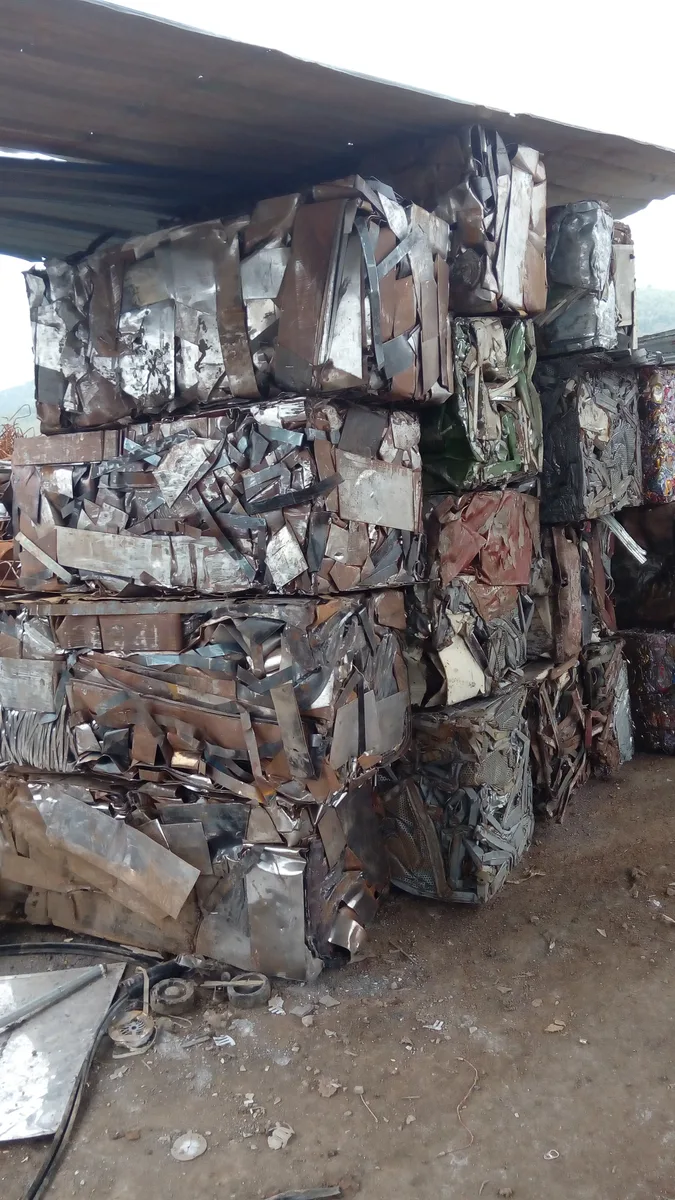
Light-Gauge Ferrous Scrap Baling
Practical sorting, preparation and equipment-selection guidance for light-gauge ferrous scrap, supported by representative material photos.
Read application guide ↗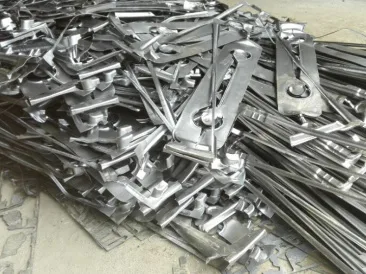
Stamping Steel Scrap Baling & Recycling
Practical sorting, preparation and equipment-selection guidance for stamping steel scrap, supported by representative material photos.
Read application guide ↗07 / QUESTIONS & SUPPORT
Product questions,
answered.
Frequently Asked Questions
Delivery scope, technical support and frequently asked questions.
Frequently asked questions
Can the machine accept whole finished doors?
Not on the basis of this page. The application is prepared door-skin manufacturing scrap, with nonmetal attachments and unsuitable assemblies handled separately.
Must long perimeter strips be cut first?
The supplier must review their dimensions and behavior against the actual chamber and loading arrangement. Do not assume every strip can be loaded without preparation.
Is a built-in cutting system included?
No integrated cutting system is established by the source. Any required preparation equipment must be separately specified.
Can coated and bare sheet share one bale?
Only if the recycler accepts the mixture and the machine supplier approves the feed. Maintain separation when grade or finish identification is required.
What does the reference video prove?
The reference video illustrates the designated front-out equipment context, not a verified test on door-skin trim or a promised production rate.
What should be included in the quotation request?
Send representative photographs, material and finish details, thicknesses, longest pieces, daily work pattern and loading proposal. Review the loading and collection layout alongside the available front receiving space.
Equipment Recommendation
Tell Us About Your Material and Capacity
Share the key operating conditions below so our team can compare suitable equipment and prepare a practical configuration.