
Metal Balers
Front-Out Y81Q Baler for Steel Ventilation Duct Offcuts
Separate clean fabrication trim from used ductwork and fittings
Review front-out baling for steel ventilation duct offcuts, including galvanized sheet, folded seams, preparation and discharge-area planning.
PRODUCT VIDEO
Front-Out Y81Q Baler for Steel Ventilation Duct Offcuts video
01 / PRODUCT DESCRIPTION
Product Overview
Purpose, machine structure and its role in the recycling process.
Define the fabrication stage before selecting equipment
Ventilation duct fabrication can generate flat steel trim, formed corners and short folded remnants. The Front-Out Y81Q Baler for Steel Ventilation Duct Offcuts concerns those identified production streams after suitable preparation. It does not extend automatically to dismantled duct systems, insulated assemblies or contaminated used ventilation equipment.
An effective enquiry shows where each scrap form originates. Flat sheet from cutting, seam-forming remnants and rejected fittings have different geometry and potential attachments. Separate them in the sample description so the supplier can review which are suitable for the proposed front-out machine and which require another preparation route.
02 / MATERIALS & OUTPUT
Prepared Materials
Suitable scrap materials, industries and operating scenarios.
Review folds, coatings and attached material
Galvanized steel is common in duct production, but confirm the actual grade and finish rather than relying on appearance. Give the recycler the coating information and keep material segregated as required by its acceptance specification. Stainless or aluminum ductwork belongs in a separately identified material stream, not an assumed interchangeable steel batch.
Folded seams and doubled edges can make a nominally thin piece locally thicker and less flexible. Record the fold shape, longest dimension and any reinforcing strips, fasteners or sealant. The relevant measurement is the complete prepared piece, not only the original flat sheet thickness. Ask whether nested or interlocked remnants must be separated before loading.
Keep insulation, flexible connections, unrelated fittings and hazardous contamination out of the approved stream. Sealed vessels, pressurized items and hot scrap are excluded. For preparation dominated by folded steel, compare the formed-offcut guidance before agreeing a loading plan.
03 / STRUCTURE & FEATURES
Equipment features.
Features and Selection Benefits
Operational advantages and configuration benefits for buyers.
Match the machine to a changing workshop mix
Hydraulic compression offers a way to assess consolidation of approved loose duct-fabrication scrap, followed by forward discharge to a defined receiving position. This can help organize the workshop's outgoing material flow when sorting and collection are controlled. It does not promise a particular density, recovery price or reduction ratio for every folded shape.
Workshops may alternate between straight-duct orders and fittings with very different scrap forms. Use identified bins and a clear approval boundary for each stream. A reviewed flat-trim batch does not establish that a nested fitting or reinforced assembly is suitable. Record changes in material or geometry before they become routine inputs.
Reserve room for both incoming containers and front-end collection. The loading and collection layout guide can support this discussion. Confirm the actual machine drawing, feeding option and control responsibilities rather than assuming that the baler includes a conveyor, coordinated handling equipment or automatic workshop integration.
04 / WORKING PRINCIPLE
Operation and Maintenance
Practical guidance for safe operation and routine maintenance.
Validate the prepared mix and maintain the station
For acceptance, supply normal flat trim and the most difficult approved folded remnants in their intended proportions. Record input preparation, loading method, any catching behavior and the finished bale's condition during collection. Ask the supplier to document the selected machine and trial conditions. A no-load cycle time should not be converted into a throughput promise for mixed duct scrap.
Daily operation should preserve the distinction between clean fabrication material and used or uncertain returns. Maintain a reject area and prevent spillover around the machine. Operators must follow the approved method for loading sharp sheet and must not reach into the chamber to free a folded piece. Stop and isolate before authorized clearing or servicing.
Inspect wear surfaces, hydraulic connections and controls at the intervals in the delivered manual. Investigate repeated scoring or snagging by reviewing the actual scrap, not by increasing operating settings without approval. Cooling and electrical supply are configuration decisions to confirm for the installation, especially where the baler shares indoor space with other equipment.
05 / TECHNICAL REFERENCE
Six Series References and Options
Key selection data and model-dependent specification ranges.
Review the proposed machine configuration
The six attributes below are drawn from the supplied HBQ front-out series sheet. They are reference values or options for this enquiry, not a verified specification for a particular Y81Q model. Confirm their applicability to the proposed machine and retain the agreed model-specific values in the order. A series range does not mean one machine operates across every value, and different source ranges must not be combined into a new specification.
Front-Out Baler Reference Video is the designated equipment and process reference. It does not establish a test on this page's material or prove a particular output, configuration or customer result.
| Attribute | Series reference / option |
|---|---|
| No-load cycle reference | 180 seconds; no-load condition, not a production rate |
| Supply phase | Three-phase; confirm installation specification |
| Foundation reference | Horizontal cement ground; confirm engineered installation requirements |
| Series steel-plate thickness | 12–30 mm; configuration dependent |
| Listed pump option | JiangSu Hengyuan; confirm order configuration |
| Listed motor option | Taizhou Taida; confirm order configuration |
The related Germany front-discharge project is a layout and collection reference, not a Y81Q trial of this page’s material or proof of its configuration.
06 / SOLUTIONS & CUSTOMER CASES
Plan the complete process.
RELATED NEWS
News & buying guides
CUSTOMER CASES
Related project references
Each reference identifies its own equipment and project scope; it is not a test record for every material on this product page.

APPLICATIONS
Material preparation guides
These are related material guides. Follow each guide’s feedstock limits; a related material is not automatically approved for every machine configuration.
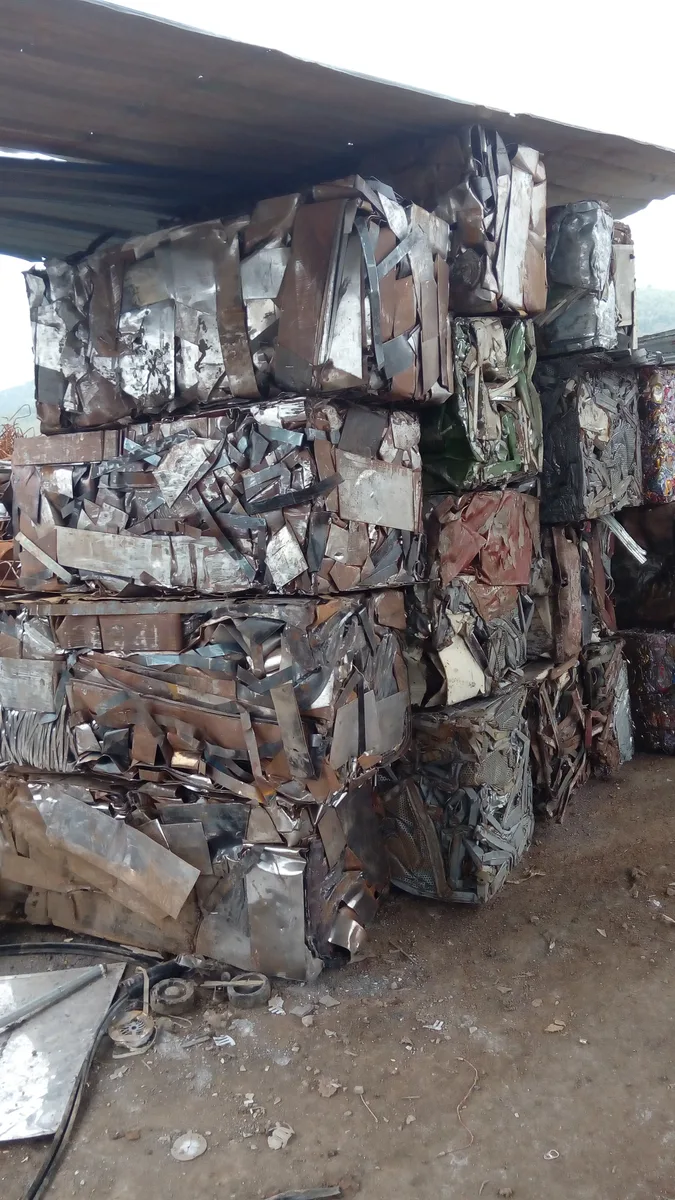
Light-Gauge Ferrous Scrap Baling
Practical sorting, preparation and equipment-selection guidance for light-gauge ferrous scrap, supported by representative material photos.
Read application guide ↗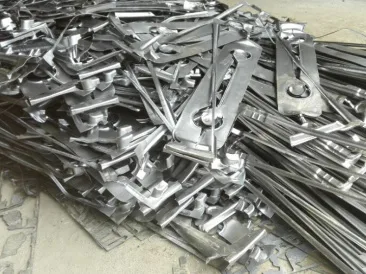
Stamping Steel Scrap Baling & Recycling
Practical sorting, preparation and equipment-selection guidance for stamping steel scrap, supported by representative material photos.
Read application guide ↗07 / QUESTIONS & SUPPORT
Product questions,
answered.
Frequently Asked Questions
Delivery scope, technical support and frequently asked questions.
Frequently asked questions
Does this application include used ventilation ducts?
No automatic approval is implied. Used ductwork can contain deposits, insulation and attached components and needs its own assessment and preparation route.
Why do folded seams matter?
A fold creates a different shape and local thickness from the original sheet. Provide complete-piece dimensions and photographs for the supplier's review.
Can galvanized steel be mixed with aluminum duct trim?
Keep them separate unless both the equipment assessment and recycler's specification explicitly accept that mixture. Grade identity should follow the material through collection.
Is an integrated feed conveyor included?
No conveyor or line synchronization is established. The front-out series overview is a starting point for discussing the separately specified loading arrangement.
What should a material trial record?
Record the prepared shapes, coatings, thicknesses, machine configuration, loading method and observed bale handling. Include difficult approved folded pieces rather than only easy flat trim.
How are jams or interlocked remnants handled?
Stop and use the manufacturer's approved isolation and clearing procedure. Do not reach into a working chamber or improvise access around moving equipment.
Equipment Recommendation
Tell Us About Your Material and Capacity
Share the key operating conditions below so our team can compare suitable equipment and prepare a practical configuration.