
Metal Balers
Side-Push Metal Baler for Dense Scrap Bales
Verify Apparent Bale Density Without Assuming a Target
Verify Apparent Bale Density Without Assuming a Target. Review the HBT configuration against the actual prepared scrap and site requirements.
PRODUCT VIDEO
Side-Push Metal Baler for Dense Scrap Bales video
01 / PRODUCT DESCRIPTION
Verify Apparent Bale Density Without Assuming a Target
A focused purchasing and operating decision for the existing HBT family.
Verify Apparent Bale Density Without Assuming a Target
Verify Apparent Bale Density Without Assuming a Target. Practical selection and acceptance guidance for the existing HBT side-push family.
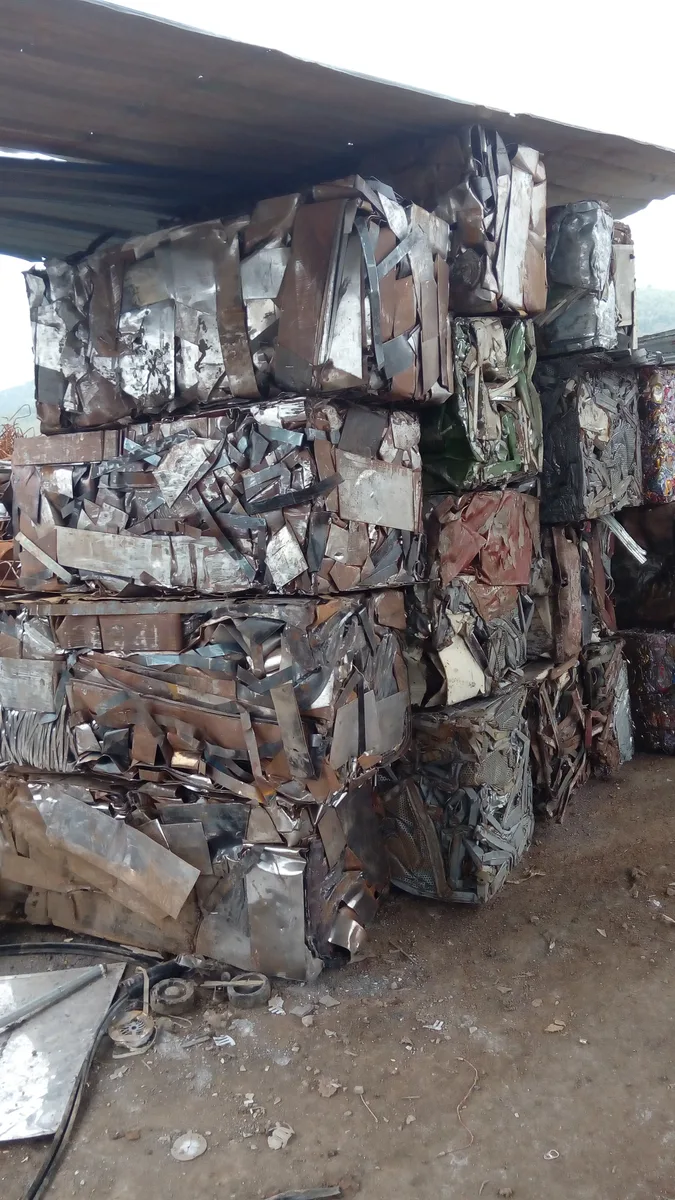
A Side-Push Metal Baler for Dense Scrap Bales is considered when a buyer wants a consolidated scrap form with a defined acceptance requirement. The HBT family compresses suitable prepared metal hydraulically and ejects the bale sideways. The descriptive word dense does not establish a guaranteed density value, a material purity level or a particular furnace charging result.
The useful decision is how the actual bale will be measured and judged. Apparent bale density uses the bale's measured mass and its defined external volume. It is different from the intrinsic density of solid steel, aluminum or copper, and it can be affected by the material form and spaces remaining within the compacted scrap.
This page focuses on evidence for a finished-bale acceptance decision. The volume reduction guide instead compares loose and consolidated collection volumes. Neither page assigns a numerical performance promise to an unselected HBT configuration.
02 / MATERIALS & OUTPUT
Identify the Feed and Acceptance Purpose
Identify the Feed and Acceptance Purpose.
Ask the intended buyer what requirement is actually needed and why. A receiving specification may address handling, shipment or a later processing stage. Do not assume that an attractive dense-looking block satisfies every use, or that a requirement from one receiver applies unchanged to another.
Describe the prepared feed by material, source, shape and condition. Thin sheet, short wire and other accepted forms can produce different bale structures. Keep grades and unwanted attachments under the relevant receiving controls. Compressing a mixed or contaminated lot cannot make its composition conform to a cleaner grade specification.
Confirm the proposed HBT configuration using representative accepted feed. Use density or bale-weight figures only when they identify the same proposed configuration and feed conditions. Where no configuration-specific result exists, state that the acceptance value remains to be agreed rather than presenting a broad family range as a tested guarantee.
04 / WORKING PRINCIPLE
Measure Mass and External Volume Consistently
Measure Mass and External Volume Consistently.
Use a suitable weighing method and record the mass unit and any tare included or removed. Define the external volume measurement method before testing, including how irregular faces and protrusions will be treated. Do not use a catalog's nominal dimensions without checking that they are appropriate to the measured bale.
Apparent density is calculated by dividing the recorded bale mass by the agreed external volume, using compatible units. Keep the raw measurements with the calculation so that the result can be checked. A calculated value is only as useful as the underlying weighing, dimensional method and identification of the material being measured.
Record which bales were sampled and why. One selected example cannot establish the full variation of ongoing production. If a buyer requires repeated samples, a range or a particular acceptance rule, agree those conditions in advance. Avoid reporting more decimal precision than the measurement method reasonably supports.
05 / TECHNICAL REFERENCE
Selected HBT Technical Attributes
Five supported reference attributes, with configuration-dependent options stated separately.
These attributes describe the HBT side-push equipment family. Options and site-specific arrangements must be confirmed in the selected technical configuration.
| Technical attribute | HBT reference |
|---|---|
| Drive type | Hydraulic |
| Machine layout | Horizontal |
| Model series | HBT |
| Bale discharge | Side push-out |
| Feeding arrangement | Manual or grabber, subject to the approved workflow |
Force, chamber dimensions, bale weight and production rate are not inferred from a material title. Confirm those values against representative feedstock and the agreed machine configuration.
Operating options: full-automatic / semi-automatic, as confirmed by Dershan. The technical proposal defines the controlled actions and operator responsibilities. These option names do not establish automatic feeding, sorting, unattended operation or a guaranteed production rate.
Interpret the Result Within Its Limits
Interpret the Result Within Its Limits.
A measured apparent density does not reveal the complete internal composition of a bale. It cannot independently certify cleanliness, alloy identity, moisture condition or furnace compatibility. Keep those requirements and any necessary checks separate from the mass-and-volume calculation.
Review a result that falls outside the agreed requirement with the supplier and receiver. Consider the identified feed, preparation and actual configuration before drawing conclusions. Do not respond with an unsupported claim that a different pressure setting will guarantee compliance, and do not alter the acceptance method after seeing an unfavorable result.
Plan weighing, measurement and collection in the approved handling area, clear of the active discharge path. Follow the machine manual for hydraulic and protective-device inspections and for shutdown and isolation before authorized maintenance. Dense appearance does not make a bale safe to lift, stack or approach without the relevant handling assessment.
06 / SOLUTIONS & CUSTOMER CASES
Plan the complete process.
RELATED NEWS
News & buying guides
Buying a Scrap Metal Baler: What to Include in Your RFQ
A useful scrap metal baler quotation starts with representative scrap, the buyer’s bale specification and a complete handling plan. Use this checklist to compare proposals on the same basis.
Read details ↗Scrap Metal Baler Throughput: How to Plan Real Production
Plan baler capacity around saleable output per working hour, including loading and discharge. A nominal press cycle is only one part of the production picture.
Read details ↗CUSTOMER CASES
Related project references
Each reference identifies its own equipment and project scope; it is not a test record for every material on this product page.

APPLICATIONS
Material preparation guides
These are related material guides. Follow each guide’s feedstock limits; a related material is not automatically approved for every machine configuration.
07 / QUESTIONS & SUPPORT
Product questions,
answered.
Side-Push Metal Baler for Dense Scrap Bales FAQ
Answers specific to this selection decision.
What does apparent bale density mean?
It is the measured bale mass divided by the defined external volume. It describes the compacted form under the stated method, not the intrinsic density of its metal or proof that every internal space has been removed.
Is a density range guaranteed for this title?
No configuration-specific target is promised here. The required value and verification conditions must be agreed for the actual feed and offered machine. A general reference range is not a substitute for that evidence.
Can density be judged from a photograph?
Not reliably. A photo cannot provide verified mass, complete dimensions or internal condition. Use the agreed weighing and dimensional records, with the photograph serving only as supplementary identification.
Does a higher value prove the scrap is cleaner?
No. Composition and contamination require their own evidence. A mass-and-volume result cannot establish alloy purity or demonstrate that unwanted attachments, liquids or other contaminants have been removed.
How many samples are enough for acceptance?
That depends on the buyer’s agreed acceptance plan and the variability of the actual stream. Define the sampling method in advance; this page does not invent a universal sample count or claim that one bale proves ongoing consistency.
Does meeting density requirements approve furnace use?
Not automatically. The receiving operation may have separate charge, chemistry, size and contamination conditions. Obtain its approval using the complete specification rather than treating one density result as universal compatibility.
Equipment Recommendation
Tell Us About Your Material and Capacity
Share the key operating conditions below so our team can compare suitable equipment and prepare a practical configuration.